One Eye Open

This morning I awakened like a sleepy dog, one eye open, a bright new day rising up from the east. I wonder what today will bring. Will I learn to breathe through the morning news without a rise in blood pressure?

“One day at a time”, one of my brothers tells me via Messenger.

My sister is an EMT who drives the ambulance in a small summer village on Long Island. When I ask, she sends me a photo of herself in her N-95 mask and face shield.

I think that I’m going to need more than my usual 1 liter of black French press this morning.

On Sunday, I realized it was Easter.

On Monday afternoon, I called my 90-year-old mother. She’s in a nursing home. I asked if the Easter bunny had brought her anything.

“Not yet,” she said.

“Same here,” I said.

Monday evening I enjoyed a fun and inspiring night. I participated in a story-telling event via Zoom. It was stimulating and relaxing. “Yes” to both. A paradoxical experience.

Like cruising down the highway at 75 mph in your Volvo station wagon in the middle of an 8-hour drive to a teaching residency in the Mississippi Delta when you see your rear driver’s side tire suddenly roll past you at breakneck speed onto the median strip. Been there.

In the storytelling, I enjoyed once again having an active role, instead of my current semi-passive existence, writing and keeping house in these pandemic days.

Today is Day 35 of my self-imposed quarantine.

We have plenty of food, plenty of sharpened pencils & black ink drawing pens, empty sketchbooks & journals, shovels & rakes, compost and packets of sugar snap peas. Tools for every whim of creativity.

Groceries are delivered to the porch. It’s like Christmas when I bring in the bags and wipe down the boxes. Tillamook Coffee Almond Fudge.

Thriftway doesn’t deliver alcohol.

I joined a wine club yesterday. At least it was a bargain offer for the first round of bottles. They’re probably getting a lot of short-term members like me, those who are unable to mingle in stores. On my last grocery stock-up day in February, I remember thinking that I should get wine, but then I’d have missed the ferry…

But the wine club was a decent bargain. Just days earlier, cruising the internet at midnight, I found myself scrolling through Katz’s Delicatessen in New York City, craving pastrami. I have all the ingredients to brine one here at home but I wouldn’t be able to select the brisket first hand.

So I came this close to buying a pound of Katz’s pastrami (all natural with 7-days brining and smoking) for $35. Or a whole four-pound pastrami for $83.95. The whole one would have been a better deal. Even with the $70 shipping cost.

Was I insane? I shut off the light and pulled up the covers. That was close.

There’s plenty of gardening to do. And a fence to mend. Both of which give me time to think as I ponder past, present, and future. Present tense is the important one. Nevermind the others.

On Tuesday, I learned that my mother has tested positive for COVID-19.

Like my brother says, “One day at a time.”

Day 17. Self-quarantine and what have I learned?

Day 17. Self-quarantine and what have I learned?

  1. It’s not that different from my regular routine. Introvert here.
  2. I’m not accomplishing as much as I thought I would.
  3. Gained 3 carb pounds but lost them as soon as I realized I was foraging in the pantry too often.
  4. Walking the yard is more fun than the treadmill.
    1. I can listen to my first audio book. (Love in the Time of Cholera by Gabriel García Márquez)
    2. I can do mental gardening, deciding which plants need pruning and such.
    3. I can even stop and pluck weeds—if I want to.

Biggest achievement: I wrote my first piece of Fiction.

That may sound surprising, but my formal background is in Art Education. Only in recent years have I begun to put my life’s desire into practice. I’m finally growing into the writer that I’ve always wanted to become.

I’m still a tender seedling. I identify as a fresh, green vine of snow peas. I’m pulling myself up by my fragile tendrils and reaching for the sky.

One of our island writers suggested that it might be fun if some of us wrote a piece together. She wrote a scene. Created a list of characters, both animate and inanimate. The first fifteen volunteers would have four days to submit 500 words and she would combine our work into The Flame Flickers and post for our fellow islanders.

I signed right up. Any writing challenge excites me.

(Confession: Self-quarantine makes me an easy target.)

I loved my assigned character, enjoyed the fantasizing involved, and sent it in. Am looking forward to seeing the other writers’ contributions.

Amazingly, I’m pretty sure that I could tackle a bigger piece of Fiction.

Writing Memoir is by design an “all about me” genre. I like the idea of using Fiction—as many writers do—as a way to write about things I’m uncomfortable sharing in Memoir.

For example: XX XXXXXXX XXX XXXXXXXXXX XXX XXXXXXXXXX XXXXXXXX.

There. I said it.

Well, I tried, but I just couldn’t rip off the Band-aid.

Follow me on Facebook.

Linda 2.0

Today is my anniversary.
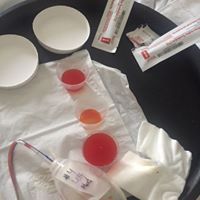
It was precisely one year ago today that an IV drip began to dose me with the anesthesia that would propel me into a seven-hour surgery. A team composed of two oncology surgeons, an anesthesiologist, and ER nurses worked together to eradicate my breast cancer and put me back together again.

I used to be deathly afraid of anesthesia. It was because of a bad reaction to sodium pentathol decades ago. I was having a couple of teeth removed prior to orthodontic braces. As soon as the anesthesia was administered, I spiraled into a seemingly never-ending nightmare and awakened crying and screaming.

Thirty years passed before my second surgery—for a minor procedure about ten years ago—but that first event at the orthodontist’s office was in the back of my mind.

On the gurney, ready to roll to the ER, my fears were intensifying. Tears began sliding uncontrollably down my cheeks as the nurse pushed the gurney through the corridor.

She brought the gurney to a stop.

“Why are you crying?” said the nurse. “Are you in pain?”

I shook my head “no”.

“Are you afraid?”

I nodded “yes”.

“Oh, honey, you’re going to be just fine,” she said. “Listen, this is what you’re going to do. When the IV drip begins, I want you to think of your happy place, the place that makes you feel the most happy and secure.”

Her instructions were like a much-needed hug. At the appointed time, I went to that happy place, glanced up at the IV, saw the fluid moving and the next thing I knew, I was in a recovery room with no ill effects.

Last January—the surgery for the big one—there were extensive discussions with my surgeons and anesthesiologist 24 hours before the big day. They explained everything I would experience, step-by-step, and answered all my questions. Then the surgeons drew circles, arrows, and dotted lines on my torso with a black Sharpie, along with cryptic notes-to-self. I still regret that I didn’t take a selfie!

This time I was totally prepared and relaxed.

I woke up fresh as a daisy.

I guess what I’m trying to say is that preparation can make even the biggest challenges easier. Recovery wasn’t a walk in the park, but one deals with it.

cancer

As a child, I had no support system. I navigated too many terrifying situations alone, and yet, those lonely times created a resilience that continues to serve me today. I can’t think of anything that I’m afraid of.

To be clear, I understand the difference between Fear and Danger. Fear is imaginary—the monster under the bed. Danger is real—walking alone in the bad part of a city at 1 AM.

I know what constitutes Danger and do my best to avoid it. Fear is something I can control.

Today I’m all healed.

I’m Linda 2.0, the new, improved version of myself—back on the trail, back in the saddle.

I’m in my happy place.

UPDATE, 4 days after writing this post. Back in the saddle!
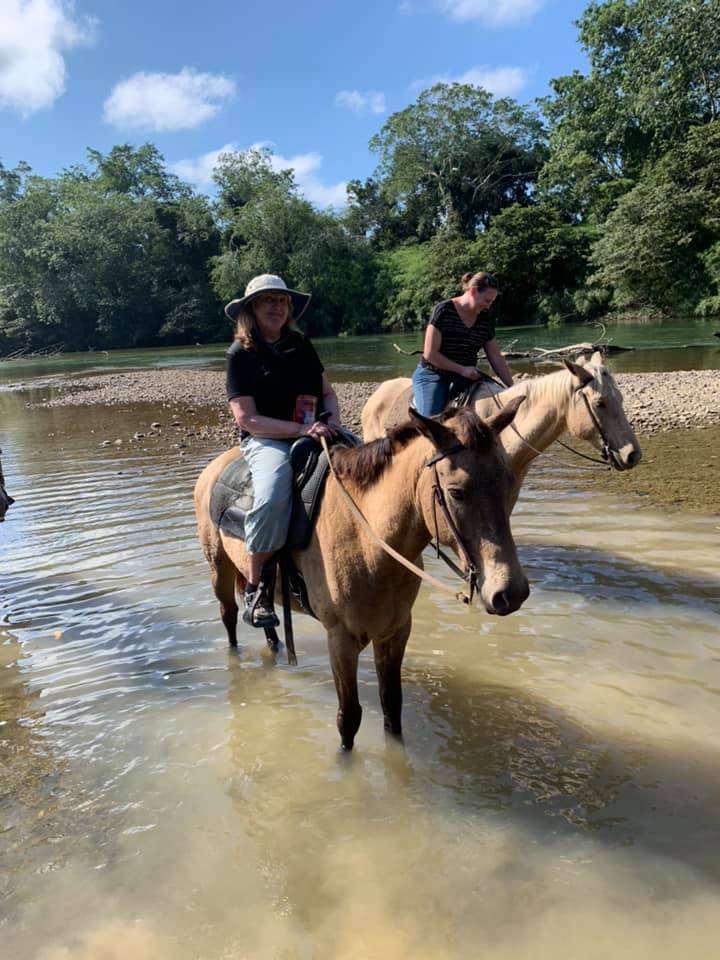
Linda Summersea riding Rising Star. Banana Bank Horses, Belmopan, Belize. #BananaBank

On the Steamship Finland

“Babci! Can I have a cup of tea?” I skipped into the kitchen and plopped into a chair at the kitchen window. From upstairs, I had watched Dziadzia heading across the lawn to the barn where he would milk the cows.
“Yah,” said Babci. She opened the upper cupboard for tea cups and tea bags, then pulled a teaspoon from the drawer below.


Babci’s kitchen continued to be a good place for a lonely girl to get away to. She and I spent many quiet afternoons in mostly companionable silence. We always drank tea. Lipton or Salada. No sugar or milk. If we were having tea alone with no bread or pie, we sat near the kitchen window with a low oak cabinet between us. The cabinet stood in front of the west window where a sill full of potted red geraniums bloomed plentifully all year ‘round. Their strong herbal fragrance lifted into the air when Babci pinched off a dried blossom or plucked a withered yellow leaf. Even today, years and years later, I always have geraniums in my planters, and I always remember Babci as I remove the spent blossoms.


It was during one of those tea-infused afternoons that I learned Babci had been only seventeen-years-old when she set out for Antwerp and across the ocean beyond on her way to America. I don’t remember how the subject came up, but soon Babci was blurting out the whole story of her travel on the steamship Finland.


She was standing alone on a train platform somewhere in western Russia in 1911, six years before the Russian Revolution. Her family lived in Kolno, in rural eastern Poland which was part of Russia at that time, and she managed to find a ride in a carriage that would pass by the station.
The moonlight sparkled on the crust of the deep frozen snow. Young Róża drew her cheap coat closer against the bitter cold and stamped her feet to warm them.
When the train arrived at the station, Róża boarded and handed her ticket to the conductor. It departed soon after with her trunk in the baggage car, and its shrill whistle merged with the howling of the wind and wolves in the forest. Some of the travelers, those bound for fancy destinations in Western Europe and the Christmas holidays, were elated to be on their way. Others, like Róża, may have shed a few tears for her Mama and Ojciec left behind.
She layered her hand knit shawl over her coat and pulled it tighter. Being peasant Polish, she couldn’t afford a stylish pheasant-feathered hat like those she had seen entering the First Class compartments. More likely, she wore a babushka tied beneath her chin, like the one she wore almost every day of the rest of her life.


Arriving at Antwerp the next day, Róża’s trunk was transferred to the waterfront. She carefully removed some money from a pocket hidden in her petticoat and bought a Steerage Class ticket to New York at the Red Star Lines’ ticket window.
The dock was a beehive of activity. The ships of the Red Star Line were always full occupancy with travel between eastern Europe and the United States. Many of them were Jews until the threat of the Nazis stopped their exodus.
Wagons were being unloaded left and right. Róza walked the gangplank onto the ship Finland with the other young people, first watching to be sure that her trunk was stacked on the baggage wagon and hauled on board. She knew to be careful. Everything she owned was in that trunk. Her clothing, her Sunday church shoes, her featherbed, and even—a basket woven of willow that sits on a shelf in my kitchen today—right beneath my cookbooks. Róża fingered the rosary in the pocket of her coat, one bead at a time, her lips moving silently with her prayers. She found her way below deck to the Steerage Class bunks. Soon the ship was underway.


Babci told me that the trip at sea was scary. Girls in the nearby bunks whimpered and moaned, crying and vomiting with seasickness. The food served below was “nie dobzre”—“no good”—she said, but she had to eat in order to be strong for the medical examination upon arrival in the United States. She stood in line with her tin plate to receive a grey meal consisting of a chunk of bread and a scoop of watery stew ladled from a big pot. The smells of seasickness and the boiling meat blended together, so, like the others, Babci mostly stayed in her bunk with her queasy stomach.
She shared that when she first made her way through the ship’s windowless hold to her assigned bunk, she saw people with dark black skin nearby. The lady in the next bunk told her they were devils.
“Devils.” Babci repeated the word. “Devils!”
She laughed self-consciously when she told me this. It was the slightly embarrassed character of Babci’s laugh that communicated to me—a ten-year-old who had only seen black people on television—that she might have actually believed it at the time.
We shook our heads at such a silly thought. Who would believe such a thing?


As the Finland steamed westward, Róża preferred to keep to herself. Christmas came and went. She told herself her Christmas gift would be stepping ashore at Ellis Island. And so it was, although it took some time. The steerage passengers were transported on unheated barges, and by the time they got to the Great Hall, her hands were cold and her nose, dripping. There were examinations and interrogations.
“Where are you going? Where are you from? What is your occupation? Who is meeting you? Do you have a job to go to? How old are you?” and more. Those were the questions that were asked as she stood before the official in Immigration. The answers were scribed in a ledger and Róża was officially permitted entry into the United States of America.


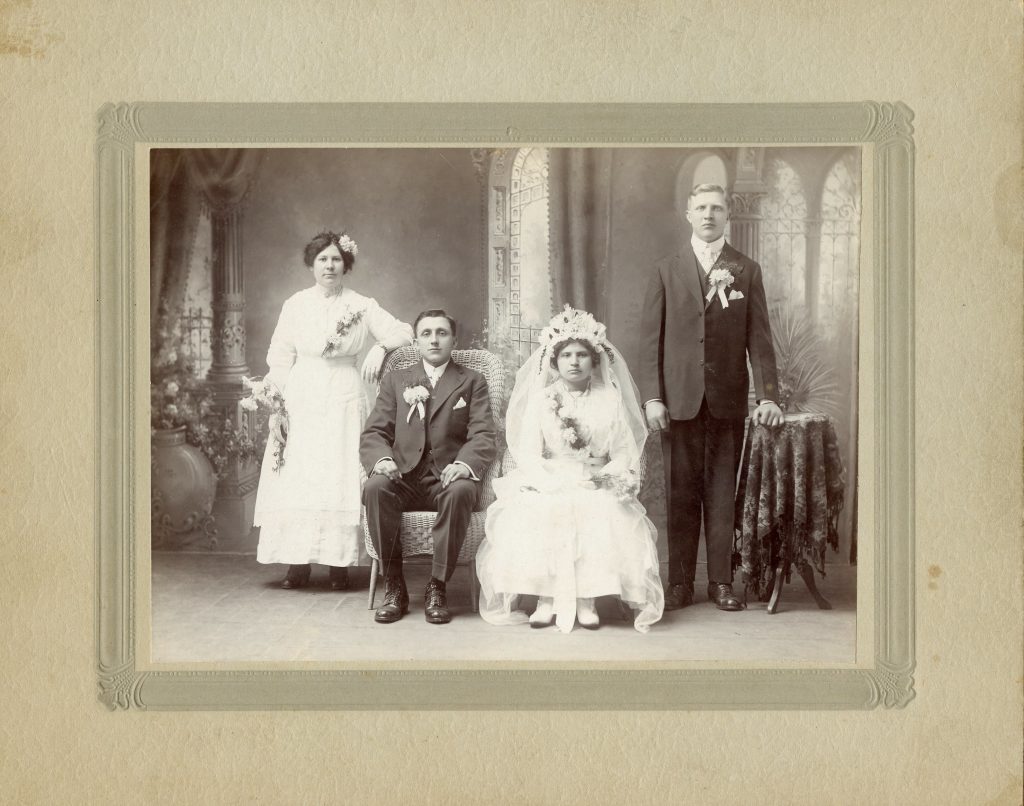
Babci and Dziadzia, Uncle Heromin and the unidentified Maid of Honor

A Comedy of Errors

Back story: I’ve been coming to Belize from time to time for 30 years. In 1989, there was no electric power cable under the sea from the mainland to this island. Electricity was supplied by a humongous generator in town that hummed like a sleeping giant. It shook itself awake periodically, knocking out the power, bringing darkness and an ominous quiet. Eventually the purr of the ceiling fan’s return to slow revolutions followed the hum returning to the background. We slept in a thatched hut at the water’s edge. No window glass. Louvered hardwood window slats.

An elusive boa constrictor resided in the bar at the center of the semi-circle of huts, and my young sons hoped to see him in the rafters as they took turns getting drinking water for the hut.

The streets (Front, Middle, Back Sts.) were still unpaved—silky, hard-packed sand. My 9-year-old son Chris wore a machete in a leather sheath as he climbed the Mayan ruins at Altun Ha. We danced energetic Soca on Friday nights on the patio of the Sun Breeze Hotel.

One Sunday morning, we walked by a man lying in the middle of the street. Flies buzzed around his closed eyes.

“Is that man dead, Daddy?” my 7-year-old asked.

“No, Zack, he’s just sleeping,” my husband said as we walked around the body.

Those were good times. The tiny resort was called Paradise and it was torn down when a concrete resort—The Phoenix—rose up in its place. True.

____________________________________________________________________

January 2019. Day 1. An island off the coast of Belize.

After a successful morning of writing, I took a brief walk around the resort to see what was new. Not many people around for high season.

I decided to walk south under the clouds for two miles on the beach and then inland to The Truck Stop, and a rare place that sells ice cream cones. Sea Salt Caramel. Set out north again, on the road this time, through brief showers that fell between the patches of tropical sun. Being Sunday, it turned out to be very busy with local families ripping by on golf carts overflowing with babies and children, mamas at the wheel. (There are few cars here.) I returned to the beach via the path to El Pescador after stopping at a groceria for orange juice, pita bread, a couple of Belikin Lites—and some frozen bacon to keep the beer cold on the return trip.

Remember Jeff Goldblum traveling with his dehydrated food to Ecuador in Vibes? That’s me, filling up my suitcase to 49 lb (50 lb allowed) with granola, coffee, canned clams, flour, Himalayan pink salt, spices, probiotics, vitamins and more. It’s always worth it. As a woman traveling alone, I prefer to cook in my unit most of the time with fresh seafood and bring what I can from home to supplement. It’s a continuation of the frugality that was so necessary in my childhood.

After unpacking my grocery bag and cracking open a beer, I had a successful session of writing and editing, and granted myself the guilty pleasure of reading a culinary mystery after dinner. Fell asleep around 8 or 9 PM. Re-awakened at 1 or 2 AM, wrote for an hour or two, then tried to get back to sleep with no luck.

I have a lot on my mind. Even meditation methods didn’t work. I kept tearing off my sleep mask to take notes on the thoughts that kept popping up. I know from experience that middle-of-the-night messages will be forgotten if I don’t write them down.

Took an antihistamine and when that also failed to send me to sleep, I decided to catch up with news online. Nevermind Trump. I’m leaving him to Nancy Pelosi. I just wanted to know if Green Book won at Golden Globes. It did! And Mershahala Ali won best Supporting Actor. Yay.

At 5 AM, I put out the “Do Not Disturb” sign and went back to sleep pretty much instantly.

At 9:30 AM, I was awakened from a deep sleep (…and a nightmare: Christopher Walken approaching my home, leading a Pitchfork Brigade, all carrying flaming torches.). There was a persistent banging on my door. I tried to ignore it. No luck. It was the housekeeper saying that my door sign had blown off during the night. Which way had I hung the sign? Did I want “Do Not Disturb” or “Please Make Up Room”?

“Do Not Disturb”, I said.

The Piano

During my childhood, I was allowed to visit a classmate after school precisely two times. Two different classmates. Two different years. Two different reasons why I was never allowed to go there again.

In 4th grade, I received an invitation from a classmate named Judy. She had been my kindergarten comrade and confidant, and we stuck together for a few more years. Judy was acceptable to Mummy and Daddy because she was an honor student like I was, and so they approved my request to visit Judy’s home  one day after school.

Judy’s mother was a real estate agent who dressed like Beaver Cleaver’s mother except with a briefcase. She picked us up at school in her shiny new 1959 Ford Fairlane station wagon with the wood trim on the sides. When we arrived at their home, Judy and I went in through the kitchen, hung our jackets on the coat tree in the hall, and proceeded to the dining room. Judy’s live-in grandmother had placed two servings of milk and homemade oatmeal cookies along with paper napkins. We didn’t use napkins at our house. The cookies were even placed on china plates!

As I politely nibbled my cookies, I saw through the dining room picture window that a lake was close by with a shady patch of woods between the house and the waterfront. Judy’s house had lots of windows— it was a big house—and I remember the golden autumn leaves falling from the trees that lined the slope, and twirling into the dark water near the shore.

After the cookies, we did our homework. When we were finished, Judy said, “Let’s go in the living room.”

I followed shyly, a couple feet behind her.

Judy’s living room stretched from here to there with islands of thick oriental carpets laid upon the wall-to-wall carpeting and it’s centerpiece was a piano that stood across the room. It was a well-waxed baby grand piano. I had never seen a baby grand piano. (I had seen Liberace play a larger one with a candelabra on The Ed Sullivan Show while my father snorted at Liberace’s costumes.)

I drifted onto a carpet and marveled as my feet sunk into the pile. Judy’s grandmother was settled on a sofa with a cup of tea in her lap.

Judy approached the piano with me close behind.

When her grandmother nodded, Judy pulled out the piano bench and sat down to play. I stood by as she lifted the cover off the keyboard, and I watched her fingers dancing lightly over the keys. She effortlessly played some simple songs that I immediately wanted to learn. I went home that night talking excitedly about piano lessons, but Mummy shook her head back and forth. She said “No. Definitely, not.”

“You just want to play piano because Judy does,” Mummy said. “I don’t want to hear another word about it. And don’t you mention it to your father.”

If I had said I wanted to play the accordion like my cousin Marilyn, that might have been different. If I said I wanted to play polkas on the accordion and march in the Fourth of July parade wearing a traditional white Polish dress with a black velvet vest embroidered with flowers, and a ring of flowers and velvet ribbons in my hair—they might not have been suspicious of that. But I didn’t want to play the accordion.

I only wanted to play the piano.

They wouldn’t have to worry about driving me to any parades because I was pretty sure you couldn’t haul a piano to a parade. And they wouldn’t have to buy me any fancy costumes.

I only wanted to play the piano.

But, no. I was defeated as swiftly as a hammer blow, and furthermore, I was never allowed to visit Judy’s house again, lest I get any more bright ideas about piano playing.


Fifty-five years later—fifty-five years!—I was sitting in my mother’s living room with my mother and my brother Dicky aka Dick. Of course, by then he was no longer known as “Dicky” to anyone except Mummy. She’ll always call him “Dicky”, even if he’s eighty years old. My mother was sitting absentmindedly in her chair near the fireplace. Dick was telling me about how he hoped to learn to play the piano during his approaching retirement years.

I shared with him the story of the piano at Judy’s—while noting my mother’s rejection in a quiet aside from behind my cupped hand—and I sighed as I admitted that I also had always wanted to play the piano.

Suddenly, my mother awakened from one of her more frequent lapses into dementia and began to speak from across the room.

“My sisters and I loved to play the piano,” Mummy said.

“The three of us would play side by side at the same time. It was so much fun! I sure did love playing the piano!”

Dick and I just looked at each other. There was nothing left to say.


Lest this end on a wrong note (groan), let me share the John Smith & Partners Christmas Ad 2018 that brought back this memory and inspired this evening’s blog post. (John Smith & Partners are a high-end UK department store.) Maybe you’ll get goosebumps, like I did.

I suggest that you view this Full Screen.

the pianoIf you’d like to read more now and then, I’d appreciate it if you’d Follow me on Facebook.

I’m in New England for a month, hiking and writing. Climbed Mount Sugarloaf in South Deerfield the other day—before the snow came. Now I’m hoping that there’s some snowmelt so I can climb The Cobbles on the Appalachian Trail in Dalton MA. Cheers! L.

Winter is Coming

The fog is thick this morning, surrounding us in a soft blanket of grey, creeping close and closer still, cloaking the shrubs, disguising the gardens. The fog horn has blown all night long at intervals as regular as breath. In and out, in and out, in and out. I sync my breathing, pull up the quilt again, and soon return to my dreams.

I always look forward to the horn in the night, as it predicts the following day will begin with cozy quiet.

A hike in the fog is a mystery walk. Who knows what’s around the next bend? It alerts the senses to each snap of a twig, each rustle of wings leaving the brush, each croaky caw of the raven high in the top of a fir.

Winter is coming.

winter is comingFog on water. Clean. Fresh as laundry on the line.

Fog will soon become rain.  Batten down the hatches.

Except, no need to batten down hatches or shutter the windows. No wind is on the horizon.

I’m reading Ahab’s Wife—which must be the source of my windy thoughts. A nautical read—especially of an earlier century—always makes me think of cobblestone streets and scrimshaw from Nantucket town to Lahaina. Like Ahab’s wife, I would have made a fine New England whaler’s wife, I think, watching from the rooftop walk if I couldn’t be at sea. If I couldn’t climb the rigging in search of a whale’s spouting, I’d be stitching a cross-stitch sampler and minding the gardens before minding the hearth fires that follow. I would have plenty of time to write.

Winter is coming.

Winter is a writer’s blank canvas, as white as the snow, as empty as a new journal page.

Music shifts from blues to classical. And lots of musing.

Winter is coming.

I hear a flock of geese going by. Right this minute. There’s an osprey still occupying the nest down the road, but not for long.

Winter is coming.

I doubt that I could live where there is no change of seasons.

How else would I receive reminders to begin again?

How else to embrace the changes that are inevitable?


winter is coming

Follow me on Facebook.

Running

I haven’t followed the sport of running in recent years, but this morning’s profile of Eliud Kipchoge in The New York Times caught my eye and I was only too happy to have it interfere with my writing frustrations.

Eliud Kipchoge is the greatest marathoner ever. He broke a world record in Berlin this morning. 2:02.

The only running I ever did was running from my mother in my toddler days when I perfected the long distance sprint through our apartment. My sprint always culminated with a flop and slide on the cold linoleum floor of my bedroom and ended on the far wall beneath my bed, clinging to the galvanized springs.

Why reading about running?

Because: Massachusetts. Because: Boston. Because: Patriots Day. Because: Boston Marathon.

The Boston Marathon is always held on the Patriots Day holiday, and in Massachusetts Patriots Day is more about the marathon than Lexington and Concord.

It was also a school holiday. As a young teacher, I turned on the TV and listened to the marathon broadcast in the background as I hung out on my day off, half-listening to Heartbreak Hill but especially the final mile and the laurel wreaths. The rainy days, the hot days, the snow and sleet days. The we-run-no-matter-what-the-weather days.

Johnny Kelley, Bill Rodgers, Kathy Switzer. Dick and Rick Hoyt. Even Rosie Ruiz. The Tsarnaev‘s. We know the names. The successes and the failures. The inspiration and the shame.

Running is about challenging yourself and about endurance for the long haul. Same goes for being a writer. Some days you wonder why you’re still trying so hard. You think of all the books you could be reading, if you weren’t so engaged in the writing.

Eliud Kipchoge attributes his success to Patrick Sang, his mentor and coach, a relationship that began years ago.

Kipchoge:

“If I hadn’t met him, my life would be different.”

Sang explains it this way.

“When you’re young, you always hope that one day you’ll be somebody,” Sang said. “And in that journey, you need someone to hold you by the hand. It does not matter who that person is, so long as they believe that your dreams are valid. So for me, when you find a young person with a passion, don’t disappoint them. Give them a helping hand and see them grow.”

I think about persons past and present who represent the milestones in my life. Those who supported me, and those who didn’t. More important—I think about those I hoped to inspire.

As a teacher, I remember those faces, the ones who looked up to me with such enthusiasm as I passed out construction paper  and scissors from my art cart.

My students had many questions for me. They shared their fears and family secrets. So many questions asked so innocently.

Why me? What did I know? I hope it was because they knew I would always be truthful and worthy of their trust.

In retrospect, I have one regret. I wish I had hugged them. I wish I had given them big, squishy, “I believe in you” hugs. At that point in my life, I didn’t know the value of hugs. I had experienced only one significant hug in my life.

I was in the last stall in the darkest corner of the second floor girls’ lavatory when the heavy door to the hall swung open with a squeak. Quick, clattering footsteps crossed the tile floor. Searching footsteps, pausing, moving forward again. Sister Florentine’s voice rose above the chatter of the other eighth grade girls.
“Where’s Linda?” she asked.
What? Why? Questions formed between my worried eyes. I left the stall cautiously, its door swinging shut behind me, and dragged my feet down the dark aisle into the light streaming through the translucent glass blocks above the porcelain sinks.
Sister Florentine ran to me and enclosed me in her arms. The fire had been reported on the radio. Her wooden cross pressed against my chest and the woolen sleeves of her habit enclosed me in their folds.
I stiffened, unsure of how to respond.
Sister’s arms were wrapped tightly around me, squeezing and rocking as I stood stiffly in place.
It was my first hug.

When I feel down, I would love to have a dream in which I could see all of my students lined up in a row, the hundreds who have sat in my classrooms and made me feel special. I would remember the connection that we shared, and I would begin again.


on my way

Follow me on Facebook. (Thanks!)


On my way…

on my way“I’m on my way…” said the Travelocity gnome.
And so am I. After a crazy (read: hectic), stressful (read: brutal), downbeat (read: depressing) series of hours, days, weeks, months, I think I’ve finally come out the other side.

I’m on my way to a wedding in Hamburg, Germany. Traveling solo—but isn’t that what I’m used to?

Dancing shoes packed. Check! Dresses for each of the events. Check! Manicure, pedicure, color and cut. Smile in place. Check!

A German wedding begins with the Polterabendor as the happy couple has announced it:

Kein richtiger Polterabend— “not a proper stag party”.

It’s the breaking of the porcelain. Bring your own plate! Bring good luck to the marriage!

Last night I was remembering a wedding I attended at the age of 12. Cioci, my godmother, had invited me to come along with her family. I guess she always knew there was a storm cloud that followed me from place to place. It hovered over me, casting a dark shadow and spewing drops of rain that fell in the form of tears.

At this wedding—a traditional Polish wedding—there were all the traditional Polish foods—gołabki, pierogis, kielbasa, kapusta! Men wore their Sunday suits with white shirts and tion my wayes. Black pants, always. They peeled off their suit jackets as soon as they entered the reception at the Polish-American hall. It was a hot, steamy day in Connecticut.

The women wore floral dresses with lacy petticoats. (Mini-skirts were a couple years away.) I had a dress just like this one—the same kind of chintz that became popular for draperies in the Laura Ashley days. It was a hand-me-down that didn’t fit me quite right. I was self-conscious of that and my weak posture reflected as much.

What I remember most was the band, the music, and the dancers. As  soon as the accordion sounds of the first polka filled the air, dancers poured onto the slippery hardwood floor. I sat quietly at the linen-covered table, sipping my glass of water as the dancers circled the room, smiling, bouncing, petticoats revealed, and soon, sweat dripping from their foreheads in the New England summer heat. No air conditioning. Just lots of beer.

Contrary to the infectious joy that weddings and polkas generate, I felt overwhelmed with an unexplained sadness. Before the first song had ended, I had fled to the ladies’ room where I sat in a stall and let the tears flow.

Before long, word reached Cioci and I heard the door swing open, bringing with it the sound of the polka music beyond and then, the tap, tap, tap of kitten heel pumps crossing to the tile.

“Linda, is that you? Come out, please.”

I unlocked the stall and did as she asked. If you knew me then, you’d have seen a shy, young girl standing with eyes cast downward, clutching and unclutching her fists in a self-soothing action that didn’t quite work.

“What’s the matter, Linda? Why are you crying? she asked.

I was speechless. I had no explanation. It was just a part of me that blurted out unexpectedly, but especially when I was surrounded by happiness.

I craved that happiness. I wanted so much to feel that laugh-out-loud bliss that I saw in others.

“Do your parents beat you?” she asked.

“No. No!” I said.

We left the ladies’ room and I returned to the table and my glass of water for the rest of the afternoon.

In those days,  feelings of depression were unexplained, unlabeled, and never to be discussed for fear of being branded “crazy”. One simply made the best of it, which was usually the worst of it, and left a child like me with a stomach ache and a tear-soaked pillow at the end of the day.

This wedding celebration will be different. There will be dancing and beer and smiles all around. I can’t wait.

I’m on my way…

on my way


Follow me on Facebook. Like my page. Make me happy. 😉

Seasonal Blues: Eventually It All Comes Together

Except when it doesn’t. But hang in there—this isn’t a blog about pain and misery. It’s about life’s surprises.

When I was diagnosed with breast cancer in December 2017, I actually wasn’t too freaked out. My first response to my primary care physician, who was delivering the news from the other side of the country, was “OK. What do I do to fix this?”

We had the conversation about oncologists, surgeons, reconstruction and hospitals. A few days later, I returned home to Washington state and began the interviews, appointments, and education process. A lot to learn! A lot to take in, and more importantly, a lot to decide.

seasonal bluesFast forward to today. My first surgery is eight weeks behind me.

Where did the time go? It’s almost as if it never happened. Or maybe it happened to someone else. I did, very often, feel as though I was watching someone else’s life. Except for the long voids of empty space in time. The long period of not writing. All the blog posts that I never finished. The long period of doubts and fears and alone-ness (not loneliness).

My point is: when you’re in this situation, the one thing you realize is that you damn well need to get rid of anything that isn’t working because you only have this one life to live (that I know of in this current space in time) and you’d better make this current life the Best it can be.


Then, just when I could do the simple things that were forbidden for weeks—rolling onto my stomach in bed, enjoying a hot restorative bath, easing into a hot tub—doubts crept in.

Yesterday I was seriously— and I do mean SERIOUSLY—considering leaving this writing stuff to the next generation. Maybe, I thought, maybe I was meant to have more time for walking on the beach or binging Netflix. I’ve been reading Ann Patchett’s The Getaway Car: A Practical Memoir about Writing and Life, and I’m watching other parts of my life teetering on a seesaw each day.

I hadn’t re-read my manuscript since pre-diagnosis and yesterday was the day I was going to put aside the delays of the past three months, open Scrivener and see what was there. It was HARD. I did everything I could to avoid it, including walking 7,000 steps in the cold. (I’m on the other side of the country again.)

But then, after nervously consuming multiple items that were beyond a reasonable person’s calorie count for the day, I did it.

That is, I opened Scrivener and re-read Chapter One.

I found a couple of words that needed replacing because they echoed each other’s sounds in a non-complementary manner. I re-shaped the first two sentences to remove any triteness and draw the reader in. I was careful not to change anything just for the sake of changing it. Then, I renamed the chapter to reflect more depth of the content: From a blah “My First Memory” to a significant “A Fierce First Memory”.  In short, this three months absence from writing was beneficial. I’m back in the saddle.

Fierceness is my strength. Some people might call it stubborness, but, no, I say that it is fierceness. Tenacity. It’s what has had my back throughout these sixty-seven plus years. I can see now that “A Fierce First Memory” at age three is all about everything that would—and will—keep me together for the rest of my life.

I fell asleep feeling pretty good. Feeling as though I’m on the right track and able to assess the memoir content from a reader’s point of view.


This morning, if any doubts were lingering, I was surprised to greet three reinforcements from the Universe:

  1. A person I do not know, and who does not know my Polish heritage, was in touch with me, and she is from Poland.
  2. When I clicked on a New York Times article about tackling difficult challenges to self in one’s later years, I found that the subject was Polish and had much to say about tenacity. The article was a revelation for me because I only know the Polish-American point of view. Aleksander Doba reveals something I had not ever heard:

    “The more you don’t believe in Polish people, the more determined we are. To prove themselves, Polish people will endure everything. If you aren’t willing to suffer, you can do nothing. You can sit and die. This is the only one thing you can do.”

    Doba has a deep, almost performance-art-like sense of this. You can be made small by life or rage against it. “Nie chce byc malym szarym czlowiekiem,” he told me. “I do not want to be a little gray man.” This is a common expression in Poland — and a good motto for us all.        (*Dziękuję, Mr. Doba!)

  3. I had an email from John Guzlowski’s blog. He is a poet, a Polish Chicagoan whose Catholic parents survived Buchenwald. Until chancing upon his blog a couple years ago, I hadn’t even known that the Nazis had rounded up any non-Jews.

I accepted this trifecta of Polish-ness as a positive message because I rarely come in contact with much that touches on my heritage, so I am happy to acknowledge this as a happy accident of communications.

Seasonal Blues. Eventually It All does Come Together.


Follow me on Facebook.

*Thank you, Mr. Doba