Belize Day 3 – Synchronicity, continued

In 1970, I was an undergraduate student at UMASS Amherst trying to come up with a suitable subject for a lithography printmaking assignment. I wasn’t terribly inspired in those days. I had a Merriam-Webster’s Dictionary that had been a graduation gift from my local hometown newspaper, where I was a high school journalist. I flipped the dictionary open at random that day and saw a tree/shrub called “mangrove.”
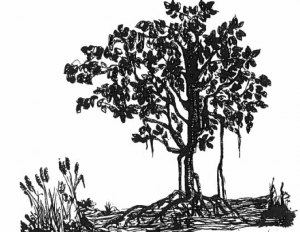
mangrovesI had never heard of this species but I’d always had an interest in plants. An illustration of the mangrove with its small leaves and tangled roots accompanied the definition. I sketched it on drawing paper and the following day, I copied my sketch onto the limestone and printed it. It’s the only print that I still have from those days. The black and white litho-crayon sketch hangs in the stairwell of our home in coastal Washington.
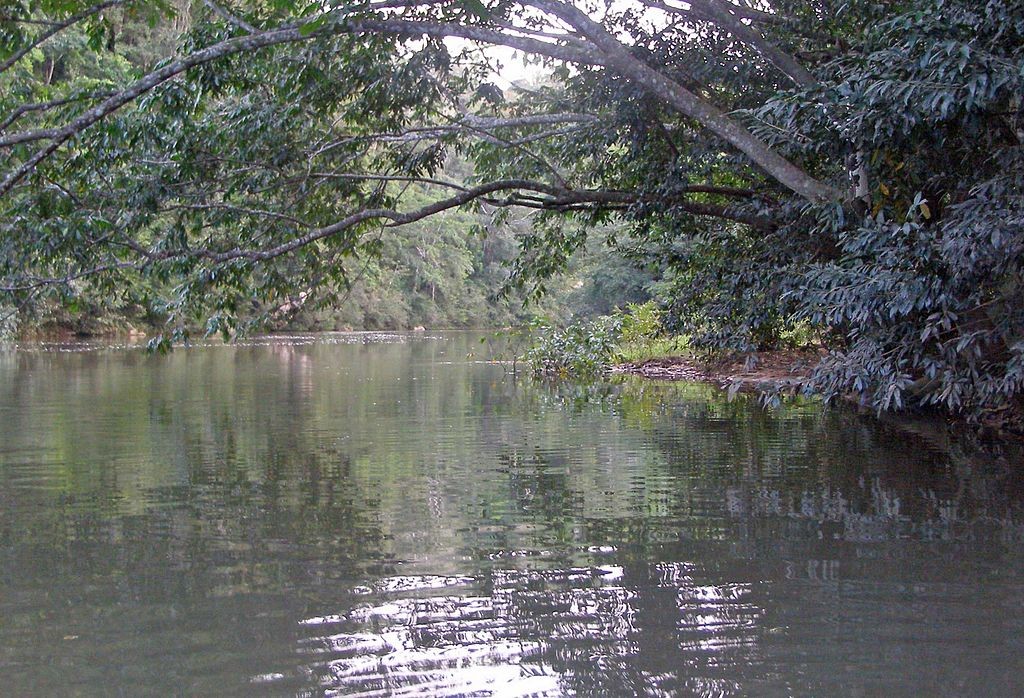
macalriverBelize

Mangrove swamps along the Macal RIver. Image source: “Schaamacal2” by Original uploader was Anlace at en.wikipedia – Transferred from en.wikipedia; transferred to Commons by User:Leoboudv using CommonsHelper.. Licensed under CC BY-SA 2.5 via Commons – Wikipedia source attribution: https://commons.wikimedia.org/wiki/File:Schaamacal2.jpg#/media/File:Schaamacal2.jpg


In 1990, our family was in a open motorboat at low tide, navigating  the shallows off the Belizean coast enroute to the entrance of the Macal River, then traveling upriver to meet our guide to the Mayan ruins at Altun Ha. At one point, we grounded on the shoals. Our boat pilot hopped out to lessen the weight in the boat and braced himself in the soft sand to push off and free us. We continued to the Macal and entered the mangrove swamps, stopping once to view a Fer-de-Lance snoozing in camouflage.

How does a timid college student in a cold North American climate select a subject matter that will turn up twenty years later and become a recurring botanical theme in the travels of a middle-aged woman? Synchronicity.
mangroves

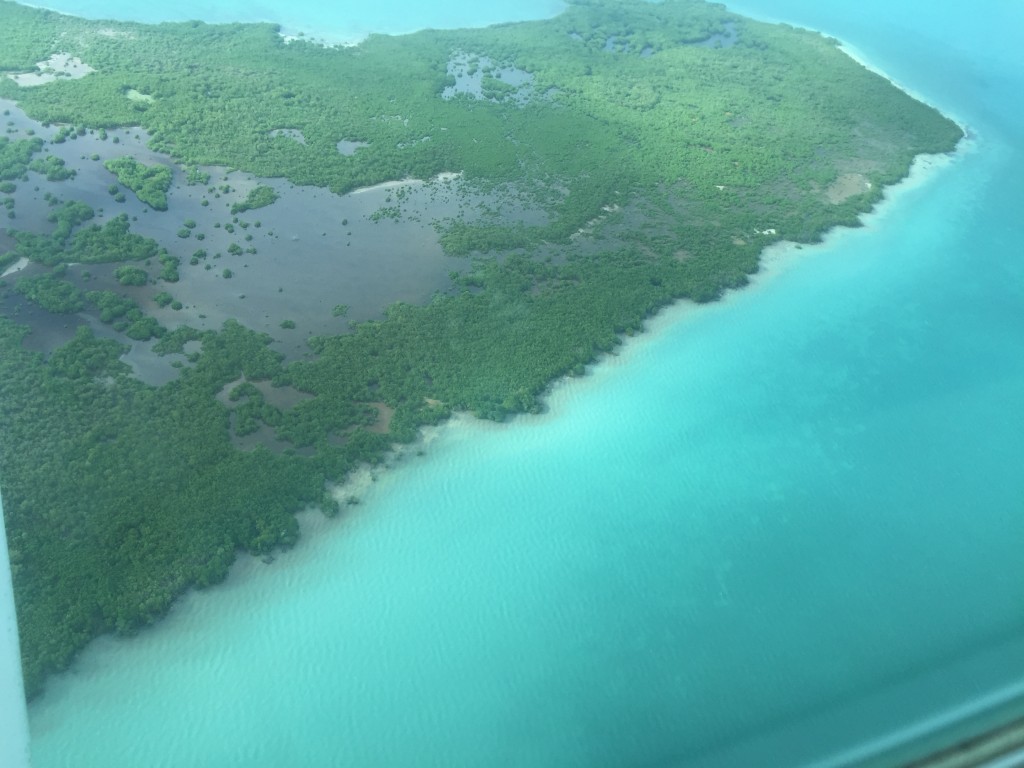
Mangrove swamps, coastal Belize, 2016. Linda Summersea.

In 2016, as Maya Island Flight 2181 made the fifteen minutes crossing from Belize City to San Pedro, I took a few photos from my seat behind the pilot. This image shows the dense forests of mangroves that line the Belizean coast and many of its islands. The salt-tolerant trees with leggy, exposed roots are useful in preventing erosion and offer a certain amount of protection from storm surge during hurricanes.

The mangroves are more important than that to me. They’re a touchstone. Synchronicity.


After a day filled with bicycling, cooking, writing and even a swim off the dock, I carried my Eno DoubleNest Hammock to the seawall. Found two cooperative palm trees. That is, two palm trees aligned so that I would receive the delicious breeze off the water, yet block the unforgiving rays of the Central American sun, and spaced just right for the hammock length and its sturdy carabinered straps.

Took me just 5 or 6 minutes to set-up. Tucked in with my Nook, thinking that this is crazy tight for two persons. It would have to be two very intimate persons. Or two very skinny persons. Or two persons who wouldn’t mind spooning all night long with no way to change position. I suppose you could lie with heads are opposite ends, but the images online all show happy couples cuddling in its cocoon shape.

Lounging in the Eno DoubleNest alone, the hammock completely encapsulated me. I wiggled around to Suggested Position 2, which is to lie crosswise. Then I lay back and prepared to read, but I became totally distracted as I lifted my eyes to the sky.

A row of perfectly painted clouds was stretched out before me hugging the eastern horizon, just above the fringe of waves crashing on the coral reef. The clouds were reflecting the color of the water, which at this time of day was the precise color of tender blue bruises. The tops of the clouds were shaded pink. Romantic pinks.  Thomas Cole landscape pinks. Hudson River Valley pinks.

As the sun inched downward to kiss the tops of the palm trees in the west, the clouds became more and more blue, less and less pink. The scene was so beautiful, it almost hurt.

Actually, it did hurt. All this beauty and no one to share it with. It hurt.

I saw a man photographing the scene from the end of a dock. Two pelicans sat on two wooden pilings, totally ignoring the incredible scene, which was destined to be viewed on a hundred Instagram accounts that night.

Two persons came by in a kayak, enjoying the calmer water at this time of day, their paddling totally synchronized like two lovers who have been enmeshed in each others’ moves for the better part of a lifetime.

Finally the clouds were totally blue. The palm trees in the west transitioned to a black silhouette as a water taxi zipped by with its running lights on.

I returned to my Nook and the 2013 Best American Essays that I had downloaded from the library.

I haven’t read any of the annual Best American Essay collections, but when Cheryl Strayed showed me her home library, after pointing out the books that had belonged to her mother, she was most proud of her collection of Best American Essays.

This was several months before Wild hit the film screens at the Toronto International Film Festival. And several months before Strayed began the resulting rock star ride of her life. She was well-know to readers, of course, but the film brought her work to the masses.

Cheryl, being Cheryl, didn’t tell me that she had essays in those volumes, and she didn’t share that she had been invited to edit the latest (at that time) volume of the Best American Essays. Always modest and low-key, always concerned more about you, Cheryl Strayed is a woman who personifies the highest order of best intentions- not to be confused with the road to hell that’s paved with good intentions.

Finally comfortable in my hammock, I clicked to the Introduction from the Editor:

“When I teach writing I tell my students that the invisible, unwritten last line of every essay should be and nothing was ever the same again. By which I mean the reader should feel the ground shift, if only for a little bit, when he or she comes to the end of the essay. Also, there should be something at stake in the writing of it. Or, better yet, everything.”

As I read this, something suddenly clicked. I read it again.

I’ve never had a course in essay-writing. It seems that the general interest in writing instruction prevails upon Fiction and Non, mostly in book length. Short form is usually relegated to Poetry.

I read on. Everything the editor had written was so on target with what I needed to hear. By the end of the introduction, I was pretty much convinced that essays are meant to play a significant role in my writing.

Then I saw the signature line of the editor. Cheryl Strayed.

Synchronicity.

Subscribe to my blog here.

perfectionFollow me on Facebook.

The Dream, Climbing Back to Creativity

The Dream, Climbing Back To Creativity

Yesterday I arrived at my destination just as dark fell upon a tiny beach village on the U.S. side of the Canadian border at British Columbia. I had driven north on a grey day (or a gray day or a grey dey- I was already contemplating poetry and prose- and listening to writer podcasts).

It didn’t begin to rain until I was almost there. I clasped the stirring wheel tighter and shut off the podcast, staring intently ahead. I couldn’t be foolish enough to let my guard down and turn this writer retreat into a disaster before it had even begun.

Slush began to form on the bridges, and sure enough, at the exit where I turned off, an ambulance was departing the scene of an accident (“wrecks”, they called them in the South, where they’re not so polite about the possible accidental cause of such an event). A police car’s blue light was lighting up the dusk, a white station wagon pointed face first into a gulley, its side peeled open by a little red something or other that lay wounded up ahead. See? You have to be careful when the weather turns.

I remembered that I had forgotten to bring coffee and blueberries so the light of a market lured me off track. The smartphone lady told me to return to the route. Recalculating. Suddenly I was surrounded by frosted donuts and sprinkled cookies and six-thousand calorie muffins and Talenti gelato (sea salt caramel). I waded onward to fruits and vegetables. Blueberries. Coffee. Fresh-ground Columbian breakfast blend. Tunnel vision to the checkout.

Checkout lady: Making smoothies?

Me: Um. Yes. As a matter of fact, yes.

Checkout lady: I thought those were too many blueberries for muffins.

Me: Mm. Right.

4:20 PM. I pulled up to the premises and parked. Poor lighting. Can’t see the office. No sign of life. Dug my arrival info out of my bag.

“Check-in time: 4 PM. In order that your unit be properly prepared for your arrival, we regret that early check-ins are not available.”

Called the phone number on the sheet.

“Thank you for calling Holidayland. If you are reaching this message, we are closed for the weekend. Our hours are 9 to 4, Monday through Friday. If it is an emergency- and ONLY IF IT IS AN EMERGENCY- call 000-0000. If it is not an emergency, leave a message.”

I put up my hood and got out of the vehicle. Pouring rain and wind blowing horizontal. Behind the fence I saw white pages taped to the inside glass of a door.

“If you have arrived after 4 PM and have not made arrangements for late arrival, call 000-0000.”

Rosemary answered the phone, and yes, she had been expecting my call. Key in a dropbox at unit 208. Everything’s ready. Warmth, fireplace, 3 bedrooms if you need them. (I don’t.)

I carried my groceries inside the spotless, cozy, home away from home. Freshly scented, vacuum cleaner tracks on the carpet. Put suitcase on a bed in Bedroom 2. Unpacked the basics and got sorted away, as I always do.

This time was different.

I was blocked. I was making an attempt to get back on the writer track, on my Nth edit of the manuscript, trying to find the key that was going to turn my memoir into something meaningful. If not, I told A.C., I would mark it fiction, add erotica, and upload to Amazon. Well I told him that with a wink but I wasn’t very convinced. He agreed. “Yes!”

So there I lay (lied? laid? Verb tense, my weakness), on a colonial sofa with some very cozy pillows behind me, checking my email and twitter notifications. I was a little bit frightened that it wasn’t going to work this time. (It had always worked before. Isolation, quiet and aloneness- as opposed to loneliness- always work for me.)

By eight o’clock, I was drifting off. Put on my playful puppy-printed flannel pajamas. (Why are flannel pajamas always playful prints? Why are there no sexy flannel pajamas? People in Canada get horny too, you know.) Went to bed. Of course I brushed my teeth and flossed and all that hygiene stuff that I wouldn’t want you to think I skipped over.

The next time I awakened, it was 12:30 and I was sweating. I peeled off the puppy pajamas and tossed them on the floor where they belonged.

Deep breath. Asleep again. The next time I awakened I realized that I had been dreaming the most amazing Technicolor dream. I didn’t dare open my eyes or I would lose the dream forever because that’s how I always lose my dreams.

I am normally a vivid and regular dreamer of dreams. Every night, great adventures. However, the past few months have been dream-free— maybe from too many awakenings or tossing and turning, but I missed my dreams. I felt uninspired.

This dream might be significant.

I kept my eyes closed and began to carefully recount the details, retracing my steps in the dream to recall as much as possible.

I had been attending some kind of weekend self-improvement course for women. The content is nebulous, but “Paris” was a factor, so it could have been about Survival or Art or even Beauty. No, not Beauty. There were four or five other women in my group and suddenly it was time to leave. I had four bags, all cross-body types. I lifted my laptop strap first, then, layered the next onto the opposite shoulder. It was made of brown velour. In the dream I fondled the fabric, remembering that I once had a brown velour dress in college, the one that I wore to the Janis Joplin concert for homecoming. Then I added the two other bags. Their weight was an encumbrance. I had the impression that they were filled with art supplies. I looked like Pancho Villa with all the straps across my front.

At the exit of the event, I was asked to reach into a box and draw a name. A winner was going to receive a trip to Paris. I did so and called out the name of a young woman who popped up smiling, long dirty-blond hair, not dirty-blue jeans. (Who decided that “dirty-blond” was a color for hair? Do people even say that anymore? Rude.)

My group of four or five found each other and set out for home on foot. It was a bright blue and green day and we wandered far and wide, oblivious to the miles, like pilgrims. Or the characters in The Handmaid’s Tale. Onward, finding our way.

Soon we came upon a roadblock on a hillside. Tall piles of dirt filled the road. I climbed up and looked around to the other side. A house was being demolished. Its contents sat piled up precariously on the side of the road. Asian antiques. Ducks, brass, ivory, calligraphy, cranes and more. All quivering on this delicate pile. I stopped and rebalanced a duck sculpture that looked like it might knock the whole pyramid down. We admired the antiques as we passed. Blue china. Plates and cups in porcelain. Vases. More tentative stacks, all assembled on the hillside. Fragile Beauty.

Workmen continued to add to the stacks, walking back and forth from the scene of the house demolition as we passed. When we got to the top of the hill, we looked back and saw that they had finished.

Suddenly, music vibrated against the hillside and its echo caused all of the Asian antiques to fall down into a broken mess. The workmen were cursing one of their midst who had found an old Donovan tape and couldn’t resist playing it. I don’t remember the song but Donovan brings to mind art and colors. “Colours,” “Mellow Yellow,” “Wear Your Hair Like Heaven,” “Try and Catch the Wind,” “Season of the Witch”. These were songs that meant something to me years ago. I hadn’t thought of Donovan in as long.

We turned around and now the scene changed to one of Art being created all around us.

An outdoor passage, the width of the Sistine Chapel, was filled with young men and old men—all men— creating Art in brilliant media. There were no canvases or brushes. The earth was the canvas and it was sparkling White and made of something magical and malleable.

I leaned back to look up and saw single colors being celebrated. No rich realistic Michelangelo mastery. Just wedges of pure color in abstraction. Royal blue was being spread into a graphic shape. Yellow pigment was being swirled into a sculptural scene marbleized with white as translucent as the Pieta. I was aware that there was much wet paint and I was admonished to step carefully. We were climbing and there were no stairs. The artwork composed the steps and risers, and each riser was taller than average. I had to strain to lift myself from one section to the next, as if I were suddenly Lilliputian.

I was marveling at how each artwork was more beautiful than the next. Crowds of others making their way and seeing my travel companions ebbing and flowing with the crowd. Nearer, farther. Together again.

The world was Art.

A fast moving rush of water suddenly appeared in the midst of all this art, pouring from a huge opening in the wall. It was like the rivers I’ve floated in the caves of Central America, sharing the same waterways that were once part of the sacred Mayan underworld. I suddenly had the impression that the water was healing but that I had to stay on the “right” side of this flowing water.

Then I was awake, amazed that I had dreamed of all this Creativity and Art.

I remembered that Royal Blue and Yellow—the primary colors in the Dream—are colors that I never use. Maybe I’m supposed to dare to go places in my writing that I haven’t dared to go before today.

The Beautiful Asian Antiques that were being saved from the demolished house and later collapsed? Maybe I’m supposed to save the best bits of my writing and be careful to use them properly and not be distracted by other influences.

Time to write.

creativity

Time to Write

creativityFollow me on Facebook.

Writing a Memoir isn’t for Sissies

Writing a memoir isn’t for sissies.

Let me rephrase that. Writing a memoir is for hard core masochists- for those who truly enjoy pain- because, for the most part, that’s what you’re going to experience as you struggle with what to tell, what to hold back, and how the whole fits together.

I was just about to move the weekend’s Wall Street Journals to the recycle bin when I peeled open the Review section one more time, looking for something to accompany my vegetable soup.

Sure enough. Somehow I missed the interview with Mary Karr (The Liars Club), whose The Art of Memoir is going to be released on September 15.

She has a good bit of relevant input to share with a fellow memoir writer—albeit with an unpublished fellow memoir writer. Correction: especially with an unpublished fellow memoir writer.

Karr: “It’s cathartic, but the purpose of it (the memoir) is not your catharsis. You’re publishing it to create an emotional experience in another human being, and for me, unless another human being reads it and has that feeling, there’s no point.”

Mmm. Yes. Agreed. I do know that we’re always told to never admit that we have written our memoir as a means of healing or catharsis. Agents and publishers don’t want to hear that. Everyone’s life is fucked up, everyone’s family is dysfunctional, and yours is no better or worse. It’s not all about you.

During the first draft, you may write the memoir as a catharsis—but don’t tell anyone that’s what you’re doing—even if it makes you feel better.

After the first draft, if you truly enjoy language, as I do, you lose yourself in the creation of evocative sentences. You want the reader to touch and taste and smell the places you’ve been. To hear and see it all from the most degrading statements that were made to you, to your near death experience, to the survival tactics that you employed as a child.

In this process, you’ll hopefully create a work that the reader will be able to experience on such a level that they almost walk in your footprints and relive your reality as their own.

Karr says that her new book is a guide to “navigating life’s events, first psychologically and then on the page.”

“Success in memoir writing,” she says, “involves a psychological self-awareness of how you changed over time.” Karr herself is the child of two alcoholic parents. Her mother tried to kill her with a butcher knife when she was eight years old. Serious stuff.

Taking that into consideration, I believe that, during the writing, the unspoken catharsis becomes your raison d’être. If you can relive your past, get it on paper and survive the stress of it, your catharsis will be worth it. Even if you come through the first draft like the head-spinning, projectile vomiting Regan of the The Exorcist. Sometimes, it does feel that difficult.

Further, Alexandra Wolfe, her interviewer, writes:

“Ms. Karr says that writing about hope is just as difficult as writing about pain.

Karr:

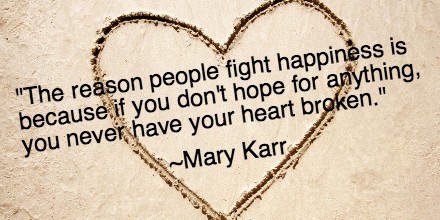
‘The reason people fight against being hopeful is because it sets you up to be disappointed. The reason people fight happiness is because if you don’t hope for anything, you never have your heart broken.”

PeopleFightHappiness

The Swimming Lessons

It’s the August full moon of midsummer, a time which always brings back memories of summer Sundays at my grandparents’ cottage on a lake in Massachusetts.

By 4th of July, the hand-dug well on our farm had always gone dry so baths and shampoos were out of the question.

As a substitute for Saturday nights in the bathtub, we drove to my grandparents’ cottage once a week and the lake was supposed to wash away the grime that had accumulated during the previous week of wandering barefoot on the farm.

The Sunday soaking ritual always took place with our five other cousins during unsupervised “swimming” in front of the cottage while the adults downed bottles of Schlitz and Old Milwaukee, out of sight at the top of the property. The quotation marks are here because the other cousins were all good swimmers. Very good swimmers. They were fearless. They water-skied, they jumped off the dock, they dove for quarters thrown in the water. They were like black labs–balls were thrown and retrieved. They had endless water games in their repertoire.

My siblings and I didn’t have a clue. We stood in water up to our knees with our arms folded self-consciously in front of us until we gradually waded deeper, the waterline creeping up our bathing suits, one excruciating inch at a time. I was supposed to keep an eye on the two of them and make sure they didn’t accidentally wander into deep water.

I always hated my responsibility as the one in charge of the younger ones, an unfair role assigned by the random cruelty of birth order, and I said as much.

Mummy finally decided it might be appropriate to enroll us in swimming lessons, mostly to cover her ass if anything happened out there. Harsh judgment on my part, but probably true.

On Day One of the swimming lessons, Mummy pulled her green ’56 Plymouth station wagon up to the curb at the Town Pool. My brother and sister and I got out. We had our towels around our necks and our flip-flops on our feet. We held hands, as we’d been told, and I carried the registration envelope.

Dicky wore his new “supporter” of which he was quite proud. Mummy made quite a big deal out of purchasing his first jock strap, and he was supposed to take the swimming lessons in stride like a “big boy”. Sharon and I wore matching pink tank suits.

Without looking back, we climbed the sidewalk mountain to this place we’d never been. We didn’t hear the station wagon drive away, but we knew Mummy left without a glance back as soon as she heard three doors slam.

As we reached the summit of the park, we saw bleachers at the water’s edge down below. We pressed on. Slowly and carefully, we trod down the concrete steps towards the black water that stretched for a mile wide, or so it seemed.

I was the eight-year-old babysitter, timidly leading the five and six-year-old, one clasped at each side of me.

Chatty pastel-clad mothers were sitting on the bleachers in sunglasses and sun hats, flicking their cigarette ashes onto the grass. A card table stood in the bright sunlight with tidy boxes of index cards and a line of kids and mothers in front of it. We joined the line and soon it was our turn to register.

A man with a whistle on a cord around his neck looked up at us over the top of his sunglasses as he flipped through the index cards.

“Is your mother here?” he asked.
“No, she said to give you this,” I said.

I handed over the envelope. The man filled out more index cards and then someone came along and divided us up. My brother Dicky went to the right with the “minnows”. Sharon went I don’t know where. Another group of minnows, I guess. I squinted into the sun as they were led away.

I was then directed to yet another group. I had no previous swimming experience but I was tall for my age. Maybe I was in the group of bigger non-swimmers.

So it was, as we attended our weekly swimming lesson at the Town Pool. Each week, after that forbidding event, we somehow found each other, held hands, and fled back up the steps with our towels, over the top, and down to the circular drop-off drive. Eventually, our calm was restored as we waited silently in a shady patch of grass to avoid being hit by a car. My mother always told us to stay away from the street. It was dangerous.

Each week, there was always the matter of the long wooden docks that stretched out towards the middle of the dark, deep water. I knew that both of my siblings were afraid. When I heard screaming, and squinted in the distance, I saw Dicky crying loudly, his chest rising and falling with his uncontrollable sobs. I was never able to find Sharon anywhere.

The three of us never discussed the swimming lessons. The experience was too painful to put into words. At home, Mummy and Daddy never asked us about it, so we never told.

At the end of summer, the day arrived when we would all be tested for our achievement. After a brief test of floating and dog paddling in the shallow water, all of the swimmers—and I use that word loosely—had to jump off the dock in order to pass the test.

I did what I was told. I floated on my back, although that was not due to any particular skill. I always had the ability to float upside, sideways, Dead Man’s Float, any kind of float. I could float in a hurricane. For a skinny kid, I had a high body fat ratio.

When it was my turn to demonstrate my learned skills, I swam the dog paddle, floated, treaded water. I jumped off the damn dock where my swimming certificate was being held for ransom.

I succeeded, glub, glub, glubbing to the surface with water up my nose, and received my Minnows certificate with the automatic assignment to next summer’s Flying Fish class.

So what?

Mummy never let us finish anything we started so I knew that I wouldn’t be back next year to take the Flying Fish lessons.

I saw Dicky standing on the end of the other dock. All of the other kids had already jumped in and passed. I saw them standing impatiently in the water, while his instructor pleaded with Dicky to jump. Another instructor was in the water below, ready to catch him, if need be. All he had to do was jump.

I sniffed in disgust—not at Dicky—at the fruitlessness of the scene. I knew that there was no way in hell that Dicky was going to jump off that dock.

We returned to Sundays of unsupervised “swimming” at my grandparents. One time, with my body tucked firmly into a highly-inflated rubber tire tube, I drifted into deep water where I couldn’t touch bottom. (“Stay where you can touch bottom,” Mummy always said.)

Somehow I got flipped over. My head was under. My legs were pointing skyward. My body was wedged firmly in the opening with no option of sliding out.

I couldn’t breathe. I panicked. For the first time ever, my eyes were wide open underwater. I saw the posts of the dock, the legs of the other kids in the distance. I saw some broken water toys on the bottom. I even saw a few fish swimming around—probably laughing at my demise.

I was kicking, squirming, flailing, thrashing. No one heard me. I knew I was going to die. So this was what drowning felt like. My sad fate would be announced on the front page of the local newspaper, with a brief obituary inside. They’d be sorry now!

I continued to thrash in the water, drifting further under the dock. Try as hard as I might, I couldn’t break the suction of the tire tube from the surface of the water. Then, with one final burst of adrenaline, I popped back up.

As I celebrated my survival with painful, sputtering coughs and a deep, cleansing breath, I saw my cousins, my sister and my brother. They were all frolicking near the shore, and all oblivious to my plight.

Years later, I still wonder where my mother went during that weekly hour of swimming lessons. There were never grocery bags or other signs of her destination.

Sharon learned to swim but she, I discovered a few years ago, is still terrified of water where she can’t see the bottom. Dicky never did learn to swim, and my mother never thought to ask why his bathing suit was always dry

from the Girl with the Black and Blue Doll, Linda Summersea
the swimming lessons
The Swimming Lessons

The Road to Marrakesh

After flights totaling 21 hours, we wearily checked into the El Mansour Hotel in the old Medina of Casablanca, Morocco. Roger left me in the dark shuttered room while he hailed a cab to pick up our rent-a-car. “I’ll be right back,” he said.

That was more than 40 years ago. February 1975. Our honeymoon.

Four hours later, my husband had not returned. I had taken two showers, paced back and forth endlessly, stripped off my clothes and burrowed deep into the downy bed, hoping to fall asleep and escape this nightmare.

I dressed and stepped out onto the balcony, shading my eyes from the brilliant sun that sparkled in the waves crashing on the Barbary Coast in the distance. Lorries and men in djellabas leading donkeys piled high with bundled goods vied for position in the street below. There was much crying and gnashing of teeth. Mine.

Finally, the brass doorknob turned. In strolled Roger, as though he’d just popped down to the lobby for a newspaper. An argument ensued. Roger claimed that some fellow had transported him all over the city because the car rental office was closed that day.

The next morning, he led me to a white Renault sedan and we headed north to Fez via Rabat. Roger was driving, although perhaps he might not have had the appropriate license. A young fellow, seeing our hippie clothing, had approached Roger earlier. Roger said the fellow would be our guide.

Distracted by this man in the backseat, Roger promptly zipped through an intersection, ignoring a traffic policeman’s directive to stop. Said policeman promptly signaled us to pull over. Our guide leaped from the back seat and ran away. I saw him growing smaller and smaller.

The policeman spoke no English. We certainly had no Arabic, and very limited French. The policeman commandeered a big-finned ’59 Chevy Impala and, as he climbed into the vehicle, he looked back, swiveling his wrist in a “follow me” gesture.

We traveled through narrow streets, finally emerging into a bustling square. An enormous pockmarked white stucco building stood at its edge. Unshaven men in dingy grey shirts stared out through barred openings.

The policeman, with starched uniform and stiff-brimmed cap, motioned out of the car. He brushed the street dust off his epaulettes, and adjusted the hem of his jacket. Throwing back his shoulders, he led us into the miserable building through a small cellar door.

There, across the vast, dirt-floored room, an enormous mahogany desk rose above us.

A ray of early morning sunlight shone through the single tiny window, and the polished surface of the desk reflected the somber faces standing in the long queue of derelicts beneath it.

A scowling magistrate peered down through wire-rimmed glasses. The policeman led us to the end of the line and as we inched forward, Roger formulated a plan.

“We’ll say that you’re ill from the heat. No—from your period! You have cramps! Hold your stomach. Moan!

When it was our turn, Roger pled “Ma femme est malade!”

A staccato conversation rose between the judge and the policeman. Suddenly the voice of the judge became louder– angry! What? The judge was reprimanding the policeman! Mon dieu! We just might get out of this.

The policeman led us back to the street, where he motioned that I was to drive. Roger hung his head, suitably shame-faced, and slid into the passenger seat. With an expression of disgust, the policeman waved me away from the curb. I shifted into first, then second, and pulled into a roundabout.

“Go!” he called, pointing north, “Go!”

Many kilometers later, we passed through Meknes and finally entered the capital city of Rabat. We were greeted by a traditionally garbed water-seller who poured cool water from his goatskin bag into shiny brass cups. We ate couscous in a café, then French pastries from a bakery. We were licking our fingers—rich strawberry tarts washed down with cold Oranginas.

Back in the car, we exited through the elaborately carved gates of the city, and soon were in the middle of nowhere, cruising along a smooth asphalt road that waved up and down, curving around orchards bright with oranges. The Atlas Mountains rose in the distance.

An argument ensued. Roger wanted to drive the car. “There’s no one here,” he contended. We quarreled for forty kilometers. Maybe more. I held my ground. He may have called me a “b*tch”. I may have said he was a “f*cking idiot.

Suddenly we heard a siren. It couldn’t be. It was. A motorcycle cop with a pen and ticket book in his hand. He spoke good English. He said that I had passed a donkey cart a while back in a “no passing” zone. Indeed, I had.

For a mere 200 dirhams (about US$50 at the time) we could put this little incident behind us. I peeled the bills from my wallet and smiled with appropriate humility.

At Fez, we hired a licensed guide who showed us his city with great pride and let me wear his fez for photos. We spent the night in a tiny hotel where the echoing Muslim call to prayer awakened us at dawn. We set out on the long road through the mountains to Marrakesh singing brightly. You know the song. “I’ve been saving all my money just to take you there, I smell the garden in your haairrr…”

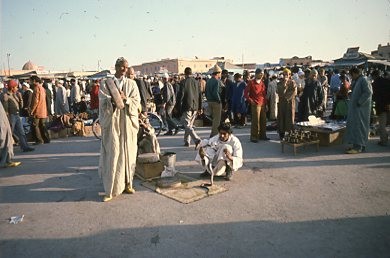
Cobra charmer, Djemaa El-Fna, Marrakesh; Linda Summersea photo

Cobra charmer, Djemaa El-Fna, Marrakesh; Linda Summersea photo

We found a room near Djemaa el Fna. A snake charmer removed his cobra from a coiled basket and led him in a hypnotic dance on a blanket. I practiced my negotiating skills, acquiring leather goods and djellabas from the vendors that surrounded the square.

It was time to head to Casablanca again, this time across the desert. Shimmering mirages appeared as a train steamed past us to the east. We rolled the windows down in the heat, singing “Marrakesh Express” at the top of our lungs.

Guess who was driving?

Linda Summersea, Marrakesh, 1975

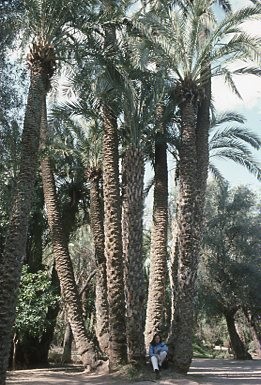
Linda Summersea with Palms, Marrakesh, 1975


Thank Your Mother for your Sexual Freedom

Yes, your mother (or grandmother) made it possible for you to have one less worry in your wild life.

Your mother made it possible for you to hook up with your lover without the fear of pregnancy.

Your mother made it possible for you to complete the joy of intimacy by making a physical connection to a human whose intellectual and spiritual bond with you was already in place. Or not. Your Choice.

(LS edit here: Not trying to be confusing. I mean: maybe you have an intellectual & spiritual bond. Maybe you don’t. Maybe you want to make a physical connection. Maybe you don’t. Your Choice.)

When she was your age, your mother lived with the frustration of not being able to express her sexuality with a partner without fear of pregnancy.

I vividly remember that our bathtub surround in the 50s always held a jar of Massengill douche and its related hose contraption. When I learned to read as a first grader, I reveled in reciting the label on the jar aloud, line by line, to my sister as we sat together in the tepid water, knees up to our chins while my mother shampooed our hair on Saturday nights.

When I reached puberty, my mother handed me three items: a box of sanitary napkins, a copy of “Growing Up and Liking It” and a panty girdle. A panty girdle?

Yes. A panty girdle. Apparently she felt this would ward off the attention of any males who might consider fondling my buttocks.

The girdle as a form of birth control. What a concept!

By providing this panty girdle and the “Growing Up and Liking It” booklet, my mother felt that she had done her job regarding the Facts of Life.

The booklet, brought to us by the Modess Corporation, a company that made sanitary napkins, had drawings of the female reproductive organs with the triangular shaped place called the “uterus”, connected on each side to an ovary by means of fallopian tubes. There was a drawing of an egg in motion, wiggling its way down the track of life with its little tail. Circles and arrows, Arlo Guthrie style.

The voice of authority in the booklet said that each month eggs were released from the ovaries and the result was blood, known as one’s “period”. However—and here comes the really scary part—if an egg was fertilized, you didn’t get your period, pregnancy was the result and a baby began to grow inside you! OMG!

The booklet neglected to explain how the egg got fertilized. I pored over those pages behind closed doors, secretly, constantly. There was no one with whom I could discuss this awkward topic and I could not for the life of me figure out the fertilizing part. Damned poor editing on the part of the Modess Corporation, I’d say.

The result was that Every Single Month from age twelve through eighteen and a half, I worried myself sick that my egg was going to get fertilized. I marked my period on freebie Hallmark pocket calendars with a star for each bloody day. During the week of having my period, I was relieved and buoyant. Unfortunately I was also in terrific discomfort since I was one of those unlucky ones who endured really brutal menstrual cramps that ached all the way down my inner thighs. Curl-up-in-fetal-position pain, with-your-eyes-shut pain. My mother never gave me anything to take for it. She’d say, in this “I told you so” kind of voice, “That’s the Facts of Life.”

During the week after my period, I’d be OK for a while; then those fears would begin to dog me again. Once, I meekly said to my mother, “My period is late this month.” It was late. I didn’t have precisely regular periods.

“What have you been doing that you’re worried about your period being late?”

“Nothing,” I said. Which was true.

When I had a blind date with a neighbor’s boyfriend’s friend, my mother suddenly came up to me, and said, “Your father wants to make sure that you know about ‘The Facts of Life’.”

Huh? Thinking, thinking. Facts of Life equals getting your period and enduring cramps. Check!

“Yeah. I know.”

Then I went to college. 1968. I had a new boyfriend and he conveyed the truth of the “Facts of Life”. Yikes. I sincerely had no idea. I was a late bloomer. I didn’t even understand what Mrs. Robinson and Benjamin Braddock had been up to.

What was it like to be dating and mating as a college student in the 60s and 70s?

Colleges had Rules. Crazy rules. During the early 60s, men could only visit women’s dormitories in their downstairs parlors. Later, when men were allowed to visit women’s rooms, the door had to be kept open. Both parties had to have one foot on the floor. Yes. It’s true.

Even at our state university, where rules were more flexible than women’s colleges, there were strict curfew hours in the late 60s. 10 p.m. on weekdays. Midnight on weekends. Sign-ins compulsory. Don’t even think about spending the night with a member of the opposite sex.

Then overnight—not quite, but it seemed like it—everything changed. 1967 had been “The Summer of Love” in San Francisco. We became “gentle people with flowers in their hair”.*

The women’s movement began to gain momentum. Betty Friedan and Gloria Steinem continued to inspire us to stand up for our rights—including the right to sexual freedom.

Changes were happening on college campuses at warp speed. It was still illegal to prescribe birth control pills to unmarried women until 1972, but sympathetic doctors could be found.

In 1970, I was engaged to be married. I learned from other women that there were liberal doctors at our Student Infirmary who would prescribe the Pill under certain circumstances.

When the doctor closed the door on the treatment room, he asked the reason for my appointment.

I was nervous but truthful. I told him that I was engaged to be married, and my fiancé and I would like to have sex.

“To have sex” sounds a bit incongruous, but I don’t recall any euphemism that I might have used. Certainly not the slang of the time—“get it on”—and certainly not a clinical term like Sheldon Cooper’s “engage in coitus.”

The doctor looked at the engagement ring on my finger and reached for his prescription pad. Minutes later, I was heading down the hill with a 3 pack and I was officially “on the pill”.

Sexuality became a revolution. Co-ed dorms. Love-ins. John Lennon and Yoko in Amsterdam.

The result of those transformative years was your personal sexual freedom.

My advice? Be very careful how you use it. There’s a lot more to intimacy than sex.

———————–

*San Francisco, lyrics by Scott Mackenzie

“Thank Your Mother for your Sexual Freedom” is an excerpt from Linda Summersea’s manuscript of essays, Writing Like A Mad Woman.

birthcontrolpils2

Live the Island Life: Live Green. 10 Tips Learned from Island Living.

I confess that I am in the midst of a very long, ongoing love affair—with islands.

Many islands. I have yielded to their temptation in many seas—some repeatedly—and each island has shared its unique characteristics abundantly and unabashedly.

The most valued aspect of these island affairs is that they have taught me the principles of green living, as dictated by the isolation that is a normal, accepted part of the island lifestyle. While the isolation is part of the charm, it also has its own set of challenges.

The point is that living on any island requires one to live mindfully. Mindful of everything from water use to recycling to consolidating trips to the mainland to save money.

Right from the beginning, I found myself constantly saying, “When we return home, we need to continue to live as though we’re living on an island.”

And then we did.

Here are a few things we learned.

  1. Avoid paper products. Paper products take a high toll in trees and are bulky to ship to islands. We had never used paper products except for toilet paper, so this was easy. One amusing result was that when our oldest son went to Kindergarten in 1985, he returned home with cafeteria questions.

“What are those paper squares that the ladies put on the trays?” he asked.

“What do they look like?”

“They’re folded up,” he said. “They’re white.”

“Ohhh. Those are ‘paper napkins’. Schools don’t use cloth napkins,” I said.

I imagine the school staff thought we were raising little heathens who didn’t know how to use napkins.

  1. Conserve water. On the islands that we have visited, water is usually gathered from the passing rain showers and saved in a cistern. You didn’t let the water run while you brushed your teeth. You didn’t run the washing machine without a full load. Common sense.
  1. Don’t get hung up watching television. In the islands, mega-sized generators that fueled the entire island and went down several times a day often supplied electricity. Televisions were rare. One time walking the dusty road into town, I saw a crowd gathered around a tiny black and white set in front of a village store. The crowd was laughing hysterically. I approached to see Paul Rodriguez beaming in from Mexico City. We rarely watched television, and this non-habit was part of our life at home. While we had a television—a small Sony that we had purchased in 1974—we only watched it for occasional news or—ha!—“Saturday Night Live”.

Instead of watching television, we sat out on the porch. We read, or played Scrabble, or talked to each other. Sometimes we swung in the swing under the shade of the enormous twin beech in the front yard. The boys rode their tricycles up and down the length of the porch, and chased fireflies at dusk.

In later years, we would occasionally rent a movie from the convenience store. In those days, when you rented a movie it entailed carrying home a VCR unit. Yes, kids, you carried home a VCR and a VHS movie videotape as part of your evening rental, hooked it up and then carried back the whole kit and kaboodle the next morning.

  1. Visit your library for reading materials. I loved one island’s aged library whose wide stone sills had been built during the sugar mill days. At home, instead of buying books impulsively, we went to the library. I did have a small but growing library of my own beloved titles, and we did buy Children’s Books. I wanted our sons to know the joy of having special, favorite books. Going to the bookstore was a very dear activity. When they moved from home, our sons took with them several large boxes of their childhood books, which they retain today in their 30s.
  1. Buy local. In the islands, you can’t get there from here. You have to be satisfied with what’s available from a limited selection. Once when I asked for a Hershey bar at an island mini-mart, the response was “melt too much”. (The heat also makes the language terse. 5a. Mean what you say and don’t chatter needlessly.)

At home, we didn’t just drive into town for every little item that we needed. No impulse driving. We kept a list for the items to be purchased and the errands to be run. In later years, when we lived in a rather remote location by some standards—an hour’s drive from the grocery store—our habit served us well.

  1. Grow a garden and cook it yourself. In the islands, local produce is king. Due to the high cost of ocean freight, in the islands you pay high prices for prepared foods that mainlanders take for granted. At home, I planted and maintained a garden from Day 1. Organic. In the early years we lived close enough to the ocean that we used seaweed to mulch and enhance our soil. I canned and froze everything. At home, we cooked from scratch. Everything. Even the bread—and this was before bread machines. As a result, our children enjoyed nourishing food and were never fussy eaters.

There were some times when it proved comical.

Our children always chose a favorite meal for their birthday dinner. One year when our youngest was five, we had a birthday party and four little boys joined us that evening. Zack’s selection was a Cantonese meal: Ho Yu Gai Poo. The children refused to eat it. No problem. We had lots of leftovers. I suppose I could have told them that these were “chicken nuggets” and served the sauce on the side, but I’m glad that this didn’t enter my mind.

When our sons grew up, their taste buds were “spoiled”. Since they had never experienced fast food, they didn’t crave it. Of course, they did try it when they went away to school, and certainly ate it for a period of time. Now in their 30s, our sons favor a plant-based diet with occasional free-range meats—never pork. (Pigs are smart creatures.) They have been at times vegan and pescatarian. It makes a mother proud.

  1. Make things and fix things. In the islands, you don’t buy new clothing every season, as the fashion magazines would lead you to believe is necessary. If you need a chicken coop, you build it. Recycled lumber is very common.

I had always sewn my own clothes, except for blue jeans and imported Indian tops and winter jackets.

I had always been repulsed by the pinks and blues assigned at birth so automatically. I made velour overalls for our babies, soft and warm, and in bright or earthy colors like purple and russet. I hand-sewed a stack of quilts, made a goosedown coverlet from a Colorado kit company, and knit a cedar closet full of woolen sweaters. We built our own house, barn and chicken coop. For heavens sake, we drilled our own well!

Sometimes when I think back, I have to remind myself that this all really did take place. I’m sure that some of you can identify with this. There is nothing quite like the energy of youth. Youthful energy becomes mid-life habit and mid-life habit begets senior citizen tradition. It’s all good.

  1. Find delight in nature. In the islands, we enjoyed tropical trails and white sand coves on shore, and coral canyons full of schools of bar jacks and butterfly fish in the sea. At home, we looked forward to morel mushroom season in the woods when we walked sycamore-lined creek beds and old apple orchards. I followed the tracks of a mountain lion and her cubs with my snowshoes, reveled in the sound of the coyotes in the hills, and absolutely loved to watch the beaver heading home at dawn as he swam across the front of our property. Admittedly, we had to wire fence our trees to ward him off. One morning, I found an otter lazing about on our dock eating fresh water clams.
  1. Dream about the rest of this amazing solar system. One island home that we rented had a flat concrete rooftop where lounge chairs called to you at night so that you could view Mercury on the horizon in December and watch for the occasional shooting star—a special treat to point at quickly and track across the sky.

At home, I drove the truck up to a high field during the Perseids in July and lay in the truck bed with my sons while the cascades of meteors flew by.

  1. Share with your friends and neighbors. In the islands, little is wasted. We saw people carrying home other persons’ discards. At home, if we didn’t need something, we sold it cheaply or gave it away to someone who did. The boys sorted through their toys for donations, and participated in food drives.

I’m pleased to say that we now live on an island in Puget Sound where these values are firmly in place. People here take the ferry to the mainland. Thankfully, there is no bridge.

Certainly we haven’t spurned technology. It brings the world to us. We even have an island Facebook group where our residents share what they no longer need, report ISO (in search of) items and report stuff we need to know. Example:

“Heads up! Two Nubian goats seen headed south on Island Road at 5:10 this afternoon. Do you know who they belong to?”

I am very pleased that we are living the island life in reality now, but then, we have always lived the island life.

Live the Island Life Anywhere on the Planet. Live Green.

live the island life

live the island life Follow Linda Summersea on Facebook.