What If We DO Live to be a Hundred?

NOTE: I'm back! Whew. I had password trouble with this site on & off for months.
*This is a post that I originally wrote and posted here TEN years ago!  In retrospect,
it still makes sense to me... even as I find myself 10 years closer to the end of 
the line that I spoke of on May 29, 2015. (Its title was "What if we DON'T live to
be a hundred?)
My life has changed more in the past year than I could have imagined. Good times, 
bad times. It's all part of the deal. I still think Neil Young said it best. And now,

I believe that we WILL live to be 100. I DON'T like that these 10 years went by in a flash!
Carpe Diem!

“Old man take a look at my life
I’m a lot like you
I need someone to love me
the whole day through
Ah, one look in my eyes
and you can tell that’s true.” Neil Young

When we were young, the thought of growing old didn’t cross our minds- except perhaps in a romantic reference to a place we’d never be. We would never grow old. We would rather die than grow old.

Our heroes died young, living their lives like a stick of dynamite whose wick was burning fast and furiously.

“Twenty four
and there’s so much more
Live alone in a paradise
That makes me think of two.”

Then we merged and had children and reveled in the miracle of a thumb-sized hand grasping ours and a tiny mouth given life while cradled at our breast. We held their hands as they grew strong and we advised them as best as we could.

How to be in the world. How to exist amongst their peers. How to find a light in the dark. How to survive the heartbreak that is part of life’s passage and the love that cures it.

“Love lost, such a cost,
Give me things
that don’t get lost.”

Time passes at a rate that we’re told goes faster because the ratio of our current life to the big picture becomes less and less. At five, we’ve potentially lived only one/twentieth of a hundred year life. At twenty, it’s one/fifth.

But that doesn’t account for the times when life unaccountably slows up. When we sit in the waiting room of a hospital. Or fall from a great height to the ground below, feeling ourselves turn head over heels three times, slowly, realizing we might die at the bottom when our brain sloshes as our skull hits the concrete, but we inexplicably survive.

Or when we remember a luscious afternoon that we’re able to relive in our memory until it stretches for hours and hours, breathe after breathe, until it hurts because we want so much to go back in time and be there.

“Lullabies, look in your eyes,
Run around the same old town.
Doesn’t mean that much to me
To mean that much to you.”

Our children mature as we did, and move on to have their own lives. We continue hoping that they’ll cherish these days as we did not, and make the right life decisions.

At forty-five, we think: forty-five is half of ninety. We’re strong. We’re sexy. It’s the best time of our lives. Surely, we’ll live to be ninety or a hundred. Science tells us so. We’re only half-way there.

Then fifty. Fifty-five, sixty. The wheel is spinning faster. Hang on. We need to think clearly. Decisions have to be made. Every day is a gift. Not trite, but true.

“I’ve been first and last
Look at how the time goes past.
But I’m all alone at last.
Rolling home to you.”

How do we want to spend our days, now that we can see the period at the end of the sentence?

 

LSLiveto100

Are We Weeds or Flowers?

When I moved to the Pacific Northwest last fall, I was unfamiliar with our King County noxious weeds, a group of plants quite different from the heat-loving weeds of the Ozarks from whence I traveled. As I became busy with the details of moving in, getting settled, and getting my life back on track, I ignored the weeds growing in our perennial beds.

At first they were mere seedlings and I told myself that there was plenty of time to deal with them later. The brown soil boldly bared itself all around them. The weeds were sparse and spindly. But before I knew it, these foreign weeds were stretching wide and tall and deep, gaining a firm foothold in the garden where they enjoyed both sun and shade and reveled in the moist soil beneath the pendulous branches of the blossoming weeping cherry tree and her pink sisters.

Nor did these weeds have any hesitation in pushing up amongst the roses and peonies. No problem at all with marching en masse along the hedges of lavender! And soon—

I found them towering over the new spring growth of hybrid lily stalks- stalks that didn’t know what hit them as the weeds pushed through their fragile fringe of bright green.

One day, on returning from yoga class, I observed that in my absence the tallest weeds had not only formed buds, but now they were also blossoming. I knew that from blossoms there would soon be seeds and briefly panicked as I became determined to set things right in the garden. Immediately. Posthaste.

This would be a good opportunity for me to experience a much-needed grounding of my spirit as well. Crawling around in the soil on my hands and knees has always been an uplifting, pleasurable act.

I would allow Samu— the act of mindfulness in practical, physical work— to take precedence. A weed-free garden would be the secondary benefit.

I slid open the rust-edged doors of the garden shed to retrieve my tools. The doors objected with metallic shrieks cursing the light that entered their darkness. I hauled out the wheelbarrow, which by now, was leaning to the left as much as I.

I was dressed to kill in my faded garden hat, long-sleeved denim shirt and blue jeans, as I tossed my deerskin gloves, my padded kneeler and a three-pronged digger into the wheelbarrow.

I decided that I would realize feelings of accomplishment more quickly if I started where the weeds were thickest and tallest. And so it went.

Pull.   Pull.   Pull.   Toss into the wheelbarrow.

Repeat several times, and crawl forward with the kneeler. The rhythm of Zen was soothing. Birds aloft in the Douglas firs gossiped quietly. They were not surprised to see me on my knees.

Pull.   Pull.   Pull.  Toss into the wheelbarrow.

After about twenty such motions, a brown swath of soil was visible. Eddie, my orange tabby cat, joined me to see if I might be stirring up any excitement—perhaps a mole or two. None that I could hear.

After fifty such motions, I couldn’t help but notice the beauty of the plants in the wheelbarrow. Dead or alive, they had delicate blossoms and lovely arrowhead leaves.

As I continued, I questioned: who decided the taxonomy of these plants?

What made Herb Robert (Geranium robertianum) and Garlic Mustard (Alliaria petiolata) such villains? One woman’s geranium is pot-worthy—another to be pulled. One man’s garlic is fit for salad—another for the compost.

Stinging Nettles, I can understand. In spite of long sleeves and deerskin gloves, I accidentally pulled one specimen and it briefly touched my bare wrist—no more than a second.

Who canglovesnot respect a plant that causes welts to rise on your skin along with tingling and stinging sensations within two second of contact? …in addition to a tingling that begins anew twelve hours later when the antihistamine has worn off? Admittedly, not a totally unpleasant sensation once we embrace the amazingness of it.

Purple loosestrife, agreed, is another plant worthy of “weed”. But foxglove and scotch broom? Are we so intolerant of their personalities?

Of course, I know the answer to my questions. It’s never a good thing when a plant is so strong that it dominates and destroys the rest of its peers.

As I took a breather in the shade with a glass of water, I considered the same of people. How do we carry out our lives? Are we dominating? Or tender as a daisy? Do we act in such a way that causes us to be scorned or beloved? Are we weeds or flowers?

flowerorWeed

Follow me on Facebook. facebook

Family Secrets

Every family has its secrets.

I often sat with my paternal Polish grandmother- Babci- at the round oak table in her kitchen, under the watchful eyes of Jesus and his Apostles. (All good Catholics had a framed print of Leonardo da Vinci’s The Last Supper hanging in their kitchen or dining room.)

We shared a cup of tea, and in very special instances, a slice of her apple pie, made from the apples in our orchard that she covered with a crust made flaky by the lard from our slaughtered hogs.

The tea- Lipton or Salada- was poured from a kettle on her cast iron cook stove into Blue Willow tea cups that were crazed with fine lines on their pale interiors, like the wrinkles that she wore by then in her early sixties.

Heat shimmered from the surface of her cast iron cook stove winter or summer, stoked with split logs that she carried in from the woodpile. Babci never had a modern stove. Wood was plentiful.

When we didn’t have cups of tea, we sat by the window, each of us a bookend to the pots of red geraniums on the sill.

Babci’s kitchen was a good place for a lonely girl to get away to. She and I spent many quiet afternoons in mostly companionable silence.

Once, Babci began to cry softly.

I looked at her, my eyes questioning.
Finally, I guess that she sensed she should offer something in the way of explanation.
She told me that my grandfather—not my grandfather who was her husband— but my other grandfather—my mother’s father— was a very good man.

I nodded in agreement.

Yes. He was a very good man.
Babci then reached into the pocket of her apron, retrieving a balled-up handkerchief that I noticed was wet with tears. She dabbed at her eyes self-consciously.
“Don’t tell anyone,” she said.

family secrets

Self-Image

This morning, while cleaning my bathroom, I accidentally glanced at the mirror and realized that it was splattered with a Jackson Pollack spray of white toothpaste dots, which I then proceeded to wipe away.

A seemingly normal task.

Not so normal for me. I’m one of the many adults and children with a misinformed self-image that prevents me from looking into mirrors unless absolutely necessary.

This aversion to mirrors begins when one is given false cues- usually in childhood- regarding one’s appearance. You ask your mother if you look “OK”. She responds “yes”. She always responds “yes”. You learn that sometimes you don’t actually look OK because you get feedback- maybe from bullies or classroom critics- that your skirt is too long or your bangs are too short- or -worst of all- your slip is showing (This was the ’50s-’60s). You begin to distrust your mother’s answers. Then you distrust your own answers. Finally you don’t look in the mirror because you begin to misjudge what you yourself are seeing. You weigh 105 pounds but the image in the mirror weighs 150 pounds. It’s not something you can “snap out of”. It’s real. It’s a false perception.

“Do these pants make my butt look big?” A common question in situation comedies, but not so funny.

Children with poor self-image always think that they look wrong, even when they look right.

The only way that they can correct this is through reassurance from trusted sources. When I was young, bulimia wasn’t well-known or widespread. Otherwise, I suspect that I, and lots of others, would have surely tried it.

from The Girl with the Black and Blue Doll:

“This wasn’t far from the Luncheonette where a long marble counter held napkin dispensers, paper straws in glass jars with chrome lids, salt and pepper shakers and, in front of the counter, a row of round, red leatherette, chromed-wrapped stools for sitting and spinning. A mirror was on the back wall so you could see yourself while you were eating. That alone would have prevented me from eating there. I didn’t use mirrors, and I couldn’t tolerate window reflections.

When you walked down Main Street in those days, the angled plate glass windows reflected your approaching self. I always looked down at the cracks in the sidewalk so that I wouldn’t accidentally see my reflection.”


Self-image, noun

  1. the idea one has of one’s abilities, appearance, and personality.

Wikipedia says: A person’s self-image is the mental picture, generally of a kind that is quite resistant to change, that depicts not only details that are potentially available to objective investigation by others (height, weight, hair color, gender, I.Q. score, etc.), but also items that have been learned by that person about himself or herself, either from personal experiences or by internalizing the judgments of others. A simple definition of a person’s self-image is their answer to the question

“What do you believe people think about you?”.

More from Wikipedia:

Poor Self-image

Poor self-image may be the result of accumulated criticisms that the person collected as a child which have led to damaging their own view of themselves. Children in particular are vulnerable to accepting negative judgments from authority figures because they have yet to develop competency in evaluating such reports. Also, adolescents are highly targeted to suffer from poor body image issues. Individuals that already exhibit a low-sense of self-worth may be vulnerable to develop social disorders.

Negative self-images can arise from a variety of factors. A prominent factor, however, is personality type. Perfectionists, high achievers, and those with “type A” personalities seem to be prone to having negative self-images.[4] This is because such people constantly set the standard for success high above a reasonable, attainable level. Thus, they are constantly disappointed in this “failure.”

self-image

Growing, Healing, How?

I can’t pretend to know what works best for growing and healing. I’ve definitely floundered around during my lifetime, trying to climb out of that hole. I still miss my foothold now and then and slide down to the bottom.

What I’ve learned is that children who grow up in sheltered circumstances while experiencing questionable- OK- bad– parenting find themselves in a scary place most of the time, even though they often- like me- think that the other kids at school are experiencing the same kind of childhood.

Like me- they endure emotional pain, confusion and fear. Their self-concept is warped. When they look in the mirror, they don’t see a realistic view of themselves the way happy, healthy children do.

They look to their dysfunctional parents for the cues that end up reinforcing negative statements made carelessly in their presence.

The fear causes sadness and tears. A lot of tears. Perpetually swollen eyelids and bloodshot eyes. Lots of lying on the bed facing the wall in a fetal position.

But no one notices. In those days, most people minded their own business.

In my case, every now and then, I’d be allowed to visit another child’s home after school. OK. Three times in twelve years. All three times, I came home with feedback that meant I couldn’t return to those homes ever again.

1. My friend’s father cooked supper for us. I’ll never forget him. He made French toast and he laughed. He laughed a lot! Like an out of season Santa Claus. He was slightly overweight and jolly and fun and told “knock knock” jokes while he wielded the spatula at their electric stove. My own father wouldn’t even put a slice of bread in the toaster. If we had a toaster. We didn’t have a toaster.

2. Another girlfriend had a piano in her living room. She sat down and played some little ditty effortlessly and I was enthralled with the music that floated up, its melodious notes surrounding us in her colonial wallpapered living room with the hardwood floors, the oriental rugs and the formal sofa where her grey-haired grandmother sat smiling approvingly with an afghan over her lap.

3. In ninth grade, I actually got to sleep over at a third girlfriend’s home. It was a red brick ranch house. I remember the too bright fluorescent ceiling lights in their sunny yellow kitchen, where my friend was asking her mother about growing up. She spoke of coming to school one day and suddenly all the girls in the lavatory were talking about this cute boy, and girls suddenly had crushes. Shyness was developing along with budding breasts and curiosity about the opposite sex. Her mother responded so sensitively. I can remember her exact words. “You’re growing up now. There are lots of changes happening- all good things.”  All good things! I rejoiced at that. It was news that I was so ready for.

These three visits caused me to return home full of excitement and anticipation. At the supper table on the days following these events, I must have shared too much and spoken too highly of my experiences on the other side of the fence.

A father wearing a gingham apron and telling “knock knock” jokes! A grandmother and a piano! A mother who answered her daughter’s questions. It’s unfortunate that I was so dumbstruck that I didn’t think to get answers to any questions of my own.

My mother’s rubber-stamped response to all of my questions was “I don’t know.”

What’s a “happy hour”? from a sign in a tavern window. “I don’t know.”

What’s “clean fill wanted”? from a sign on a pile of dirt in a field. “I don’t know.”

What’s a “reasonable facsimile”? from the back of a box of Corn Flakes. “I don’t know.”

For an adult, my mother didn’t know anything.  She never answered a single question in all the years that I was under her “care.”

The piano was one of the most disappointing revelations because I had always wanted to play piano, ever since Sister Remigius played and sang On the Good Ship Lollypop in kindergarten. Seeing the piano in that living room was the first time I realized that pianos could actually exist in private homes. I learned that Judy took piano lessons and asked if I could too. Mummy said “no.” Absolutely not. She said it was only because I wanted to copycat my friend.

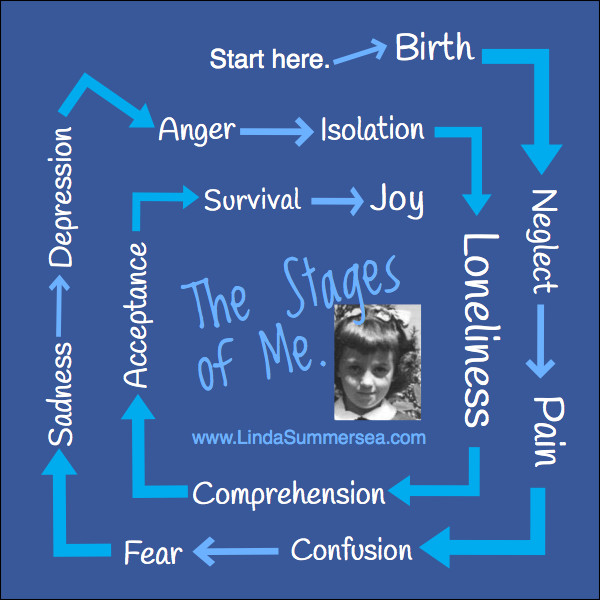
It made me sad when I realized that my home life was so different. I returned to my depressed state. When puberty kicked in, so did my anger. I was rebellious and noisy in my frustration at home.

We were still isolated, so I was still lonely. Even in high school when I got my driver’s license and was able to drive to a school basketball game with my sister, I was still too shy to develop any long-lasting friendships. Finally I comprehended the fact that nothing would ever change  and I silently accepted my fate. Like most of the other children in situations like mine, I survived. I grew up and I even found some semblance of joy.


When I was 64- sixty-four!-  I learned that my mother not only took piano lessons, but that she loved playing piano, and her two sisters also took piano lessons. This bit of information slipped out as Mother was free-falling through the decades in her dementia-affected memories. She didn’t even notice when I frowned as she described how they would gather along the keyboard, three little sisters playing piano together.

stagesofME

Mother’s Day is a Bitch

Every single year, since I was old enough to feel the pressure to celebrate it, it’s been the same old thing.

Mother’s Day is a Bitch.

I can’t ignore it. The pop-up ads from the national florists tell me to Shop Now, Save 25% for Mother’s Day. The television ads for I don’t know what… I try to tune them out. The subliminal and blatant messages everywhere in the two weeks prior. Perfume, gardening gloves, hats, massage appointments, scented soaps, chocolate, cheese boards and Etsy earrings.

My mother isn’t a sophisticated, scented, hat-wearing, high-heeled, groomed and gracious example of the archetype.

I go to the card shop and stand in front of the rack. While others come and go, selecting their fourth or fifth choice, I have to open every damned card.

No. My mother has not “taught me everything I know.”

No. My mother has not “always been there for me.” There? Where?

No. My mother never “gave me wings.” She did push me out of the nest.

No. My mother was not “right about everything.” Was she right about anything?

No. My mother did not “always make it look easy.”

No. My mother did not “give me wonderful memories.” She gave me nightmares.

No. My mother did not “make life great for me.”

No. My mother did not “encourage me,” “praise me,” or “cheer me on.” None of the above.

I can’t choose a blank inside card. Then I might say what I’m thinking.

I found one card that came close in a warped kind of way. It said:

Front of card: “None of your kids are in prison.”

Inside of card: “That’s a motherhood blue ribbon right there.”

Hmmph. They were trying to be cute and humorous, but it’s a wonder that I’m not in prison with the rest of the Orange/New/Black inmates. It’s an absolute bleepin miracle that I didn’t end up promiscuous and drug-addicted in my quest for your love. But there are worse things than promiscuous and drug-addicted.

If I were a Hallmark card designer I would say:

“Mom, I hope you have the kind of day that you deserve.”

Yeah, that’s it.

Mother's Day

The First Time I Got Paid for Doing It

The First Time I Got Paid for Doing It… for Writing, of course.

The United Church of Christ on Main Street had a hall where Ballroom Dancing & Etiquette Classes were held for eighth graders. My mother refused to let me attend.

“That’s where girls get pregnant!” she said.
Every morning as my school bus passed the church, I pressed my nose to the window glass, wondering what on earth went on in there. Halfway through 11th grade, I finally did get to check out the inside of that building. It was under different circumstances, but I thought that I might finally solve the puzzle of the mysterious goings on.

In Junior English class, we received a single-page handout detailing the International Lions Club’s annual “World Peace” Essay Contest. What a notion. It was December 1966. The Vietnam War’s Operation Rolling Thunder had flown nearly a million sorties by then, with thousands of American men joining their fruitless efforts, bleeding and dying month after month. And here I was, sixteen years old and hardly even been out of town, contributing my five hundred naïve, optimistic words on achieving World Peace.

I gave it my best shot, between vacuuming, cooking dinner, changing my little brother’s diapers and watching American Bandstand with my homework in my lap on the living room sofa. (Mummy worked nights. She passed me the baby as I entered the front door after school and she hustled down the steps and away. No instructions and no looking back.)

A few weeks later, I learned I had won first prize at our local level. $100, to be awarded at the monthly meeting of the Lions Club.

The night of the meeting was intensely cold. It was also a school night. I finished my homework and got dressed in my sister’s pumpkin-colored, heather wool Bobbie Brooks sweater with its matching skirt. The skirt was a little big in the waist so I folded it over a couple of times. It was only a little creased across the thighs. I didn’t have time to iron it. I brushed my hair and asked my mother if I looked OK. Of course I looked OK.

My parents didn’t accompany me. No one looked up as I closed the front door behind me. Maybe Andy Williams had a TV special. I drove myself to the United Church of Christ with my faithful companion, Overwhelming Fear.

The Town Hall clock was striking seven as I carefully parked my father’s Ford at the corner of Church and Main, under the glow of the streetlight closest to the church hall. All the stores were closed. Lights were out and doors were darkened. Park benches across the street were empty. The shutting of my car door echoed the melancholy stillness. The sky was so inky black that night that even the tiniest, most remote dots of starlight watched me from afar.
Ice and snow crunched under my boots as I climbed over the crusty pile of dirty snow between the street and the sidewalk and carefully ascended the frosty brick steps to the double door entryway. The stairs had been recently cleared and a snow shovel stood guard at one side. My ragged breath came out in little puffs of steam. I think I can, I think I can.

I approached the doors and gently pressed the thumb-piece of an elegant brass door handle with my gloved hand. The door swung open on bright hinges, inviting me inside. The hallway was dark, but a slant of light on the carpet showed me the way. I glanced into the room to see what awaited me; then I hung my shoulder bag and my Sunday coat on a coat rack, stuffing my gloves in one pocket, my knit hat into the other. I pushed my hair up off the back of my neck and fluffed it up a little.

Insanely self-conscious, I was steps away from entering a fluorescent-lit room populated only by a sea of men in business suits. The Mrs. Cleavers must have been at home washing the dinner dishes in their high heels. Even the second prize contest winner was a male, a Senior, and he was there in a sports jacket with his flannel-shirted father.

I literally quaked.
Somehow, I made my way to the front where I was directed to a cold, metal folding chair on the dais, facing all of these men. A vast ocean of suits and ties and freshly barbered hair. Not a word was spoken. All eyes were to the fore.

As soon as I sat down, I panicked that maybe they could see up my skirt, even though my legs were tucked modestly to one side. I was also quite cold—and lonely—in that unwelcome way that metal, folding chairs make you feel.
Without warning, a tiny spot on my left cheek, about an inch to the left of my nose, began to twitch involuntarily. My cheek kept twitching and twitching. What was wrong with me? I felt my armpits drench and my face flush as a wave of heat spread over my body. Did anyone notice? The realization dawned on me that this might be what a “nervous tic” was. Maybe. Or maybe I was having a heart attack. My father had had a heart attack.

The twitching continued. I suffered through the reading of the previous month’s minutes while the white-faced clock, high on the back wall ticked patiently.

Finally, it was time for the awards. I sat there on the cold, metal folding chair while the winner of the second prize received his award and rejoined his Dad. Then it was my turn. I can’t remember if they read my essay aloud. I stood up, approached the podium with tentative steps, and accepted a white #10 envelope.
“Thank you”, I said weakly. I can really only remember the fluorescent ceiling lights and the suits. And the smell of Old Spice.

My return trip to the entryway is unclear. I retrieved my coat and buttoned it on, digging for my car keys while tucking the envelope into my shoulder bag. The twitching stopped. I retraced my steps into the night. Inside the car again, I started the engine, put the heat on high and waited for the windows to defrost. I pulled out the envelope and untucked the flap. Drawing out the check, I held it forward, tilting it towards the lamplight to read my name neatly typed in Courier font after Pay to the Order of.

To Remember and Forget… and Forgive?

I’ll always remember. I’ll never forget.

I have truly tried to forgive, and I think I’m almost there, but it’s not easy.

Sometimes a storm swirls inside of me, causing me to regress to the terrified child.

Then- just as suddenly- I return to shaping the phrases and selecting the words,

and I remember that

A meaningful journey occasionally has storm clouds on the horizon. Linda Summersea

LindaSummerseaisBorn


Surviving Kindergarten

I found myself in a sea of similar sized individuals, in my assigned seat with my assigned school supplies. One fat #2 pencil. Dark blue, not yellow. One black and white patterned composition book. One large pink eraser that didn’t really deserve its name- it constantly called attention to my mistakes by carving blisters in my worksheets.

My favorite were Crayola jumbo no-roll crayons that quivered with their scent of waxy color. Opening the box reflexively triggered a deep inhalation of creativity, and I dropped my chin to the tabletop, the better to partake.

I loved it when the crayons were still sharp and pointy. Alas, my overzealous coloring style flattened them in no time and I rued the day when I had to peel off the label, marking the beginning of the long slog to the end of the school year.

Initially, I wasn’t comfortable with the concept of this group learning experience under the direction of these pale-skinned creatures outfitted in strange black and white garments tied with ropes and crosses and topped with matching headgear. “Wimples”. They wore wimples.

The Kindergarten wimple-wearer turned out to be quite nice, a welcome change from my alternative at home. Once I settled in, I found that I thrived in this environment. My little brain had its billions of neurons firing rapidly, lightning bolts of joyful learning exploding and illuminating all day long.

Of course I never spoke aloud, except for the time when we were asked to state our desired choice of occupation. It was multiple choice. We girls were told that we could be a nun, teacher, nurse or mother (in that order). I chose “teacher.” (I don’t remember what the boys’ options were, but how much do you want to bet that “businessman” was one of the choices?)

Our gigantic kindergarten class of eighty+ students was well documented in a group photo taken at mid-year. In the photo, I’m wearing my favorite green dress with the white cuffs, and staring solemnly up at the cameraman who was positioned high above our group on a stepladder. He wore a suit, tie and fedora while aiming a shiny silver Clark Kent flash camera at us.

The cuffs of my sleeves are folded down, nearly reaching my elbows. This was something I did when I took my place at my seat. First the left, then the right, I set the scene for my favorite fantasy.

I fantasized about the metamorphosis of Cinderella- the “girl of cinders”.
Folding them down instantly transformed me from ordinary Kindergartener to magic-slippered Princess awaiting my Prince. It was my magic Princess dress. Bibbitty-bobbitty-boo!

surviving kindergarten

Sankofa: Go Back and Fetch It

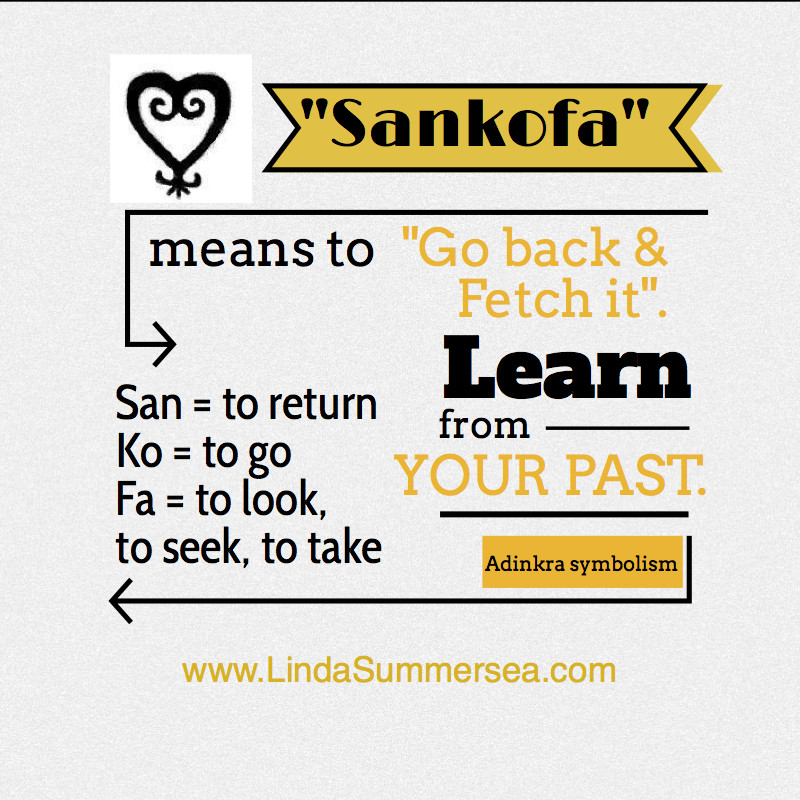
AdinkraSankofaNot too many years ago, when I was teaching Adinkra symbolism to children in the Arkansas Delta, there was a symbol that caught my attention with its graceful design, and caught my heart with its meaning. The symbol was “Sankofa”, a stylized heart with a curvy inside and base. It became my mantra and my life symbol.

The word “Sankofa” in the Adinkra language means “Go back and fetch it”. It emphasizes the necessity of learning from the past before one can move forward.

“Sankofa” means that we must go back and reclaim our past. Take ownership of it. Review what took place and try to come to terms with our role in the past- whether as victim or oppressor. Only then can we understand why and how we came to be who we are today.

Sankofa is particularly relevant to the emotional work that must be carried out by those like myself, who have written a memoir with less than pretty details.

There’s much to be scrutinized and evaluated- and then, either tossed or taken. When you keep Sankofa in mind, hopefully, like me, you can find enough positive growth in the hardships to enable forgiveness for the harms done to you.

Your past is not my past and my past is not yours- but our history does not have to be similar to be shared. We need only to be able to have empathy for another’s experiences, and realize that the past will always influence our future.

Go back and look, seek, and take. Take away the Truth and carry it to the Present. Learn, so that you don’t make the same mistakes. Learn, so that you can duplicate the positives. Love and prosper.

sankofaSummmersea