Posts

Happy Christmas to all, and to all a good night!

I haven’t posted in a while because here on the home front, beyond politics and Covid-19, I’ve been riding the roller coaster of Life. I’ve been hanging tight… It wouldn’t be Life if we didn’t have a few lessons to learn, right?

I wish all of you a wonderful holiday season and a happy new year 2021! And without further ado, here’s a happy memory from Christmas week, 1966.

“I was sixteen. I was driving myself to Denholm’s Department Store in a city twenty miles away on a school night. I must have told Mum and Dad what I was up to because I had to ask permission to borrow the car.

As proof of my emotional immaturity—and my hesitation to leave childhood behind—I was on my way to fulfill a childhood fantasy. I had always wanted to have my picture taken with Santa Claus.

On the second floor of the store, I saw Santa sitting on a golden throne in the Toy Department. His throne, hung with fragrant evergreen swags and a string of twinkling white lights, was the centerpiece of a green-carpeted platform placed three shallow steps above the rest of us. I joined the line of small children and their mothers, and they paid no attention to me. Well, maybe they did.

I was wearing an A-line, mint green, silk shantung dress. It was the prettiest dress I have ever owned in my life—bar none. I even felt pretty in that dress.

I was a little nervous and somewhat intimidated. I had my coat unbuttoned, ready to shed it quickly as I got closer to Santa.

When it was my turn, I handed my coat to an elf. I tiptoed up the steps to Santa and sat on the edge of his lap, just barely touching his red velvet thigh. I told him I didn’t want anything for Christmas except the photo, and I directed one of my rare smiles towards the elf with the camera. Santa didn’t say too much. Maybe he ho-ho-hoed. After the camera flash, I stepped down from the Santa throne and a few minutes later, my Polaroid was ready and Santa’s elf handed it to me in a Merry Christmas photo card.

I liked it. I did. There I was—carefully seated with Santa in my pretty green dress. My long brown hair looked just right. It was perfect. Even in my self-conscious state, I couldn’t find anything wrong with it. I stared at the photo as I rode down the escalator and floated out the door to where it was snowing lightly, just a scattering of fluffy flakes under the street lights to dust this fairy tale evening with Christmas magic.

I drove home on auto-pilot, parked the car in the driveway and before anyone had time to question me, I hung my coat in the hall closet and made my way upstairs to bed. I never shared that experience with anyone before now. Maybe I’ve always been a little embarrassed at being so lonely and emotionally withdrawn, but having my photograph taken with Santa Claus at age sixteen had given me Joy. I’m glad that I was brave enough to realize that it’s never too late to make something right.”

Summersea, Linda. The Girl with the Black and Blue Doll.

Linda 2.0

Today is my anniversary.
It was precisely one year ago today that an IV drip began to dose me with the anesthesia that would propel me into a seven-hour surgery. A team composed of two oncology surgeons, an anesthesiologist, and ER nurses worked together to eradicate my breast cancer and put me back together again.

I used to be deathly afraid of anesthesia. It was because of a bad reaction to sodium pentathol decades ago. I was having a couple of teeth removed prior to orthodontic braces. As soon as the anesthesia was administered, I spiraled into a seemingly never-ending nightmare and awakened crying and screaming.

Thirty years passed before my second surgery—for a minor procedure about ten years ago—but that first event at the orthodontist’s office was in the back of my mind.

On the gurney, ready to roll to the ER, my fears were intensifying. Tears began sliding uncontrollably down my cheeks as the nurse pushed the gurney through the corridor.

She brought the gurney to a stop.

“Why are you crying?” said the nurse. “Are you in pain?”

I shook my head “no”.

“Are you afraid?”

I nodded “yes”.

“Oh, honey, you’re going to be just fine,” she said. “Listen, this is what you’re going to do. When the IV drip begins, I want you to think of your happy place, the place that makes you feel the most happy and secure.”

Her instructions were like a much-needed hug. At the appointed time, I went to that happy place, glanced up at the IV, saw the fluid moving and the next thing I knew, I was in a recovery room with no ill effects.

Last January—the surgery for the big one—there were extensive discussions with my surgeons and anesthesiologist 24 hours before the big day. They explained everything I would experience, step-by-step, and answered all my questions. Then the surgeons drew circles, arrows, and dotted lines on my torso with a black Sharpie, along with cryptic notes-to-self. I still regret that I didn’t take a selfie!

This time I was totally prepared and relaxed.

I woke up fresh as a daisy.

I guess what I’m trying to say is that preparation can make even the biggest challenges easier. Recovery wasn’t a walk in the park, but one deals with it.

cancer

As a child, I had no support system. I navigated too many terrifying situations alone, and yet, those lonely times created a resilience that continues to serve me today. I can’t think of anything that I’m afraid of.

To be clear, I understand the difference between Fear and Danger. Fear is imaginary—the monster under the bed. Danger is real—walking alone in the bad part of a city at 1 AM.

I know what constitutes Danger and do my best to avoid it. Fear is something I can control.

Today I’m all healed.

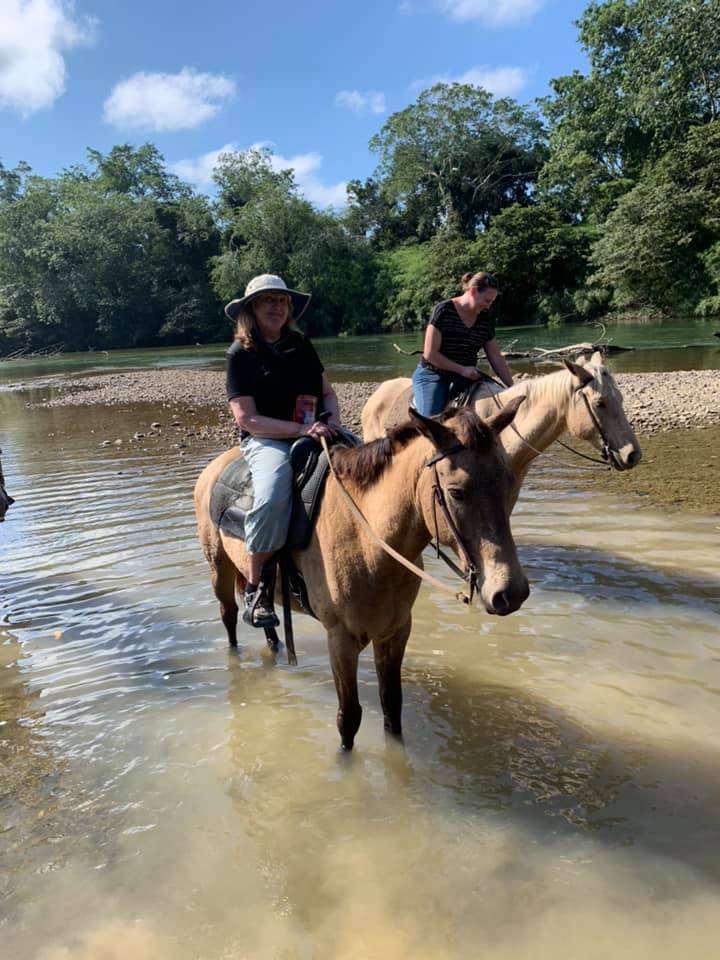
I’m Linda 2.0, the new, improved version of myself—back on the trail, back in the saddle.

I’m in my happy place.

UPDATE, 4 days after writing this post. Back in the saddle!
Linda Summersea riding Rising Star. Banana Bank Horses, Belmopan, Belize. #BananaBank

On the Steamship Finland

“Babci! Can I have a cup of tea?” I skipped into the kitchen and plopped into a chair at the kitchen window. From upstairs, I had watched Dziadzia heading across the lawn to the barn where he would milk the cows.
“Yah,” said Babci. She opened the upper cupboard for tea cups and tea bags, then pulled a teaspoon from the drawer below.


Babci’s kitchen continued to be a good place for a lonely girl to get away to. She and I spent many quiet afternoons in mostly companionable silence. We always drank tea. Lipton or Salada. No sugar or milk. If we were having tea alone with no bread or pie, we sat near the kitchen window with a low oak cabinet between us. The cabinet stood in front of the west window where a sill full of potted red geraniums bloomed plentifully all year ‘round. Their strong herbal fragrance lifted into the air when Babci pinched off a dried blossom or plucked a withered yellow leaf. Even today, years and years later, I always have geraniums in my planters, and I always remember Babci as I remove the spent blossoms.


It was during one of those tea-infused afternoons that I learned Babci had been only seventeen-years-old when she set out for Antwerp and across the ocean beyond on her way to America. I don’t remember how the subject came up, but soon Babci was blurting out the whole story of her travel on the steamship Finland.


She was standing alone on a train platform somewhere in western Russia in 1911, six years before the Russian Revolution. Her family lived in Kolno, in rural eastern Poland which was part of Russia at that time, and she managed to find a ride in a carriage that would pass by the station.
The moonlight sparkled on the crust of the deep frozen snow. Young Róża drew her cheap coat closer against the bitter cold and stamped her feet to warm them.
When the train arrived at the station, Róża boarded and handed her ticket to the conductor. It departed soon after with her trunk in the baggage car, and its shrill whistle merged with the howling of the wind and wolves in the forest. Some of the travelers, those bound for fancy destinations in Western Europe and the Christmas holidays, were elated to be on their way. Others, like Róża, may have shed a few tears for her Mama and Ojciec left behind.
She layered her hand knit shawl over her coat and pulled it tighter. Being peasant Polish, she couldn’t afford a stylish pheasant-feathered hat like those she had seen entering the First Class compartments. More likely, she wore a babushka tied beneath her chin, like the one she wore almost every day of the rest of her life.


Arriving at Antwerp the next day, Róża’s trunk was transferred to the waterfront. She carefully removed some money from a pocket hidden in her petticoat and bought a Steerage Class ticket to New York at the Red Star Lines’ ticket window.
The dock was a beehive of activity. The ships of the Red Star Line were always full occupancy with travel between eastern Europe and the United States. Many of them were Jews until the threat of the Nazis stopped their exodus.
Wagons were being unloaded left and right. Róza walked the gangplank onto the ship Finland with the other young people, first watching to be sure that her trunk was stacked on the baggage wagon and hauled on board. She knew to be careful. Everything she owned was in that trunk. Her clothing, her Sunday church shoes, her featherbed, and even—a basket woven of willow that sits on a shelf in my kitchen today—right beneath my cookbooks. Róża fingered the rosary in the pocket of her coat, one bead at a time, her lips moving silently with her prayers. She found her way below deck to the Steerage Class bunks. Soon the ship was underway.


Babci told me that the trip at sea was scary. Girls in the nearby bunks whimpered and moaned, crying and vomiting with seasickness. The food served below was “nie dobzre”—“no good”—she said, but she had to eat in order to be strong for the medical examination upon arrival in the United States. She stood in line with her tin plate to receive a grey meal consisting of a chunk of bread and a scoop of watery stew ladled from a big pot. The smells of seasickness and the boiling meat blended together, so, like the others, Babci mostly stayed in her bunk with her queasy stomach.
She shared that when she first made her way through the ship’s windowless hold to her assigned bunk, she saw people with dark black skin nearby. The lady in the next bunk told her they were devils.
“Devils.” Babci repeated the word. “Devils!”
She laughed self-consciously when she told me this. It was the slightly embarrassed character of Babci’s laugh that communicated to me—a ten-year-old who had only seen black people on television—that she might have actually believed it at the time.
We shook our heads at such a silly thought. Who would believe such a thing?


As the Finland steamed westward, Róża preferred to keep to herself. Christmas came and went. She told herself her Christmas gift would be stepping ashore at Ellis Island. And so it was, although it took some time. The steerage passengers were transported on unheated barges, and by the time they got to the Great Hall, her hands were cold and her nose, dripping. There were examinations and interrogations.
“Where are you going? Where are you from? What is your occupation? Who is meeting you? Do you have a job to go to? How old are you?” and more. Those were the questions that were asked as she stood before the official in Immigration. The answers were scribed in a ledger and Róża was officially permitted entry into the United States of America.


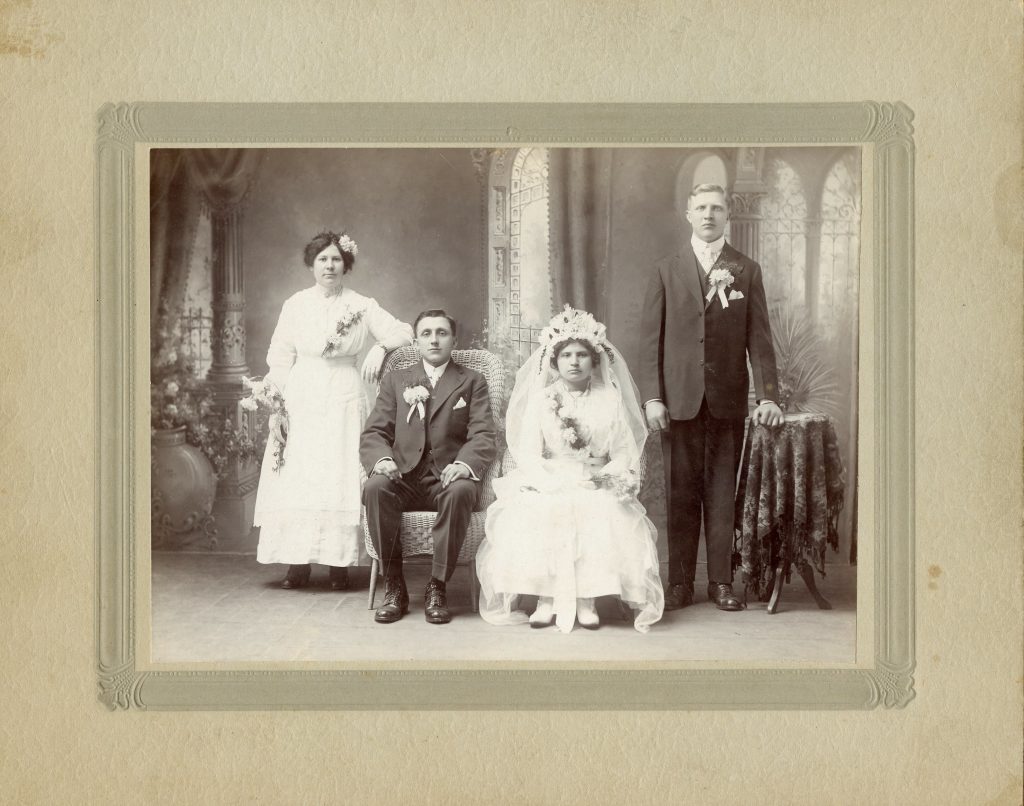
Babci and Dziadzia, Uncle Heromin and the unidentified Maid of Honor

The Piano

During my childhood, I was allowed to visit a classmate after school precisely two times. Two different classmates. Two different years. Two different reasons why I was never allowed to go there again.

In 4th grade, I received an invitation from a classmate named Judy. She had been my kindergarten comrade and confidant, and we stuck together for a few more years. Judy was acceptable to Mummy and Daddy because she was an honor student like I was, and so they approved my request to visit Judy’s home  one day after school.

Judy’s mother was a real estate agent who dressed like Beaver Cleaver’s mother except with a briefcase. She picked us up at school in her shiny new 1959 Ford Fairlane station wagon with the wood trim on the sides. When we arrived at their home, Judy and I went in through the kitchen, hung our jackets on the coat tree in the hall, and proceeded to the dining room. Judy’s live-in grandmother had placed two servings of milk and homemade oatmeal cookies along with paper napkins. We didn’t use napkins at our house. The cookies were even placed on china plates!

As I politely nibbled my cookies, I saw through the dining room picture window that a lake was close by with a shady patch of woods between the house and the waterfront. Judy’s house had lots of windows— it was a big house—and I remember the golden autumn leaves falling from the trees that lined the slope, and twirling into the dark water near the shore.

After the cookies, we did our homework. When we were finished, Judy said, “Let’s go in the living room.”

I followed shyly, a couple feet behind her.

Judy’s living room stretched from here to there with islands of thick oriental carpets laid upon the wall-to-wall carpeting and it’s centerpiece was a piano that stood across the room. It was a well-waxed baby grand piano. I had never seen a baby grand piano. (I had seen Liberace play a larger one with a candelabra on The Ed Sullivan Show while my father snorted at Liberace’s costumes.)

I drifted onto a carpet and marveled as my feet sunk into the pile. Judy’s grandmother was settled on a sofa with a cup of tea in her lap.

Judy approached the piano with me close behind.

When her grandmother nodded, Judy pulled out the piano bench and sat down to play. I stood by as she lifted the cover off the keyboard, and I watched her fingers dancing lightly over the keys. She effortlessly played some simple songs that I immediately wanted to learn. I went home that night talking excitedly about piano lessons, but Mummy shook her head back and forth. She said “No. Definitely, not.”

“You just want to play piano because Judy does,” Mummy said. “I don’t want to hear another word about it. And don’t you mention it to your father.”

If I had said I wanted to play the accordion like my cousin Marilyn, that might have been different. If I said I wanted to play polkas on the accordion and march in the Fourth of July parade wearing a traditional white Polish dress with a black velvet vest embroidered with flowers, and a ring of flowers and velvet ribbons in my hair—they might not have been suspicious of that. But I didn’t want to play the accordion.

I only wanted to play the piano.

They wouldn’t have to worry about driving me to any parades because I was pretty sure you couldn’t haul a piano to a parade. And they wouldn’t have to buy me any fancy costumes.

I only wanted to play the piano.

But, no. I was defeated as swiftly as a hammer blow, and furthermore, I was never allowed to visit Judy’s house again, lest I get any more bright ideas about piano playing.


Fifty-five years later—fifty-five years!—I was sitting in my mother’s living room with my mother and my brother Dicky aka Dick. Of course, by then he was no longer known as “Dicky” to anyone except Mummy. She’ll always call him “Dicky”, even if he’s eighty years old. My mother was sitting absentmindedly in her chair near the fireplace. Dick was telling me about how he hoped to learn to play the piano during his approaching retirement years.

I shared with him the story of the piano at Judy’s—while noting my mother’s rejection in a quiet aside from behind my cupped hand—and I sighed as I admitted that I also had always wanted to play the piano.

Suddenly, my mother awakened from one of her more frequent lapses into dementia and began to speak from across the room.

“My sisters and I loved to play the piano,” Mummy said.

“The three of us would play side by side at the same time. It was so much fun! I sure did love playing the piano!”

Dick and I just looked at each other. There was nothing left to say.


Lest this end on a wrong note (groan), let me share the John Smith & Partners Christmas Ad 2018 that brought back this memory and inspired this evening’s blog post. (John Smith & Partners are a high-end UK department store.) Maybe you’ll get goosebumps, like I did.

I suggest that you view this Full Screen.

the pianoIf you’d like to read more now and then, I’d appreciate it if you’d Follow me on Facebook.

I’m in New England for a month, hiking and writing. Climbed Mount Sugarloaf in South Deerfield the other day—before the snow came. Now I’m hoping that there’s some snowmelt so I can climb The Cobbles on the Appalachian Trail in Dalton MA. Cheers! L.

Winter is Coming

The fog is thick this morning, surrounding us in a soft blanket of grey, creeping close and closer still, cloaking the shrubs, disguising the gardens. The fog horn has blown all night long at intervals as regular as breath. In and out, in and out, in and out. I sync my breathing, pull up the quilt again, and soon return to my dreams.

I always look forward to the horn in the night, as it predicts the following day will begin with cozy quiet.

A hike in the fog is a mystery walk. Who knows what’s around the next bend? It alerts the senses to each snap of a twig, each rustle of wings leaving the brush, each croaky caw of the raven high in the top of a fir.

Winter is coming.

winter is comingFog on water. Clean. Fresh as laundry on the line.

Fog will soon become rain.  Batten down the hatches.

Except, no need to batten down hatches or shutter the windows. No wind is on the horizon.

I’m reading Ahab’s Wife—which must be the source of my windy thoughts. A nautical read—especially of an earlier century—always makes me think of cobblestone streets and scrimshaw from Nantucket town to Lahaina. Like Ahab’s wife, I would have made a fine New England whaler’s wife, I think, watching from the rooftop walk if I couldn’t be at sea. If I couldn’t climb the rigging in search of a whale’s spouting, I’d be stitching a cross-stitch sampler and minding the gardens before minding the hearth fires that follow. I would have plenty of time to write.

Winter is coming.

Winter is a writer’s blank canvas, as white as the snow, as empty as a new journal page.

Music shifts from blues to classical. And lots of musing.

Winter is coming.

I hear a flock of geese going by. Right this minute. There’s an osprey still occupying the nest down the road, but not for long.

Winter is coming.

I doubt that I could live where there is no change of seasons.

How else would I receive reminders to begin again?

How else to embrace the changes that are inevitable?


winter is coming

Follow me on Facebook.

A Return to Morocco after 42 Years

In 1975 I was twenty-three years old and had never traveled beyond the borders of North America. Yet one day, I got it into my head that I wanted to tour Morocco. Long story short, a few months later my new husband and I were singing “Marrakesh Express” at the top of our lungs in a shiny blue Renault. We were traversing the mountains and deserts of Morocco on a journey that would take us through Casablanca, Rabat, Meknes, and Fes along the undulating ribbon of freshly paved highway that connected them all to the oasis of Marrakesh.

Fast forward. 2017. Intrepid Travel’s Walking With Berber Nomads trip appeared in my Facebook feed. Whoosh! Suddenly I could hear the muezzin’s call to prayer, smell the spices in the medina, and feel the breeze lifting my hair off the back of my neck on the Barbary Coast. I signed up the very next day.

Why Morocco? Why now?

Well, you never forget your first time, right? I had thought of Morocco periodically over the years, and now I wanted to see if Morocco in the digital age had managed to remain the kind, eager-to-please country I remembered so vividly.
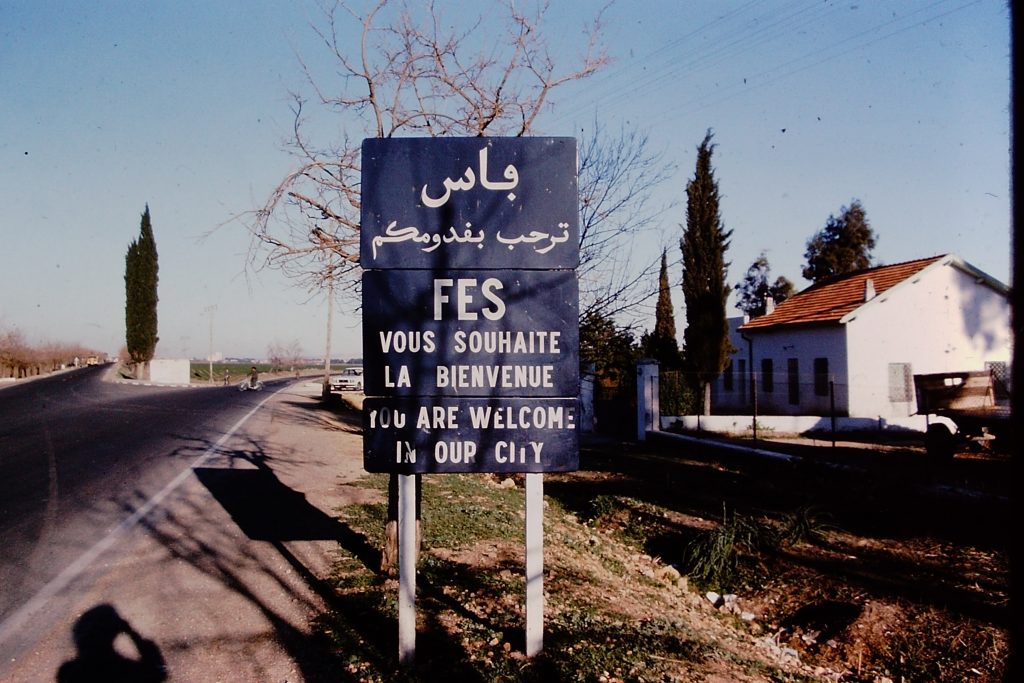
“You are Welcome in Our City”

This sign of hospitality on the outskirts of Fes remains my most enduring memory of 1975 Morocco.

See the young man on the motor scooter in the distance? He offered—undoubtedly in the employ of the hotel—to lead us to a reasonably priced guesthouse, petite dejuener included. We followed, and it was lovely. Tiled floors and a balcony overlooking the city, upstairs from a French bakery. Merci beaucoup. At the time, Arabic and French were the prevalent languages.

In those days before Trip Advisor, we traveled unencumbered by reviews. It may have been naive, but times were different.

We never met another traveler on that trip, and once we were outside the cities, we never saw another car. No wonder Jimi Hendrix was hiding out there! We did chat with some Peace Corps volunteers in Rabat whom we recognized as Americans by the Clarks Wallabies on their feet.

Early each day, with an Orangina in one hand and an open box of fresh croissants between us on the seat, I spread the road map on my lap as a napkin and off we went.

In contrast to the few lodgings in 1975, today there are now over a thousand hotels of all sizes—mostly in the cities—in a country the size of California. Frankly, other than these small differences, the countryside we experienced during our Walking With Berber Nomads trip remains very much the same beautiful, undeveloped landscape that I recall.

Morocco

Between Ouarzazate and the mountains

The twelve of us arrived from the US, Canada, UK, Germany and Australia to join Abdellah, our nomad guide, in Marrakesh. Most of the group were millennials, along with three 40ish, one 50ish, and me, the baby boomer senior citizen at 67.

Abdellah briefed us on our trip details before dinner. We were the very first participants—the guinea pigs as it were—so flexibility was going to be our motto. The next morning we set out on the same switchback roads I recalled. During the 7-hour drive from Marrakesh, we chatted, laughed, enjoyed the scenery, and bonded rather quickly with our shared love of traveling, hiking, and worldwide cultural experiences.

Soon we crossed the mineral-rich mountains of the Low Atlas and rolled off-road to the desolate location where we would join our Berber nomad family. It was springtime in Morocco. The nomads were ready to move their winter camp from the lowland desert to higher elevations for summer, and we would be hiking alongside, 9 to 15 km (6 to 10 miles) a day, an average of 4 to 5 hours a day on foot.

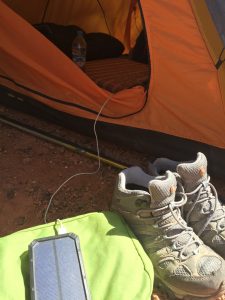
For three weeks prior, I had laid out my duffle contents on a coffee table back at home, adding and subtracting the vital and frivolous contents. Most valuable items: broken-in hiking boots with wool socks, wet wipes, hand sanitizer, trekking poles, solar charger, journal. We each were allowed a duffle bag (40 lb/ 18 kg max) and had purchased drinking water along the way. There would be no water available for bathing or showers.
Morocco

Meeting our Berber family

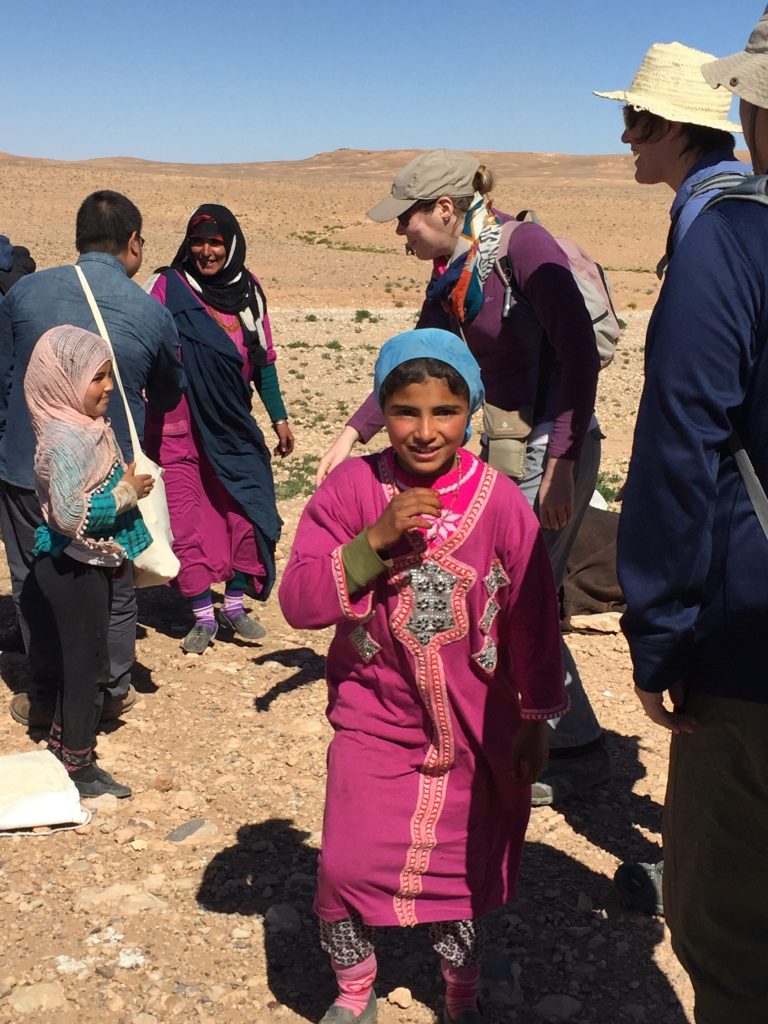
As we approached the Berber camp, our van drove ahead to drop off our gear, and we walked the final couple of miles to stretch our legs.

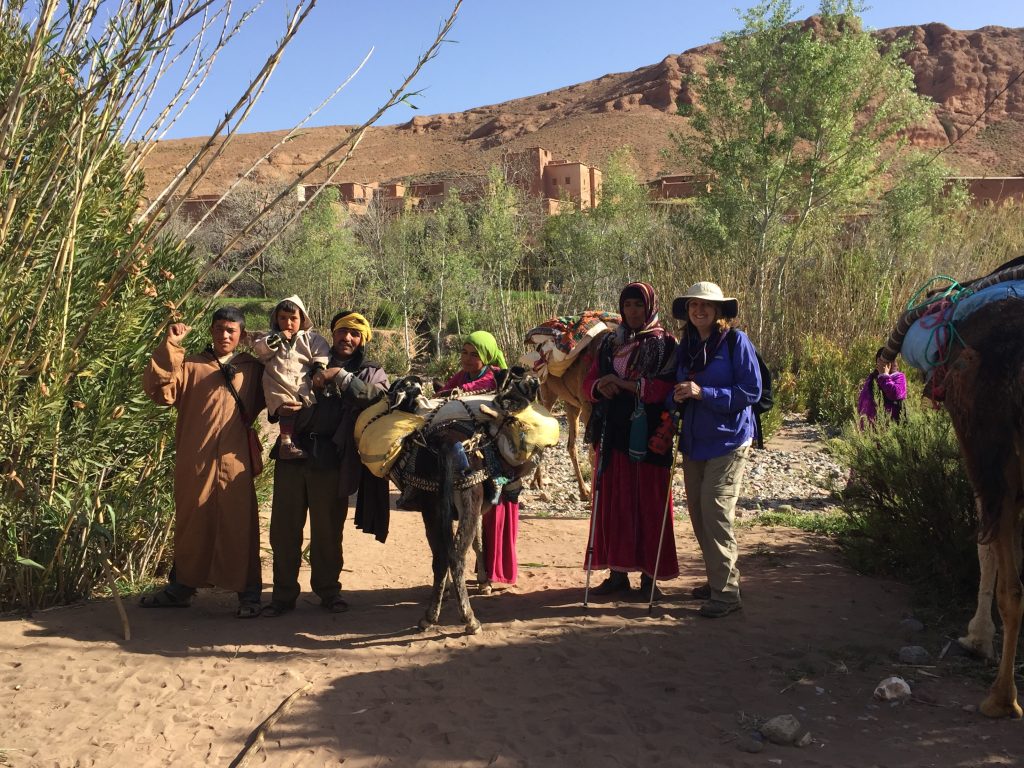
Our Berber nomad family was waiting for us across the plain at a location with smoke darkened caves that had been hand-carved into the banks by nomads hundreds of years ago.

A cook, as well as a contracted team of three men to transport our tents and gear on mules, rounded out our group.


MOrocco

Tucking in the Baby Goats

The animals consisted of 3 adult camels (1 of them very pregnant, and no—darn it—she didn’t give birth that week), 3 mules, 4 donkeys, 53 goats, 8 baby goats, 120 sheep, and 2 chickens. The baby goats tolerated being tucked into blanket pockets on the back of a donkey every morning with the two chickens decorating the top of the blanket pile like the bride and groom on a wedding cake.

Day temperatures averaged low 80s F./ 26 C., and dropped to 40s F./4.5 C. at night. Not too hot, not too cold. “Just right,” said the baby bear.

After dinner in the cave, we retired to our tents and fell asleep listening to the murmur of animals around us. I slept deeply in my silky long underwear with a change of clothes stuffed in the pillow shell of my sleeping bag.

Morocco

Sunrise Slowly Coming over the HIlls

At dawn, we were awakened by a symphony of cellphones with a back-up chorus of goats and sheep. I hustled into my clothes, laced up my boots and sprang from my tent to greet the day. Watching the low rays of the sun swim over each hill until we were all bathed in its rosy warmth never got old.

Morocco

Tents Pitched on the hill over the Caves

Breakfast: Mint tea, English breakfast tea, sweet Moroccan oranges, cheese, flatbread and jam.

While we ate breakfast, the crew took down the cook tent, packed up, and set out ahead of us. As Karen Blixen’s houseman Farah had longed to do in Out of Africa, the mule team went ahead of us and prepared for our arrival.

Each day had a similar routine, except for the days when they didn’t. Yes, pleasant surprises were frequent, but the common denominator was the same relaxed pattern.

Privy

  1. Rise and shine. Use privy, a hole dug in the ground with a canvas privacy stall around it.
  2. Pack up, take down tent, refill our water bottles.
  3. Eat breakfast.
  4. Hike for a couple of hours, enjoy a 15-minute break with a snack of tangerines, nuts and some bite-size cookies/biscuits like American animal crackers. Maybe some chocolate.

    Morocco

    Break for Tea in a Dry Riverbed

  5. Continue hiking to the night’s campsite.
  6. Enjoy the lunch that awaited us in a cave lined with rugs and our sleeping mats.
  7. Rest for the afternoon in our

    Solar Charging my iPhone

    tents or communally in a cave, write in our journals, or explore.

  8. Meet for dinner in a cave around an oil lantern. Share stories and comradery.
  9. Before or after dinner join the nomads in their singing, dancing and drumming.
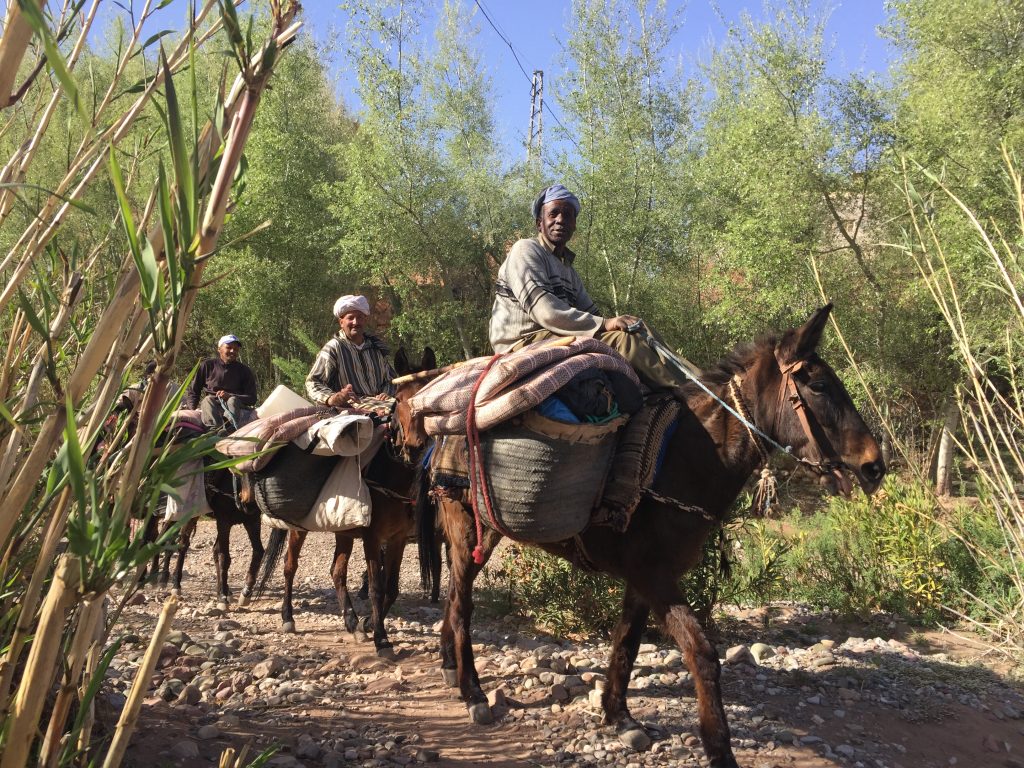
 

Mule Team Transporting our Gear
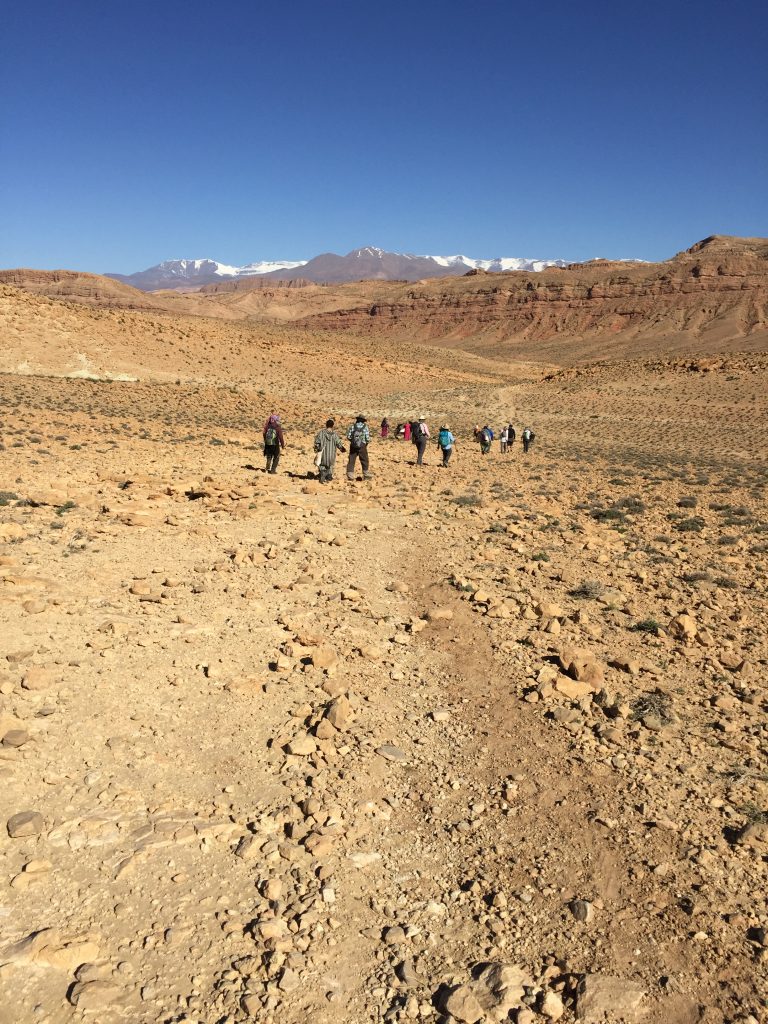
 

Day Two. The High Atlas before us. Seven hours. Crossing two valleys, countless ridges and a dry riverbed.
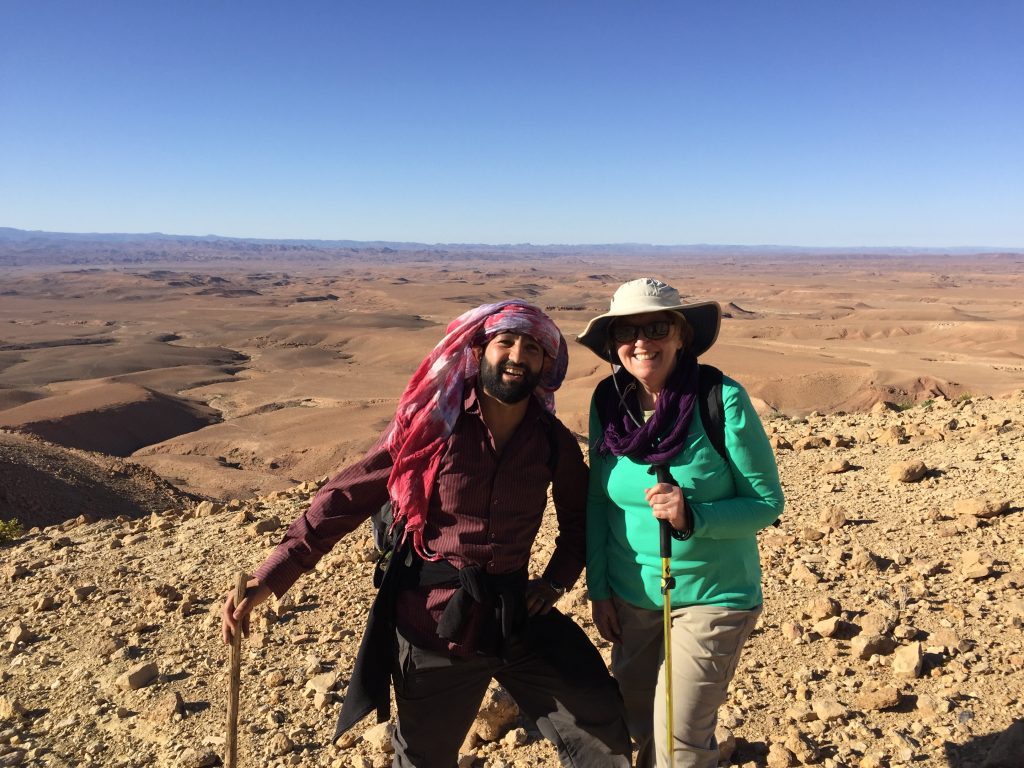
Abdellah and Linda Summersea pause at the first 1000′ climb in elevation. Low Atlas behind us, High Atlas ahead of us.

Our guide Abdellah with a member of the nomad team.

What did We Talk About on the Trail?

Everything except politics. Exclamation Point.

When you’re traveling with strangers, you don’t have the same reservations about being judged, so you tend be more frank. In the group, we rarely, I think, spoke about ourselves. This was about cultural immersion and we wanted to learn as much as we could about the nomadic lifestyle. For myself, I found that the conversations I had were about comparing travel destinations, discussing religious philosophy, and asking Abdellah questions about everything under the Moroccan sun: halal vs. non-halal, education, solar energy in Morocco, and more. Abdellah frequently addressed us on topics related to our passage: farming, crops, exports, irrigation, the structure of village politics, cemeteries and burial customs—anything we saw that caught our interest. Other times, we walked along alone with our thoughts, the rhythm of our footsteps the only sound.

After many miles, a village.

The nomads follow the old caravan routes, so our trek eventually brought us to some of the original 1000-year-old kasbahs (walled towns) in the mountains. The family herded the animals around their perimeter, while we passed through two villages. We saw the architecture and gardens up close, and stopped for tea at a B&B.

Approaching the Village
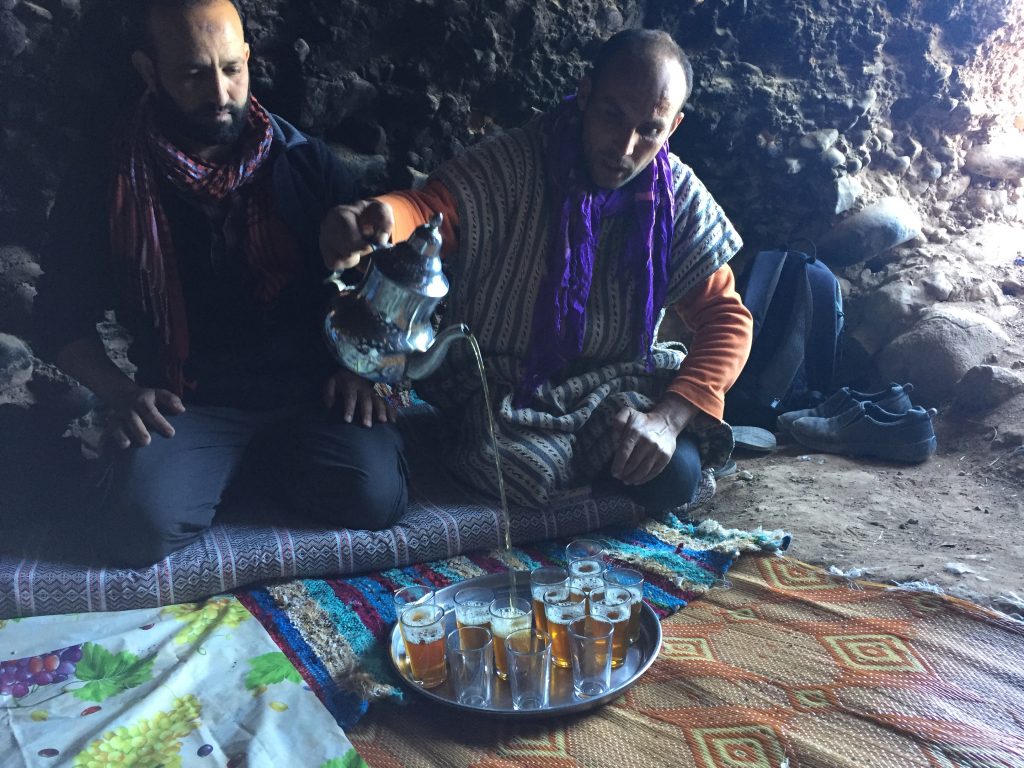
As in Moroccan households, in camp, fresh mint tea was a ritual at every meal. The silver teapot is held high while pouring into the traditional glasses with lots of Moroccan lump sugar.

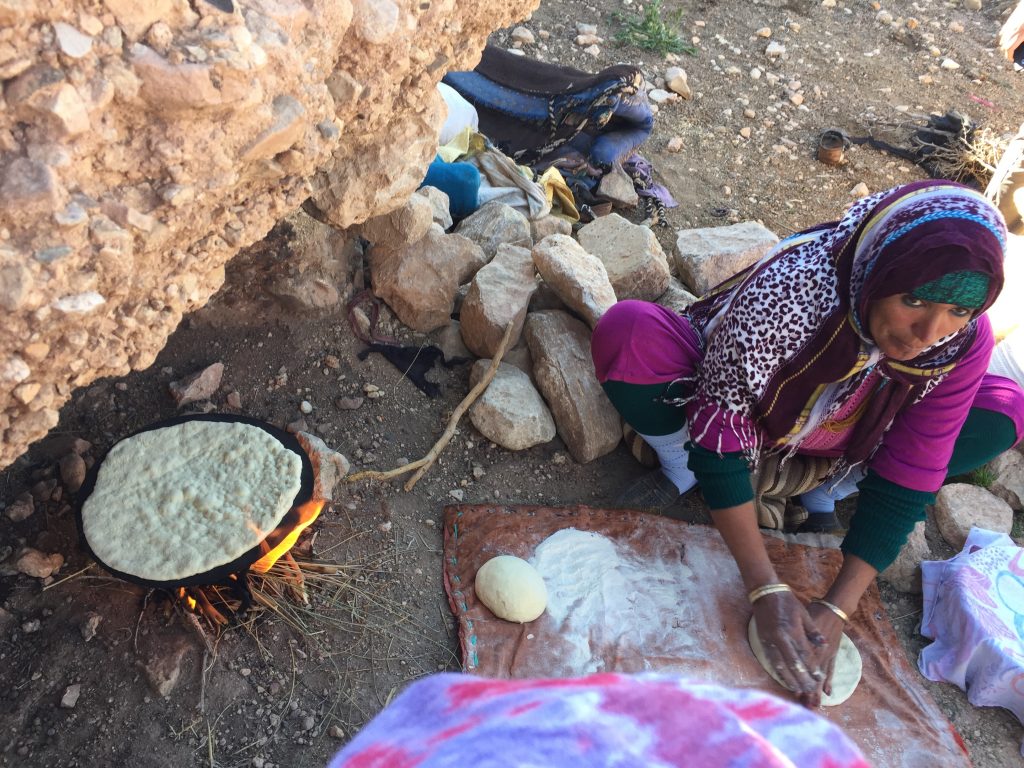
Fatima shared her daily tasks, teaching us a variety of skills from flatbread baking over the fire to goat milking at dawn. She even applied kohl to the eyes of our women and organized a mock wedding with the “bride” selected from our group and the cook serving as “groom”. The wedding took place on our final night in camp, a celebration that coincided with reaching the nomads’ summer location. There was a bridal procession with singing and dancing, and even “parents” of the bride and groom to demonstrate the details of a typical Berber nomad wedding.
Morocco

Fatima with Flatbread

Morocco

Linda Summersea with our Berber Nomad Family

That night was our final night in camp. The following morning we expressed our heartfelt thanks to the family for being such kind hosts and so generous in sharing their culture with us.

We passed along items from our gear that we thought they might be able to use. I contributed my trusty roll of duct tape.

After many hugs and shukran’s (thank you’s), we reluctantly lifted our backpacks for our last hike as a group.

Just before rounding a bend in the trail, I turned back for one last look at the scene of camp activity in the distance. Generations of nomads have repeated this tradition annually in the deserts and mountains of Morocco, but for how much longer, I wondered.

Ahead of us, our van was waiting, ready to return us to the bustling streets of Marrakesh—and our first showers in a week.

After we split up at the hotel, I spent a couple extra days unwinding in the city, eating ice cream, getting a hammam (traditional scrub-down, bath and massage), and exploring the Djemma el Fna Square to see how the cobra charmers were doing.

But that’s a story for another day.

#RockTheCasbah


MoroccoFollow my adventures on Facebook.