Make Beautiful Music

Last night I dreamed that I was getting married. My female relatives, young and old, were gathered all around me. It was a consummate summer scene in a fragrant apple orchard with vivid green grass and brilliant blue sky.

Instead of a frothy veil, I wore a simple crown of daisies in my hair. This crown was just like the one I had braided in my kitchen from a bouquet of Stop & Shop daisies shortly before I was married nearly forty-three years ago. This time there was no groom to be seen.

I innately knew that this marriage was mine alone.

I watched my sister approach carrying a banjo, in spite of the fact that she has never played a musical instrument.

She handed the banjo to me, in spite of the fact that I also have never played a musical instrument.

I sat down with this instrument in the midst of the wedding guests and looked down at the fretboard that crossed my lap. It was a light-colored wood that made me think of birch forests. Or maybe aspen.make beautiful music

I tentatively strummed across its taut nylon strings with my thumb, and was surprised to hear amazing music, so I continued to play. I played as if I knew what I were doing and the music kept coming, clear and beautiful.

The relatives moved in closer, surprised at my sudden talent.

And then it was gone.


I think that my dream means that sometimes we underestimate our abilities and our capacity for creating our own joy.

The banjo is a less respected instrument than guitars and violins and cellos, but it’s capable of beautiful music. Just because we’re different doesn’t mean that we can’t be beautiful.

This year, embrace your uniqueness and your dreams of the future. Don’t depend on anyone else to get you there or you may find yourself disappointed.

You and your path, like the banjo, might be uncommon, but they’re no Linda Summersealess deserving of success. You can get there on your own. I know you can.

Happy New Year.


make beautiful music

Follow me on Facebook.

Write from Passion. Write from Pain.

When I began writing my memoir, it was a bonfire burning brightly, my fingertips hot on a keyboard that had never revealed my thoughts or memories. To anyone. I looked down upon my small-child-self from a bird’s eye view, flying low, watching the small child whose introversion was created by responsibilities and fear.

The small child ran and ran, never getting away, and the story ignited.

It burned tall as the trees, like the annual winter brush-burning that took place in our woodlot. We pulled scorched potatoes and sweet corn in twists of aluminum foil from the ashes and ate them greedily while setting fire to yet another pile of scrub.

The writing has been like that. I have grasped the fiery memories, explored the value of what stays and what goes. Yet even after several front to back revisions, and a chronologically accurate piece, I still didn’t feel comfortable that it was done. Whole. Meaningful.

It was accurate in a literal sense, but the pulse beneath the outward story was lacking.

I kept looking for guidance and have finally found it in the opportunity to study my work and the work of seven other writers meeting weekly since August.


I began what I’m now thinking of as a “Misfit’s Holiday”, taking the train down to Portland on Tuesdays and returning on Wednesdays after a manuscript class with Lidia Yuknavitch and a sound night’s sleep in the bunk room at The Society Hotel (Seattle Times: “Hotel Hip”).

We’ve met eight times with four to go, and man, I have grown!

The class series is called The Body of the Book and involves going deeper, going Corporeal, Lidia’s unique approach to teaching writing. It’s for eight writers who dare to go beyond the traditional critique models to “engage in collaborative art making.” (from Corporeal Writing)

As it says in the course description, after acceptance, participants agree to commit to “helping one another see the patterns at work in their material, helping them hunt for hidden metaphors, pointing out distinct rhythms and repetition and images, and supporting the writers in daring to develop them further, in the ways that other workshops insist on plot, narrative, and action.”

In a sense we are sharing the role of teaching and I dare say that, with Lidia as our teacher facilitator, it has clicked for all of us. After about four weeks, we were all in the groove, seeing those patterns in our own work as we saw them in each other’s, and you could see the growth in our pages. For me, it was the eighth week that was the bombshell.

I had set up a spreadsheet where I transcribed the notes from my peers for each chapter, so that I could go back and take another look at my work.

Bingo. Some hidden memories blasted to the surface. Other chapters fell out of the manuscript, no longer necessary to the overall story. My language evolved, advanced, grew. Paragraphs moved, watery chapters thickened.

Eight weeks in, I have nearly 30,000 words revised. Along with reading and critiquing 90 pages of my fellow students’ work per week, it’s a big task to tuck this into a life being lived.

I’ve been staying up till midnight—no— till one, till two in the morning—not wanting to close the lid on my laptop, and often remembering a better way to say something as I fall asleep, then sitting up to quickly note it before it disappears on the back of my eyelids.

Most importantly, I’ve gone full frontal “corporeal, in the body” in this revision and I’ve regained my writer confidence.

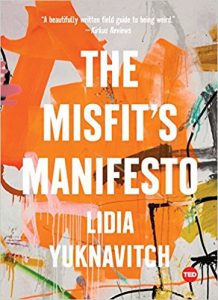
writingI suppose it’s not a coincidence that Lidia’s  The Misfit’s Manifesto launched this past week at Powell’s City of Books. My fellow misfits and I sat together front and center, knowing that we shared a special secret.

I can’t wait for Tuesday.


writing


Like me, Follow me.

Misfits

Misfits are all around us, sitting next to us on trains, wrapped in sleeping bags on wet sidewalks in doorways of businesses darkened for the night, taking deep cleansing breaths on adjacent yoga mats, directing us in traffic, speaking to us from the fronts of classrooms, handing us change at cash registers, sipping a mug of coffee beside us, selecting a disk of perfectly matching matte makeup masking much. Glancing sideways at stop lights, ignoring the rain dripping inside collars, shivering, sweating, disguised, dark, diagnosed, undiagnosed.

Misfits probably maybe definitely usually hide themselves from the general public from their mothers from their fathers because they have to want to need to today tomorrow forever maybe.

Misfits walk with eyes shades drawn with minds scarred more than wrists than knees. They’ve fallen gotten up fallen again. And again. Again.


Misfits, if they’re fortunate, find a kindred spirit in their midst.

Lidia Yuknavitch is such a kindred spirit.

The Misfits Manifesto arrives October 24, 2017. Embrace it.


Lidia Yuknavitch will be speaking at Powell’s Books in Portland OR on 10/24/17.

She’s a wonder.

Lidia also has a TedTalk of the same name. View it here.


Like me on Facebook. Follow me. Thanks!

Writing the Body of the Book

Every morning I brew Folgers-nothing-fancy in my headboard bookcase so that I can begin writing fresh from my dreams. Pajamas or nearly naked, depending on the season. Darkness or daylight, depending on the moon. Before I feed my dog and cats. Before I rummage in the pantry for breakfast in bed. Before the bald eagle flies low over the water outside my window… and he just this moment did...right on schedule. The white of his head and tail feathers so purely bright bright bright. I sigh. Every time.

For the past five weeks, I have written nothing new, other than a few watered down Facebook posts and I’ve not shared the reason. Till now.

At some point a writer needs to leave one’s nest and face criticism. Critique criticism, not you-bad-bad-girl criticism.

During the summer, I subscribed to Lidia Yuknavitch’s mailing list and, heck—I couldn’t believe it—that very same day I received a message that applications were open for her The Body of the Book workshop, where eight writers with unpublished manuscripts would meet for twelve Tuesday evenings to provide feedback and support. Not trite feedback-and-support but real, committed, feedback-that-feeds-support.

Omigosh. I began work on my application immediately. Cut to the chase. I was accepted.

I’ve been taking the train to Portland every Tuesday, booking into a wonderful little hotel that began as a sailors’ lodge in 1881. I’m loving the fifty-bucks-a-night coed hostel-style bunkroom. On the first day, the twenty-something clerk asked if I wanted her to show me how the key card worked. (WTF. Exclamation point. Yeah. I blanched. I blinked. But I simply said “no”. Ageism?? God bless me when I finally let my hair go grey. But nevermind. It’s a great place and at some point I guess I have to share that our brain cells don’t blink out like fireflies once we turn 65.)

The class is all positive good stuff, all inspiration, all writerly comradery. Warm, hot, winey, and most of all, a safe space and politics aside, although we all share the same politics. Politics: the process of making decisions applying to all members of each group.

When we were accepted, we committed to bringing everything we’ve got to the other members in the group. Feedback and opportunity. Ninety new pages to think hard on each week. Pure responses.

So that’s what I’ve been up to.

We’re midway through the process.

I’m going to miss these brilliant woman and their stories when it’s over, but for now, I’m going to continue to respond with the same fervor that I appreciate from others.

As if that isn’t enough good stuff, it’s harvest season. When I return home, it’s blackberry jam, pickled beets, zucchini relish, homemade blackberry brandy fermenting in the downstairs closet, tomato sauce simmering on the stove, a lovely chunk of brisket brining in the refrigerator for my homemade pastrami.

It doesn’t get any better. Growing, nurturing and harvesting stories. Feeding our souls and our bodies.


Follow me on Facebook.

Thanks!

Willpower

Willpower is not my strong suit. It’s not my weakest weakness, but I could do better. What are the biggest weaknesses in my willpower folder?

Writing and Reading.

Writing should not be an issue for a writer. When I get these ideas in the middle of the night, when I awaken with my teeth clenched in my mouthguard and my eye mask askew, my hands shaking with the visage of the ethereal nightmare that I’m watching grow smaller and smaller as it drifts out the window, lifting up into the naked branches of the cherry tree, and beyond, into the clear clear clear dark sky, I reach for my laptop.

I open a Word doc and type the sentence I want to remember, the sentence that will fuel my message later. Much later. I have too many writing prompts on too many topics.

But Reading. That’s my biggest downfall, my Achilles’ heel.

I am constantly finding one thing after the other to read online! (Exclamation points are another weakness but I have almost conquered that one, and you’ll note that the previous exclamation point is warranted!.)

“The anatomical basis of Achilles’s death is more likely to have been injury to his posterior tibial artery behind the medial malleolus, in between the tendons of the flexor digitorum longus and the posterior tibial vein. This area would have been included in Thetis‘s grip.” See what I mean? I’m pathetic.

The New Yorker tells me that I’ve hit the wall. I’ve read all the free articles they’re going to allow me. “Subscribe for $1 a week and get a tote.” I have too many totes, but I very nearly do it. I fear that if I subscribe to one, the rest will follow like literary dominoes. The Wall St. Journal, The Washington Post. Like the 12 Temptations of Christ, they’re calling out to me from their individual browser windows until I have filled way too many hours of my day with an endless loop of reading.

The New York Times is a deep bottomless pit of content. Yes, I do subscribe to The New York Times, digital edition, so it’s my own fault. I had been a faithful print subscriber to The Wall Street Journal for years, and then, damn it, the he/she faceless, anonymous paper delivery person kept forgetting (even when I left notes) that on Wednesdays, if he/she left my Wall St. Journal in the Beachcomber tube, the weekly Beachcomber would not be delivered. They penalize us like that. (Fair enough.)

I finally had enough of occasionally missing out on Wednesday’s local news, obits and the Calendar. I called The Wall St. Journal and told the man in India about the tube that the he/she, faceless, anonymous paper delivery person was hijacking everyday and, with unfortunate results, on Wednesday’s. “I would like to cancel my subscription.”

I would miss Dan Neil, the automotive columnist, whose blend of wit and mechanical knowledge is quite attractive to me. I wouldn’t miss the $5000 Gucci handbags in the monthly magazine section. I wouldn’t miss the Financial pages because I never read the Financial pages. I wouldn’t miss that humor guy whose pieces appear in the lower right spread “below the fold” on the Opinion page. (Below the fold is where they put the lesser content.) I can’t remember his name, but I sincerely believe that I could write a humor piece as good as he. (And don’t tell me it’s “as good as him”. When did the world switch from “he” to “him” in this context? It’s everywhere. Don’t they read Grammar Girl?)

Here I go again, off an another reading tangent. I googled* “Wall St Journal opinion page humorist” and after Peggy Noonan (!) I find a list of Top Humorists. Stephen King is #1 on this list. Joan Collins is #3. What? Art Buchwald, my childhood idol (You think I’m joking?) is #7. Tsk.

The man in India asked if I would keep my subscription if he directed the he/she, faceless, anonymous paper delivery person to install a proper tube for The Wall St. Journal. Like a good customer service rep, he diffused my annoyance and I agreed to allow 2 weeks for the tube to be installed.

I waited 4 weeks. Still no tube, and yet another lost Beachcomber issue. I called and there was no distracting me this time. I cancelled my subscription and went online to subscribe to The New York Times. I’m sure that Rupert Murdoch is not going to miss my $99 per half year.

Now I’m reading a whole new litany of favorite columns. Modern Love is best. I crave warmth like the Pillsbury Doughboy.

Facebook is my love/hate relationship. Why does someone have to ask a question of their readers that I feel responsible to answer?

This morning a fellow writer, a friend, who is writing a novel set in the time of Boccacio, posted “Who can tell me what the paste left after the oil is pressed from olives is called in Italian? In medieval times, it was a treatment for arthritis and joint pain.”

I responded,
“No, I cannot. However, thanks to your question and my lack of self-control with Google, I now know more than I need to about olives— production, harvest and economics!”

I’m incorrigible.

I found a solution to my lack of willpower with respect to Reading online.

I decided that, beginning today, I shall unplug my laptop when I begin to read online. When the power percentage reaches 0% and my MacBook powers down, that’s it. Tough luck. I’ll have to proceed to the items on my “To Do” list.

Did it work? No. As soon as the pop-up warned me that I was at 5%, I ran for the charger. I needed to finish “How Weed Got Me in the Best Shape of My Life”. What? I don’t need weed to exercise. But I was curious. This is Washington state, after all.

I should note that the day after I cancelled my Wall St. Journal subscription, I found that a shiny new Wall St. Journal tube was in place at the end of my driveway with the morning’s issue.

The very next day, it was unceremoniously removed.


*Is the verb “google” upper case or lower case? When I google it, I get everything to do with the search engine and nothing to do with the verb. 😉

Like me on Facebook.

Read more stuff.

Anticipation. In the garden and in Life.

I’ve been watching the fruit and vegetables in the garden grow and mature. Weeding, watering and wondering. When exactly is the first tomato going to be perfectly ripe for the picking?

Anticipation, I’ve always said, is a big part of any experience whether it be harvest or travel or concert or film or other highly anticipated event. The days creep along, the calendar dates change slowly. Finally, the day arrives.

Last week, a few tomatoes began to ripen in earnest. Pale orange became pale pink became reddish became almost red but not quite true ripe juicy red. I wandered around the plants, lifting a leaf here and there. I wondered which tomato would be first.

The Early Girl plants are massive, the Jet Stars half their size. Pacific Potager, where I bought plants this year, had at least three dozen varieties of tomato plants to choose from. This being only my third summer in the Pacific Northwest, I was uncertain of which to try, so reliable Early Girl was my first choice. I chose Jet Star plants because they were sturdy with a maturity date several days beyond than the Early Girls.

Surprisingly, when it came right down to it on Thursday afternoon, it was a Jet Star that would prevail.

I was harvesting parsley in the shade of our wisteria-covered pergola. Had pulled up the plants, roots and all. Rinsed off the roots with the garden hose and was snipping the parsley off the stems into a tub in preparation for chopping in the food processor before filing away in the freezer.

After a half hour of snipping, I was ready for a snack and remembered that it might be time for First Tomato.

A few steps away, there she was. Bright red, perfectly red and ready. I tenderly removed the tomato and placed it on a plate. “Tenderly”?

Yes. This was no grocery store tomato, not even a farmer’s market tomato, but a tomato to be consumed in the garden, minutes after picking.

Returning to the pergola table, I slowly drew my knife through its center, the fruit yielding perfectly to the bite of the serrated blade. I cut again, and again, until the tomato lay before me in perfect bite-sized unadorned fragments. Twenty of them. I took the time to count.

Is this beginning to sound obsessive-compulsive?

It was pure anticipation and enjoyment and I was delaying consumption as long as I could.

I sprinkled black pepper and then ground a few twists of pink Himalayan salt, watching the salt dissolve as it landed on the wet surfaces.

Then, the fork. The first taste, the flavor.

Jet Star Tomato

First tomato of the season

I spent a good fifteen minutes enjoying that tomato, while thinking about how I need to cherish more moments like this with pure anticipation and enjoyment.

What’s your tomato today?


Follow me on Facebook.

The Time is Ripe.


August and Oceans

It’s August. Summer vacations are drawing to a close.

Did you ever see the ocean when you were little?

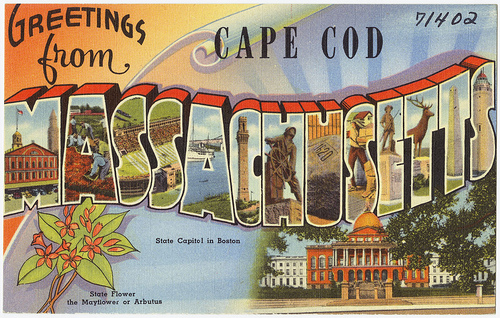
The closest I came was a postcard from Cape Cod. From my godmother. She and her family had rented a cottage not far from the beach.

I stared and stared at that postcard. It was the only postcard I ever received as a child.

I wanted to see and hear and breathe and immerse myself in that ocean. But Daddy didn’t go far from his chair near the fireplace where he chain-smoked into the dark each night.

Maybe that’s why, when given the opportunity, I fled to Cape Cod to live and teach at age 22.

It’s in our DNA. I wanted to feel it up close, to be enveloped in it, to be drowned/not drowned in it.

Unexpected Triggers

Yesterday, Janet brought me a freshly-picked bouquet of August blooms accented with curly-topped white phlox. They were just like the phlox that were as tall as I in the days when I ran barefoot in dewy cool green grass. I was 3 or 4 years old in that memory and my grandmother’s phlox border must have been about thirty feet long. It stretched the length of our tractor garage from the tool shed to the outhouse.

Vivid blue-violet salvia, the spiky perennial kind, sturdy-stalked and long-lived, stood out boldly, almost dominating the three velvety stalks of gladiolus that completed the arrangement. I placed them in the middle of the coffee table and examined the gladiolus more closely.

They were a color that I’m still challenged to describe—somewhere near coral but pinker and not quite red. These sweet gladiolus were the trigger.

How could I have forgotten about my mother’s love of gladiolus?

Gladiolus were always prominent in the displays on the altar at St. Joseph’s when I was growing up. After Mass, my mother would coo over the gladiolus.

“Did you see the red and yellow gladiolus? Ohhh, they’re so beautiful…”

You may know that gladiolus are grown mostly for cutting.

My mother, however, never cut a single stem of hers.

The reason was that my father would not allow fresh flowers in our house (except for lilacs which he had grown up with). He despised the fragrance of fresh flowers and said that they made the house smell like a funeral parlor.

Maybe it was the metamorphosis of soft vulnerable petals to dry and withered remains that offended him. Acceptance of his mortality had never come easily.

My mother would not be discouraged. She planted her beloved gladiolus in a long, straight row, five inches apart like it said on the bulb package, next to the Tenderpod green beans. She would walk in the vegetable garden after supper in August, and given the alternative, she was content to admire her gladiolus next to the green beans.

In the house, she placed a bouquet of plastic flowers in a cheap cut-glass vase on top of the TV. They couldn’t come close to standing in for flowers sprung from the soil, rained on by spring showers, and coaxed open by summer sunshine. These plastic flowers would never die, even though they faded to pale ghostly shadows in the window’s bright light.

Eventually, silk flowers were invented, and my mother tossed the dusty plastic flowers, replacing them with silk roses, red as the ones lovers send on Valentine’s Day, flowers that my mother never received.
The years passed and soon my father was at the end of his days, under hospice care at home, a hospital bed installed in their living room. When my mother found him dead, she refused to unplug his oxygen until the first responders came to take on the task.

The next day, she awakened and went into the living room. She swears that one of the roses red as a lover’s valentine had popped up from the bouquet during the night. She says she found it sticking out five inches above the rest and is convinced to this day that my father was sending her a message from the other side.

And while I do believe in ghosts and I do believe in miracles, and in lovers bringing red roses, I’m not sure that I can believe in this particular ghostly miracle.


gladiolusFollow me on Facebook. I can always use a few more friends.

Maslow Meets Fear

Three days ago, I posted about the fear of tap dancing.

Well, there was a little more to it than that, but fear and hesitation pretty much sum it up.

Received an email newsletter this morning from Holstee, with its editorial written by one of Holstee’s two brother founders.

He referenced the psychologist Abraham Maslow as he spoke of a recent episode of his own fear, a backflip into a canal in Amsterdam. Do it. Don’t do it.

I had totally forgotten about Maslow (Psych 101). His theory is a perfect reference to the tap dancing post. That is:

Maslow said that at any given moment we can step forward into growth or step backward into safety.

It’s as simple as that.

If you choose growth over safety, it’s so worth it.

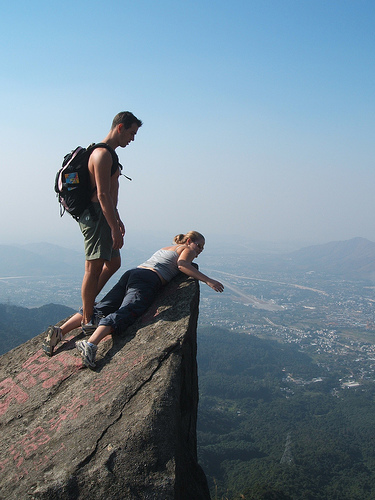
What’s your precipice?

fear


fear

Follow me on Facebook. I could use a few more friends. 😉

The Easy Way Out?

This summer, I’m taking a series of twelve tap dancing classes for adults at our local arts center. It was a last minute decision. I saw an ad in the local newspaper that triggered one my childhood desires.

Remember Shirley Temple and Bojangles tap dancing up and down that steep flight of stairs? Shirley’s banana curls bobbed up and down while the tails of Bojangles’ morning coat fluttered with the movement of his feet.

When I was five, I had the banana curls, but I never got the tap dancing lessons, so I thought, “Why not?”

The concentration required for tap dancing might be a good exercise for my brain, especially since I’m somewhat rhythm-challenged. Anyway, that was my excuse, and it turns out that tap dancing is a good brain exercise. Like rubbing your belly and patting your head at the same time.

As soon as I registered for the class, I ordered my black tap dancing shoes. Amazon Prime.

And before the UPS man was even out of the driveway, I was lacing them on in the front hall. I walked across the tile floor. Click, clack, click, clack. Then across the hardwood. Click, clack, click, clack. Out the back door. Click, clack, click, clack. Across the wooden deck…

Suddenly I knew why those boys in junior high had cleats attached to the heels of their shoes. What a cool sound!

Our dance instructor says that tap dancing is making music with your feet.

I never thought of it that way, but now walking to the refrigerator for a handful of cherries has taken on new meaning. Suddenly it’s fun, clickety-clack, clickety-clack. Toe, toe, heel, heel. Stomp, step, brush, step.

As our instructor introduces new combinations of steps, I’m willing my feet to follow my brain, and soon I’m tapping a little faster, and faster still, as the lessons progress. I’m even managing to keep up with the midriff-baring, college-age females in the class. Just barely.

Our teacher says we’re doing really great and so she’s pushing ahead of the lesson plans.

That doesn’t stop me from having my doubts. I practice indoors and out with my tap dancing cheat sheet in one hand and my other hand extended  for balance. Toe, toe, heel, heel. Dig, spank, step, heel.

At home, without the distractions of ten other pairs of feet clacking next to me, and without the rafter-raising volume of Billie Jean pulsing to my core, I’m doing quite well. I’m surprising myself.

Then I set out for class and—like clockwork—about half way through the session, I get a wave of self doubt and my smile fades.

Am I ever going to be able to connect the movements on my own without someone calling out the steps? Maybe I shouldn’t have signed up for this. It was a dumb idea. How do four-year-olds even do this?

I’m going to tell the instructor that the tap dancing is stirring up an old knee injury. Or maybe I’m getting shin splints. I have a stomach ache. I have to be somewhere else. That’s it. I have an appointment that I forgot about.

Just as suddenly as the hesitation appears—every single week—I figuratively slap myself and carry on. I put the smile back, and concentrate harder. The music is fun, after all, and the clickity-clack feels good. And the sweat! The back of my neck doesn’t feel too pretty. Hot now. Summer in the city.

I realize that maybe it’s because tap dancing is not easy for me. I’m not in the habit of selecting really challenging activities as recreation. I know the things that I’m good at, and those are the things that have become my hobbies.  Isn’t the point of recreation to have fun?

This tap dancing thing is a good lesson for me. I’m showing myself that if I stick with something that’s not easy, maybe I’ll be better prepared mentally when I need to hang in there through a challenging life experience.

Clickety-clack. Brush, spank, hop, step. Dig, spank, step, heel.

And repeat.


tap dancing  Follow me on Facebook.tap dancing

Subscribe to my Blog. No spam. Your info never shared.