The Prodigal Writer Returns

I know. I know. The date on my previous post is embarrassing. I had a rough spring. Uncertainty and doubt. Then I ran away to Mongolia in June.

Well, not exactly “ran away”.

In June 2018, I received an email from Australia’s Intrepid Travel—an email that had been sent out to those Intrepid travelers who had previous experience with Expedition-style travel. I clicked a link to a video that featured deserts, dust, mountains, and the note: “No fussy eaters!” with a reference to the Mongolian national drink: fermented mare’s milk. Yes, from horses.

The trip would be their first “Uncharted Expedition”. 22 days with no itinerary. Those accepted would agree to meet at 6 PM at a hotel in Astana, Kazakhstan on June 30, 2019. The only other detail revealed was that we should plan our departure from Ulaanbataar, Mongolia after July 22.

At the time, I was healing from two major breast cancer surgeries. Naturally, I signed up immediately. Within minutes.

I got a call the next day and learned that they were taking ten travelers and I was #11. I was assured that, more than likely, at least one person would back out, and someone did. I was in.

Now all I had to do was wait for June 30, 2019. A year forward. And plan my gear.

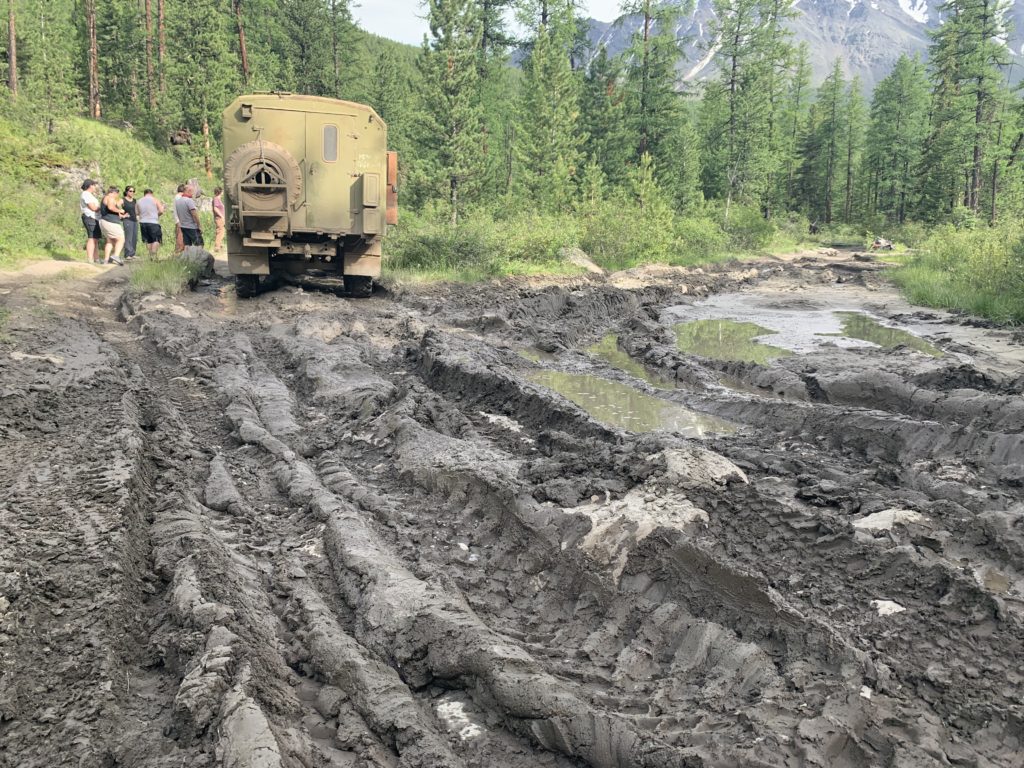
I’m not going to go into much detail here tonight. I kept a journal while on the expedition, but it’s not easy to write when you’re hiking or bouncing along in a Russian army truck making its way up a mountain.

I took hundreds of photos and dozens of video clips. I just this weekend finished a PowerPoint presentation that I’ll be sharing at the Vashon Senior Center (Vashon, WA, USA) on Friday, September 27, 2019 at 1 PM.

Creating the presentation has taken longer than the actual expedition. I’m admittedly some kind of perfectionist.

If you’re in the area, come see my captivating images and hear my stories. I promise you won’t feel like a literally captive audience.

That’s me—The Eagle Huntress—LOL—handling a full-grown female golden eagle. Each of her claws is just about the size of my hand. Yowza!
Altai Tavan Bogd National Park, Mongolia. July 2019

Your Phobia, My Joy

This morning I was reading a piece in The New York Times about three friends embarking on a 7-day kayaking trip in the wilds of Alaska*. On Day 1, within minutes of being dropped off, a whale spouts offshore, close enough for gleeful joy or absolute fear—depending upon your response to large mammals in close proximity to you in the wild.

Two of the three took the sighting as a good omen. The other, who had once been surrounded by dolphins while scuba diving, went into panic mode.

I put the article aside and came here to think about it.

Isn’t it interesting how one person’s phobia can be another’s absolute joy? And, beyond that, how you can experience an event that causes a phobia, but then, through mind over matter, reshape your response to that event.

You can see where this is going. It reminded me of my siblings and me growing up on the farm.During the hot, dry summers of Massachusetts, the heat was periodically broken by magnificent thunderstorms. We could see them approaching in the distance.

The thunder—the louder the better. Let it rock the sky. I loved to hear it roll across the landscape. The lightning—let it draw maps of madness, etching veins of light bright as the stars in response to the thunder. My sister, on the other hand, was terrified, and still is, of thunder and lightning. I don’t know what caused the differences in our responses. My father always told us a cockamamie tale of Rip Van Winkle and his pals bowling tenpins in the sky. I stood before the south window, watching the storm wipe across the valley. My sister fled to her room with a pillow squished around her head.

For years, after a fall from an extension ladder, I was terrified of heights. The ladder stood in the stairwell of my parents’ home under construction when I was thirteen.

“After the carpenters went home for the day, my sister and I sometimes carried boardgames up the hill from the farm. We liked playing Monopoly and Scrabble in the shell of our future bedroom. We sat on the floor, our backs to the open 2×4 walls, playing in the bright light of the west sun as it crept lower in the sky until it was time to go home for supper.
Without a flight of stairs, the only access to our second floor bedroom was up and down the rungs of an aluminum extension ladder from the basement. The ladder rose from the basement floor, past the first floor, and stretched up past the second floor to lean against the open stairwell. Our parents didn’t express any safety concerns. Nor did the carpenters. No one did. Until the day I fell out of the sky.
“Falling out of the sky.”
That’s what it felt like. I felt like Jack falling off the beanstalk. Like a squirrel missing a branch while leaping from one oak to another. Like Alice falling down the rabbit hole. Or a saint slipping off a heavenly cloud. (Yes, I was still under Papal influence.)
It happened after school one day when I remembered I’d forgotten the Monopoly game up at the new house. It was close to supper time. I didn’t want to be late to the table so I sprinted up the hill and rushed into the cellar’s framed door opening. I hurried across the room and scaled twenty steps up the rungs of the ladder into the late afternoon light. When I reached the top of the ladder, I climbed out onto the plywood second floor and quickly gathered up the game board and its pieces, hastily stuffing the contents back in the box. I ran back across the room. What came next was a bit of carelessness.
As I stepped from the floor to the ladder with the Monopoly box tucked under my left arm, my foot slipped. I missed the rung completely. I hadn’t yet grabbed onto the rung above with my right hand so I had no safeguard, no back-up.
Stepping on air is something you don’t ever want to experience. In a nano-second I realized my critical error, but it was too late. I found myself moving in a slow motion free fall. I was tilting backwards, and reached out in a panic, desperately grasping for the rungs of the ladder. But my right hand was closing on air.
My left hand opened. The Monopoly game fell with me. If Isaac Newton hadn’t already done the experiment, I might have been onto something big.
My right hand kept grabbing. I was upside down. Then I was right side up again. Slowww motion. Circular. All the while, I was still in a panic, trying to grab onto the ladder to stop my fall as my hands neared the ladder again, but I was too far away. It was only a few inches, but it was too far away.
In the blink of an eye, the concrete floor was rising up to meet me. My shoulders hit first. Then the sound of a dull thud was followed by a slosh between my ears as my head smacked the concrete.

The Monopoly box was unhurt.”

from The Girl with the Black and Blue Doll, Linda Summersea

From that moment on, I was afraid of heights. Leaning over the balcony in a theater. Riding in a glass elevator. Stepping across the room to the floor-to-ceiling glass at the top of the World Trade Center in New York.

When 9/11 happened, it didn’t make me afraid of flying, even though I was in New York that day, preparing to fly home, putting my suitcases in the trunk of the car, when a call came—telling me to turn on the television.

It took me a while to shake off my fear of heights. I can’t remember any defining moment. I just know that I have conquered it on ziplines in the jungle and swaying rope suspension bridges over rushing waters. I stand on a granite ledge at the top of a climb and feel the exhilaration.

Don’t get me wrong. Sometimes a bit of fear is a good thing. When I watched American climber Alex Honnold climb El Capitan in Free Solo, I held my breath and feared for his life. There are lessons to be learned from close calls.

Nevertheless, yesterday while working the chainsaw in the blackberry patch, I briefly considered the advantages of rappelling down the hill with the chainsaw to attack a greater area. Ha. Let me not get carried away with this fearlessness stuff.
________________________________

*It was Just a Kayak Trip

Linda 2.0

Today is my anniversary.
It was precisely one year ago today that an IV drip began to dose me with the anesthesia that would propel me into a seven-hour surgery. A team composed of two oncology surgeons, an anesthesiologist, and ER nurses worked together to eradicate my breast cancer and put me back together again.

I used to be deathly afraid of anesthesia. It was because of a bad reaction to sodium pentathol decades ago. I was having a couple of teeth removed prior to orthodontic braces. As soon as the anesthesia was administered, I spiraled into a seemingly never-ending nightmare and awakened crying and screaming.

Thirty years passed before my second surgery—for a minor procedure about ten years ago—but that first event at the orthodontist’s office was in the back of my mind.

On the gurney, ready to roll to the ER, my fears were intensifying. Tears began sliding uncontrollably down my cheeks as the nurse pushed the gurney through the corridor.

She brought the gurney to a stop.

“Why are you crying?” said the nurse. “Are you in pain?”

I shook my head “no”.

“Are you afraid?”

I nodded “yes”.

“Oh, honey, you’re going to be just fine,” she said. “Listen, this is what you’re going to do. When the IV drip begins, I want you to think of your happy place, the place that makes you feel the most happy and secure.”

Her instructions were like a much-needed hug. At the appointed time, I went to that happy place, glanced up at the IV, saw the fluid moving and the next thing I knew, I was in a recovery room with no ill effects.

Last January—the surgery for the big one—there were extensive discussions with my surgeons and anesthesiologist 24 hours before the big day. They explained everything I would experience, step-by-step, and answered all my questions. Then the surgeons drew circles, arrows, and dotted lines on my torso with a black Sharpie, along with cryptic notes-to-self. I still regret that I didn’t take a selfie!

This time I was totally prepared and relaxed.

I woke up fresh as a daisy.

I guess what I’m trying to say is that preparation can make even the biggest challenges easier. Recovery wasn’t a walk in the park, but one deals with it.

cancer

As a child, I had no support system. I navigated too many terrifying situations alone, and yet, those lonely times created a resilience that continues to serve me today. I can’t think of anything that I’m afraid of.

To be clear, I understand the difference between Fear and Danger. Fear is imaginary—the monster under the bed. Danger is real—walking alone in the bad part of a city at 1 AM.

I know what constitutes Danger and do my best to avoid it. Fear is something I can control.

Today I’m all healed.

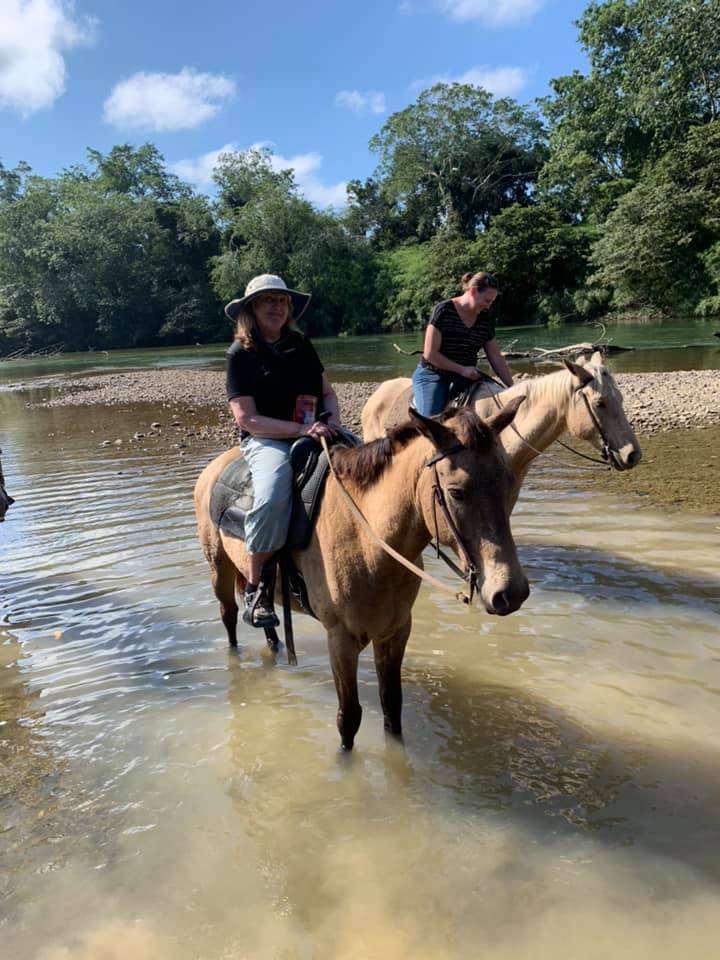
I’m Linda 2.0, the new, improved version of myself—back on the trail, back in the saddle.

I’m in my happy place.

UPDATE, 4 days after writing this post. Back in the saddle!
Linda Summersea riding Rising Star. Banana Bank Horses, Belmopan, Belize. #BananaBank

On the Steamship Finland

“Babci! Can I have a cup of tea?” I skipped into the kitchen and plopped into a chair at the kitchen window. From upstairs, I had watched Dziadzia heading across the lawn to the barn where he would milk the cows.
“Yah,” said Babci. She opened the upper cupboard for tea cups and tea bags, then pulled a teaspoon from the drawer below.


Babci’s kitchen continued to be a good place for a lonely girl to get away to. She and I spent many quiet afternoons in mostly companionable silence. We always drank tea. Lipton or Salada. No sugar or milk. If we were having tea alone with no bread or pie, we sat near the kitchen window with a low oak cabinet between us. The cabinet stood in front of the west window where a sill full of potted red geraniums bloomed plentifully all year ‘round. Their strong herbal fragrance lifted into the air when Babci pinched off a dried blossom or plucked a withered yellow leaf. Even today, years and years later, I always have geraniums in my planters, and I always remember Babci as I remove the spent blossoms.


It was during one of those tea-infused afternoons that I learned Babci had been only seventeen-years-old when she set out for Antwerp and across the ocean beyond on her way to America. I don’t remember how the subject came up, but soon Babci was blurting out the whole story of her travel on the steamship Finland.


She was standing alone on a train platform somewhere in western Russia in 1911, six years before the Russian Revolution. Her family lived in Kolno, in rural eastern Poland which was part of Russia at that time, and she managed to find a ride in a carriage that would pass by the station.
The moonlight sparkled on the crust of the deep frozen snow. Young Róża drew her cheap coat closer against the bitter cold and stamped her feet to warm them.
When the train arrived at the station, Róża boarded and handed her ticket to the conductor. It departed soon after with her trunk in the baggage car, and its shrill whistle merged with the howling of the wind and wolves in the forest. Some of the travelers, those bound for fancy destinations in Western Europe and the Christmas holidays, were elated to be on their way. Others, like Róża, may have shed a few tears for her Mama and Ojciec left behind.
She layered her hand knit shawl over her coat and pulled it tighter. Being peasant Polish, she couldn’t afford a stylish pheasant-feathered hat like those she had seen entering the First Class compartments. More likely, she wore a babushka tied beneath her chin, like the one she wore almost every day of the rest of her life.


Arriving at Antwerp the next day, Róża’s trunk was transferred to the waterfront. She carefully removed some money from a pocket hidden in her petticoat and bought a Steerage Class ticket to New York at the Red Star Lines’ ticket window.
The dock was a beehive of activity. The ships of the Red Star Line were always full occupancy with travel between eastern Europe and the United States. Many of them were Jews until the threat of the Nazis stopped their exodus.
Wagons were being unloaded left and right. Róza walked the gangplank onto the ship Finland with the other young people, first watching to be sure that her trunk was stacked on the baggage wagon and hauled on board. She knew to be careful. Everything she owned was in that trunk. Her clothing, her Sunday church shoes, her featherbed, and even—a basket woven of willow that sits on a shelf in my kitchen today—right beneath my cookbooks. Róża fingered the rosary in the pocket of her coat, one bead at a time, her lips moving silently with her prayers. She found her way below deck to the Steerage Class bunks. Soon the ship was underway.


Babci told me that the trip at sea was scary. Girls in the nearby bunks whimpered and moaned, crying and vomiting with seasickness. The food served below was “nie dobzre”—“no good”—she said, but she had to eat in order to be strong for the medical examination upon arrival in the United States. She stood in line with her tin plate to receive a grey meal consisting of a chunk of bread and a scoop of watery stew ladled from a big pot. The smells of seasickness and the boiling meat blended together, so, like the others, Babci mostly stayed in her bunk with her queasy stomach.
She shared that when she first made her way through the ship’s windowless hold to her assigned bunk, she saw people with dark black skin nearby. The lady in the next bunk told her they were devils.
“Devils.” Babci repeated the word. “Devils!”
She laughed self-consciously when she told me this. It was the slightly embarrassed character of Babci’s laugh that communicated to me—a ten-year-old who had only seen black people on television—that she might have actually believed it at the time.
We shook our heads at such a silly thought. Who would believe such a thing?


As the Finland steamed westward, Róża preferred to keep to herself. Christmas came and went. She told herself her Christmas gift would be stepping ashore at Ellis Island. And so it was, although it took some time. The steerage passengers were transported on unheated barges, and by the time they got to the Great Hall, her hands were cold and her nose, dripping. There were examinations and interrogations.
“Where are you going? Where are you from? What is your occupation? Who is meeting you? Do you have a job to go to? How old are you?” and more. Those were the questions that were asked as she stood before the official in Immigration. The answers were scribed in a ledger and Róża was officially permitted entry into the United States of America.


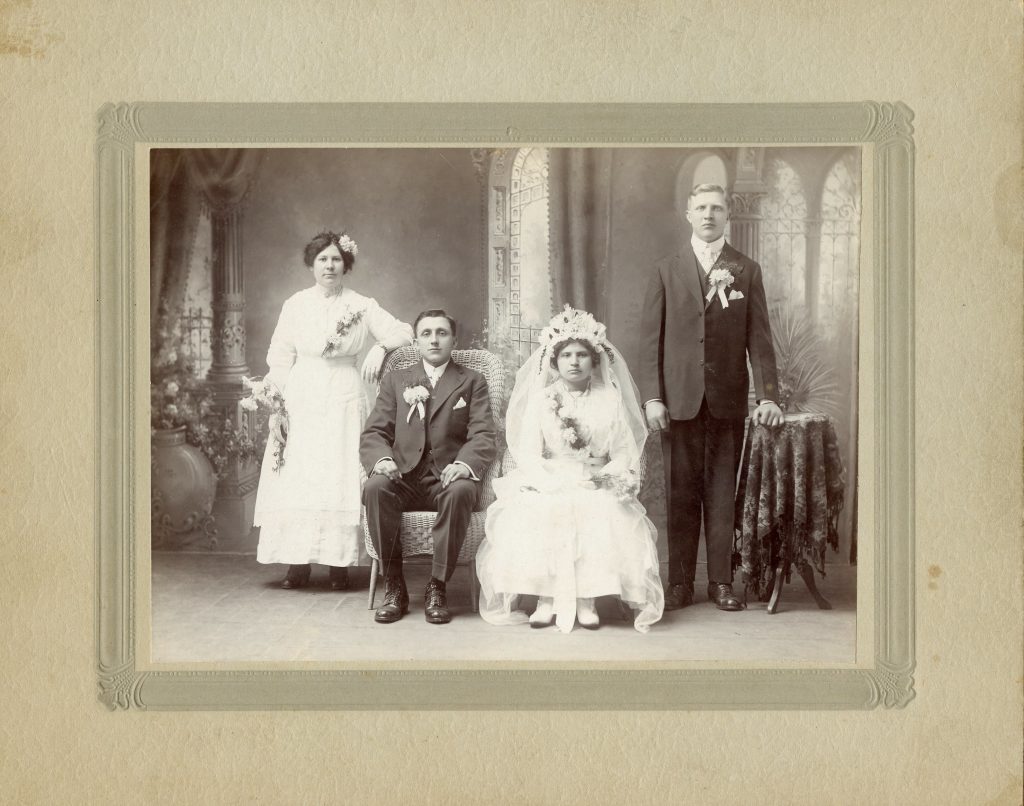
Babci and Dziadzia, Uncle Heromin and the unidentified Maid of Honor

A Comedy of Errors

Back story: I’ve been coming to Belize from time to time for 30 years. In 1989, there was no electric power cable under the sea from the mainland to this island. Electricity was supplied by a humongous generator in town that hummed like a sleeping giant. It shook itself awake periodically, knocking out the power, bringing darkness and an ominous quiet. Eventually the purr of the ceiling fan’s return to slow revolutions followed the hum returning to the background. We slept in a thatched hut at the water’s edge. No window glass. Louvered hardwood window slats.

An elusive boa constrictor resided in the bar at the center of the semi-circle of huts, and my young sons hoped to see him in the rafters as they took turns getting drinking water for the hut.

The streets (Front, Middle, Back Sts.) were still unpaved—silky, hard-packed sand. My 9-year-old son Chris wore a machete in a leather sheath as he climbed the Mayan ruins at Altun Ha. We danced energetic Soca on Friday nights on the patio of the Sun Breeze Hotel.

One Sunday morning, we walked by a man lying in the middle of the street. Flies buzzed around his closed eyes.

“Is that man dead, Daddy?” my 7-year-old asked.

“No, Zack, he’s just sleeping,” my husband said as we walked around the body.

Those were good times. The tiny resort was called Paradise and it was torn down when a concrete resort—The Phoenix—rose up in its place. True.

____________________________________________________________________

January 2019. Day 1. An island off the coast of Belize.

After a successful morning of writing, I took a brief walk around the resort to see what was new. Not many people around for high season.

I decided to walk south under the clouds for two miles on the beach and then inland to The Truck Stop, and a rare place that sells ice cream cones. Sea Salt Caramel. Set out north again, on the road this time, through brief showers that fell between the patches of tropical sun. Being Sunday, it turned out to be very busy with local families ripping by on golf carts overflowing with babies and children, mamas at the wheel. (There are few cars here.) I returned to the beach via the path to El Pescador after stopping at a groceria for orange juice, pita bread, a couple of Belikin Lites—and some frozen bacon to keep the beer cold on the return trip.

Remember Jeff Goldblum traveling with his dehydrated food to Ecuador in Vibes? That’s me, filling up my suitcase to 49 lb (50 lb allowed) with granola, coffee, canned clams, flour, Himalayan pink salt, spices, probiotics, vitamins and more. It’s always worth it. As a woman traveling alone, I prefer to cook in my unit most of the time with fresh seafood and bring what I can from home to supplement. It’s a continuation of the frugality that was so necessary in my childhood.

After unpacking my grocery bag and cracking open a beer, I had a successful session of writing and editing, and granted myself the guilty pleasure of reading a culinary mystery after dinner. Fell asleep around 8 or 9 PM. Re-awakened at 1 or 2 AM, wrote for an hour or two, then tried to get back to sleep with no luck.

I have a lot on my mind. Even meditation methods didn’t work. I kept tearing off my sleep mask to take notes on the thoughts that kept popping up. I know from experience that middle-of-the-night messages will be forgotten if I don’t write them down.

Took an antihistamine and when that also failed to send me to sleep, I decided to catch up with news online. Nevermind Trump. I’m leaving him to Nancy Pelosi. I just wanted to know if Green Book won at Golden Globes. It did! And Mershahala Ali won best Supporting Actor. Yay.

At 5 AM, I put out the “Do Not Disturb” sign and went back to sleep pretty much instantly.

At 9:30 AM, I was awakened from a deep sleep (…and a nightmare: Christopher Walken approaching my home, leading a Pitchfork Brigade, all carrying flaming torches.). There was a persistent banging on my door. I tried to ignore it. No luck. It was the housekeeper saying that my door sign had blown off during the night. Which way had I hung the sign? Did I want “Do Not Disturb” or “Please Make Up Room”?

“Do Not Disturb”, I said.