The Swimming Lessons

It’s the August full moon of midsummer, a time which always brings back memories of summer Sundays at my grandparents’ cottage on a lake in Massachusetts.

By 4th of July, the hand-dug well on our farm had always gone dry so baths and shampoos were out of the question.

As a substitute for Saturday nights in the bathtub, we drove to my grandparents’ cottage once a week and the lake was supposed to wash away the grime that had accumulated during the previous week of wandering barefoot on the farm.

The Sunday soaking ritual always took place with our five other cousins during unsupervised “swimming” in front of the cottage while the adults downed bottles of Schlitz and Old Milwaukee, out of sight at the top of the property. The quotation marks are here because the other cousins were all good swimmers. Very good swimmers. They were fearless. They water-skied, they jumped off the dock, they dove for quarters thrown in the water. They were like black labs–balls were thrown and retrieved. They had endless water games in their repertoire.

My siblings and I didn’t have a clue. We stood in water up to our knees with our arms folded self-consciously in front of us until we gradually waded deeper, the waterline creeping up our bathing suits, one excruciating inch at a time. I was supposed to keep an eye on the two of them and make sure they didn’t accidentally wander into deep water.

I always hated my responsibility as the one in charge of the younger ones, an unfair role assigned by the random cruelty of birth order, and I said as much.

Mummy finally decided it might be appropriate to enroll us in swimming lessons, mostly to cover her ass if anything happened out there. Harsh judgment on my part, but probably true.

On Day One of the swimming lessons, Mummy pulled her green ’56 Plymouth station wagon up to the curb at the Town Pool. My brother and sister and I got out. We had our towels around our necks and our flip-flops on our feet. We held hands, as we’d been told, and I carried the registration envelope.

Dicky wore his new “supporter” of which he was quite proud. Mummy made quite a big deal out of purchasing his first jock strap, and he was supposed to take the swimming lessons in stride like a “big boy”. Sharon and I wore matching pink tank suits.

Without looking back, we climbed the sidewalk mountain to this place we’d never been. We didn’t hear the station wagon drive away, but we knew Mummy left without a glance back as soon as she heard three doors slam.

As we reached the summit of the park, we saw bleachers at the water’s edge down below. We pressed on. Slowly and carefully, we trod down the concrete steps towards the black water that stretched for a mile wide, or so it seemed.

I was the eight-year-old babysitter, timidly leading the five and six-year-old, one clasped at each side of me.

Chatty pastel-clad mothers were sitting on the bleachers in sunglasses and sun hats, flicking their cigarette ashes onto the grass. A card table stood in the bright sunlight with tidy boxes of index cards and a line of kids and mothers in front of it. We joined the line and soon it was our turn to register.

A man with a whistle on a cord around his neck looked up at us over the top of his sunglasses as he flipped through the index cards.

“Is your mother here?” he asked.
“No, she said to give you this,” I said.

I handed over the envelope. The man filled out more index cards and then someone came along and divided us up. My brother Dicky went to the right with the “minnows”. Sharon went I don’t know where. Another group of minnows, I guess. I squinted into the sun as they were led away.

I was then directed to yet another group. I had no previous swimming experience but I was tall for my age. Maybe I was in the group of bigger non-swimmers.

So it was, as we attended our weekly swimming lesson at the Town Pool. Each week, after that forbidding event, we somehow found each other, held hands, and fled back up the steps with our towels, over the top, and down to the circular drop-off drive. Eventually, our calm was restored as we waited silently in a shady patch of grass to avoid being hit by a car. My mother always told us to stay away from the street. It was dangerous.

Each week, there was always the matter of the long wooden docks that stretched out towards the middle of the dark, deep water. I knew that both of my siblings were afraid. When I heard screaming, and squinted in the distance, I saw Dicky crying loudly, his chest rising and falling with his uncontrollable sobs. I was never able to find Sharon anywhere.

The three of us never discussed the swimming lessons. The experience was too painful to put into words. At home, Mummy and Daddy never asked us about it, so we never told.

At the end of summer, the day arrived when we would all be tested for our achievement. After a brief test of floating and dog paddling in the shallow water, all of the swimmers—and I use that word loosely—had to jump off the dock in order to pass the test.

I did what I was told. I floated on my back, although that was not due to any particular skill. I always had the ability to float upside, sideways, Dead Man’s Float, any kind of float. I could float in a hurricane. For a skinny kid, I had a high body fat ratio.

When it was my turn to demonstrate my learned skills, I swam the dog paddle, floated, treaded water. I jumped off the damn dock where my swimming certificate was being held for ransom.

I succeeded, glub, glub, glubbing to the surface with water up my nose, and received my Minnows certificate with the automatic assignment to next summer’s Flying Fish class.

So what?

Mummy never let us finish anything we started so I knew that I wouldn’t be back next year to take the Flying Fish lessons.

I saw Dicky standing on the end of the other dock. All of the other kids had already jumped in and passed. I saw them standing impatiently in the water, while his instructor pleaded with Dicky to jump. Another instructor was in the water below, ready to catch him, if need be. All he had to do was jump.

I sniffed in disgust—not at Dicky—at the fruitlessness of the scene. I knew that there was no way in hell that Dicky was going to jump off that dock.

We returned to Sundays of unsupervised “swimming” at my grandparents. One time, with my body tucked firmly into a highly-inflated rubber tire tube, I drifted into deep water where I couldn’t touch bottom. (“Stay where you can touch bottom,” Mummy always said.)

Somehow I got flipped over. My head was under. My legs were pointing skyward. My body was wedged firmly in the opening with no option of sliding out.

I couldn’t breathe. I panicked. For the first time ever, my eyes were wide open underwater. I saw the posts of the dock, the legs of the other kids in the distance. I saw some broken water toys on the bottom. I even saw a few fish swimming around—probably laughing at my demise.

I was kicking, squirming, flailing, thrashing. No one heard me. I knew I was going to die. So this was what drowning felt like. My sad fate would be announced on the front page of the local newspaper, with a brief obituary inside. They’d be sorry now!

I continued to thrash in the water, drifting further under the dock. Try as hard as I might, I couldn’t break the suction of the tire tube from the surface of the water. Then, with one final burst of adrenaline, I popped back up.

As I celebrated my survival with painful, sputtering coughs and a deep, cleansing breath, I saw my cousins, my sister and my brother. They were all frolicking near the shore, and all oblivious to my plight.

Years later, I still wonder where my mother went during that weekly hour of swimming lessons. There were never grocery bags or other signs of her destination.

Sharon learned to swim but she, I discovered a few years ago, is still terrified of water where she can’t see the bottom. Dicky never did learn to swim, and my mother never thought to ask why his bathing suit was always dry

from the Girl with the Black and Blue Doll, Linda Summersea
the swimming lessons
The Swimming Lessons

The Road to Marrakesh

After flights totaling 21 hours, we wearily checked into the El Mansour Hotel in the old Medina of Casablanca, Morocco. Roger left me in the dark shuttered room while he hailed a cab to pick up our rent-a-car. “I’ll be right back,” he said.

That was more than 40 years ago. February 1975. Our honeymoon.

Four hours later, my husband had not returned. I had taken two showers, paced back and forth endlessly, stripped off my clothes and burrowed deep into the downy bed, hoping to fall asleep and escape this nightmare.

I dressed and stepped out onto the balcony, shading my eyes from the brilliant sun that sparkled in the waves crashing on the Barbary Coast in the distance. Lorries and men in djellabas leading donkeys piled high with bundled goods vied for position in the street below. There was much crying and gnashing of teeth. Mine.

Finally, the brass doorknob turned. In strolled Roger, as though he’d just popped down to the lobby for a newspaper. An argument ensued. Roger claimed that some fellow had transported him all over the city because the car rental office was closed that day.

The next morning, he led me to a white Renault sedan and we headed north to Fez via Rabat. Roger was driving, although perhaps he might not have had the appropriate license. A young fellow, seeing our hippie clothing, had approached Roger earlier. Roger said the fellow would be our guide.

Distracted by this man in the backseat, Roger promptly zipped through an intersection, ignoring a traffic policeman’s directive to stop. Said policeman promptly signaled us to pull over. Our guide leaped from the back seat and ran away. I saw him growing smaller and smaller.

The policeman spoke no English. We certainly had no Arabic, and very limited French. The policeman commandeered a big-finned ’59 Chevy Impala and, as he climbed into the vehicle, he looked back, swiveling his wrist in a “follow me” gesture.

We traveled through narrow streets, finally emerging into a bustling square. An enormous pockmarked white stucco building stood at its edge. Unshaven men in dingy grey shirts stared out through barred openings.

The policeman, with starched uniform and stiff-brimmed cap, motioned out of the car. He brushed the street dust off his epaulettes, and adjusted the hem of his jacket. Throwing back his shoulders, he led us into the miserable building through a small cellar door.

There, across the vast, dirt-floored room, an enormous mahogany desk rose above us.

A ray of early morning sunlight shone through the single tiny window, and the polished surface of the desk reflected the somber faces standing in the long queue of derelicts beneath it.

A scowling magistrate peered down through wire-rimmed glasses. The policeman led us to the end of the line and as we inched forward, Roger formulated a plan.

“We’ll say that you’re ill from the heat. No—from your period! You have cramps! Hold your stomach. Moan!

When it was our turn, Roger pled “Ma femme est malade!”

A staccato conversation rose between the judge and the policeman. Suddenly the voice of the judge became louder– angry! What? The judge was reprimanding the policeman! Mon dieu! We just might get out of this.

The policeman led us back to the street, where he motioned that I was to drive. Roger hung his head, suitably shame-faced, and slid into the passenger seat. With an expression of disgust, the policeman waved me away from the curb. I shifted into first, then second, and pulled into a roundabout.

“Go!” he called, pointing north, “Go!”

Many kilometers later, we passed through Meknes and finally entered the capital city of Rabat. We were greeted by a traditionally garbed water-seller who poured cool water from his goatskin bag into shiny brass cups. We ate couscous in a café, then French pastries from a bakery. We were licking our fingers—rich strawberry tarts washed down with cold Oranginas.

Back in the car, we exited through the elaborately carved gates of the city, and soon were in the middle of nowhere, cruising along a smooth asphalt road that waved up and down, curving around orchards bright with oranges. The Atlas Mountains rose in the distance.

An argument ensued. Roger wanted to drive the car. “There’s no one here,” he contended. We quarreled for forty kilometers. Maybe more. I held my ground. He may have called me a “b*tch”. I may have said he was a “f*cking idiot.

Suddenly we heard a siren. It couldn’t be. It was. A motorcycle cop with a pen and ticket book in his hand. He spoke good English. He said that I had passed a donkey cart a while back in a “no passing” zone. Indeed, I had.

For a mere 200 dirhams (about US$50 at the time) we could put this little incident behind us. I peeled the bills from my wallet and smiled with appropriate humility.

At Fez, we hired a licensed guide who showed us his city with great pride and let me wear his fez for photos. We spent the night in a tiny hotel where the echoing Muslim call to prayer awakened us at dawn. We set out on the long road through the mountains to Marrakesh singing brightly. You know the song. “I’ve been saving all my money just to take you there, I smell the garden in your haairrr…”

Cobra charmer, Djemaa El-Fna, Marrakesh; Linda Summersea photo

Cobra charmer, Djemaa El-Fna, Marrakesh; Linda Summersea photo

We found a room near Djemaa el Fna. A snake charmer removed his cobra from a coiled basket and led him in a hypnotic dance on a blanket. I practiced my negotiating skills, acquiring leather goods and djellabas from the vendors that surrounded the square.

It was time to head to Casablanca again, this time across the desert. Shimmering mirages appeared as a train steamed past us to the east. We rolled the windows down in the heat, singing “Marrakesh Express” at the top of our lungs.

Guess who was driving?

Linda Summersea, Marrakesh, 1975

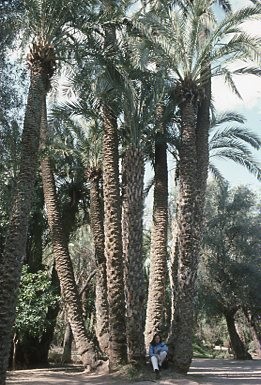
Linda Summersea with Palms, Marrakesh, 1975


What Do You Give A Man Who Has Nothing?

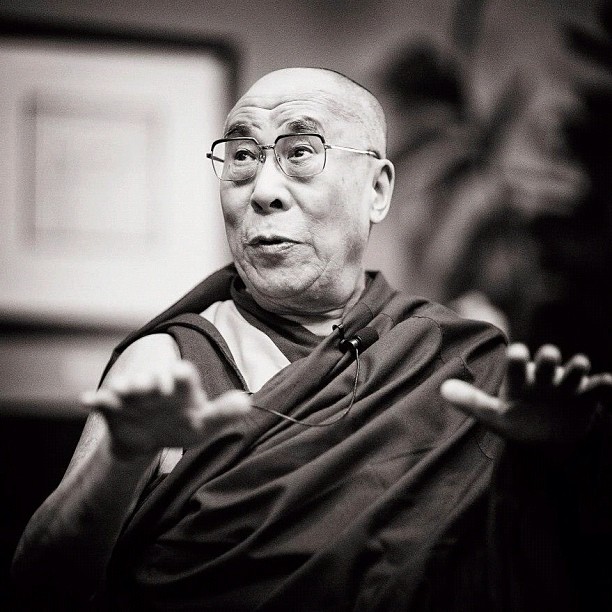
Today is the 80th birthday of His Holiness the Dalai Lama of Tibet.

I am honored to say that my article— What Do You Give To a Man Who Has Nothing? —has just been published on elephantjournal.com.

………………………

What Do You Give a Man Who Have Nothing?

The Wall St. Journal had an article on Friday that I thought was going to address gift-giving for the 80th birthday of the Dalai Lama, but it turned out to mostly be about cake. (Everyone from the Glastonbury Music Festival to the Art Institute of California-Orange County has been baking birthday cakes for His Holiness.)

The article mentioned the Dalai Lama’s selflessness and his habit of re-gifting, but mainly, it presented material examples—not spiritual, as I had hoped.

So—in honor of the Dalai Lama’s supreme selflessness, I suggest that we bestow upon him a birthday gift of our attention to Buddhist principles. Let’s try to send so many positive, loving thought waves throughout the universe today that the planet will literally vibrate with our intentions.

The following is my list of Dalai Lama quotes and 10 suggested gifts.

  1. “Depend on Mindfulness.” ~ Dalai Lama.

Today, let’s give mindful attention to all of our daily tasks from the trivial to significant.
One way that we can focus on this is to take three deep breathes when we switch gears—before we enter the shower in the morning, before we cook our breakfast, before we eat our breakfast, and so on. Mindfulness: a simple concept, but a challenging habit to adopt. Let’s be especially mindful during today’s yoga class.

  1. “Love and compassion are necessities, not luxuries. Without them, humanity cannot survive.” ~ Dalai Lama

Love and compassion are main components of Buddhism’s bodhichitta a path to enlightenment with many facets.

In Pema Chodron’s book The Places That Scare You, bodhichitta is described as as “a soft spot, a place as vulnerable and tender as an open wound”. Let’s seek our own soft spot today, sharing love and giving compassion by understanding another’s pain.

  1. “Remember that the best relationship is one in which your love for each other exceeds your need for each other.” ~ Dalai Lama

Speaking from experience, I believe that our first encounters with love often develop into relationships where there is an imbalance of need and want. This creates weakness in the relationship, leading to failure. We should not need one another, but want to share our love. Let’s try to be less needy today.

  1. “Silence is sometimes the best answer.” ~ Dalai Lama

Who among us cannot contribute a little silence? This is a great gift.

  1. “Be kind whenever possible. It is always possible.” ~ Dalai Lama

There are daily challenges to our kindness, not the least of which is our own impatience with brief acts that inspire negativity. The person that cuts us off in traffic. The waitperson that accidentally spills coffee on our sleeve. The child that has left their toys out.

Let’s be kind, and in return, it will foster kindness in those we touch.

  1. “We are born and reborn countless number of times, and it is possible that each being has been our parent at one time or another. Therefore, it is likely that all beings in this universe have familial connections.” ~ Dalai Lama

Treat everyone if they are our brothers and sisters. Our familial relationships have their ups and downs, but usually, we are more willing to make peace with our brothers and sisters than with strangers. Let’s sincerely try to extend that respect to all.

  1. “A vegetarian diet is the most healthy one for you. We must respect all forms of life.” ~ Dalai Lama

The Dalai Lama is not strictly vegetarian, as he lives also by the principle that he should accept whatever he receives, but he also believes “Animals deserve our compassion. We must know their pain. We should nurture this compassion through education. Showing concern about animal rights is respecting their life.”

Let’s prepare and enjoy a lovely vegetarian meal in his honor.

  1. “Happiness is not something ready made. It comes from your own actions.” ~ Dalai Lama

Happiness. This is a tough one. We can appear so free and balanced in others eye, yet often we lack true happiness. Let’s try not to measure our lives against another person’s measuring stick. Let’s try to have a truly “glass half full” attitude towards life. It will make us happier.

  1. “Take into account that great love and great achievements involve great risk.” ~ Dalai Lama

In 1989, the Dalai Lama was awarded the Nobel Peace Prize for his work advocating nonviolent means to free Tibet from China. It’s not always easy to take the leap of faith towards love, and it’s not always easy to have faith in one’s goals. Take a chance on love and life today. Take the risk and find your own inner peace.

  1. Fasting.

The Dalai Lama usually has hot porridge for breakfast with barley powder, hot tea, bread and jam. A vegetarian lunch, and no dinner. I have read that as celebrations of the His Holiness’ 80th birthday take place around the world, some celebrants are including fasting in varying degrees.

Surely, if the Dalai Lama can forego dinner on a daily basis, we can go without dinner tonight in accordance with his practice.

Maybe we’ll find that we can do without more than we thought.

Happy Birthday, His Holiness Dalai Lama!

In honor of His Holiness, let’s have an awesome mindful day today!

I’m heading out to yoga class in 30 minutes… how appropriate.

……………………………

Click here to read the article on elephantjournal.


Photo credit: Tenzin Gyatso

Photo credit: Tenzin Gyatso


Finding Bodhichitta. Finding Love.

(Author’s Note, after the fact: I just counted 5 “fears”, 1 “fearless” and 5 “loves” in this post. You can’t have too much love, but 5 fears is crazy. This is not one of my better pieces.)

I’ve been reading Buddhist beliefs lately, not in search of a new religion, but as a willing student of world thought.

I was raised in a religion filled with ritual, fear, and dark-robed teachers. As a chronically depressed child, I didn’t need any more fear in my life but I hung with the sheep until my escape to college. I can definitely say that there was zero love in my life so I had no role models in the treatment of other people and animals. For me, life was pretty much about treading water and survival.

Navigating my adult years with highs and lows, I married, had children, moved about a bit, and experienced a life of rich creativity—without feeling any sense of accomplishment or joy from it.

I never spent much time thinking about religious doctrine, but I knew that I believed in karma.

I loved my children and my students. They shared so much with me—fearlessly.

I was too busy to think about Todays. (I was busy thinking about Yesterdays and Tomorrows.)

Like many people, I’m finding that as I look in the rearview mirror and see the end of life on this planet, I have a lot of questions.

I picked up Pema Chodron’s The Places that We Fear because Fear has always been such a huge part of my life. I’ve been dogged by the shadow of fears that were branded upon me as a child for so long that it seemed as if that’s all that Life was about.

Every morning for years, I awakened with a sense of impending doom that I shook off with a couple cups of coffee before heading out into the Light.

I was surprised to learn that bodhichitta is not a heavy-duty doctrine.

Surprise. It’s about Love.

Doesn’t everyone want more Love in his life?

In reading Chodron’s work, I see that, of course, it begins with my attention to the Love around me. And Compassion. In bodhichitta, we have the ability to feel the pain that we share with others.

Chondron says that “sometimes the open heart and mind of bodhichitta is called the soft spot, a place as tender as an open wound. It is in part equated with the ability to love.”

It’s a way to enlightenment.

Maybe

“In every heart there is a room
A sanctuary safe and strong…

Maybe

“…And this is why my eyes are closed
It’s just as well for all I’ve seen
And so it goes, and so it goes

And you’re the only one who knows.”

Thank Your Mother for your Sexual Freedom

Yes, your mother (or grandmother) made it possible for you to have one less worry in your wild life.

Your mother made it possible for you to hook up with your lover without the fear of pregnancy.

Your mother made it possible for you to complete the joy of intimacy by making a physical connection to a human whose intellectual and spiritual bond with you was already in place. Or not. Your Choice.

(LS edit here: Not trying to be confusing. I mean: maybe you have an intellectual & spiritual bond. Maybe you don’t. Maybe you want to make a physical connection. Maybe you don’t. Your Choice.)

When she was your age, your mother lived with the frustration of not being able to express her sexuality with a partner without fear of pregnancy.

I vividly remember that our bathtub surround in the 50s always held a jar of Massengill douche and its related hose contraption. When I learned to read as a first grader, I reveled in reciting the label on the jar aloud, line by line, to my sister as we sat together in the tepid water, knees up to our chins while my mother shampooed our hair on Saturday nights.

When I reached puberty, my mother handed me three items: a box of sanitary napkins, a copy of “Growing Up and Liking It” and a panty girdle. A panty girdle?

Yes. A panty girdle. Apparently she felt this would ward off the attention of any males who might consider fondling my buttocks.

The girdle as a form of birth control. What a concept!

By providing this panty girdle and the “Growing Up and Liking It” booklet, my mother felt that she had done her job regarding the Facts of Life.

The booklet, brought to us by the Modess Corporation, a company that made sanitary napkins, had drawings of the female reproductive organs with the triangular shaped place called the “uterus”, connected on each side to an ovary by means of fallopian tubes. There was a drawing of an egg in motion, wiggling its way down the track of life with its little tail. Circles and arrows, Arlo Guthrie style.

The voice of authority in the booklet said that each month eggs were released from the ovaries and the result was blood, known as one’s “period”. However—and here comes the really scary part—if an egg was fertilized, you didn’t get your period, pregnancy was the result and a baby began to grow inside you! OMG!

The booklet neglected to explain how the egg got fertilized. I pored over those pages behind closed doors, secretly, constantly. There was no one with whom I could discuss this awkward topic and I could not for the life of me figure out the fertilizing part. Damned poor editing on the part of the Modess Corporation, I’d say.

The result was that Every Single Month from age twelve through eighteen and a half, I worried myself sick that my egg was going to get fertilized. I marked my period on freebie Hallmark pocket calendars with a star for each bloody day. During the week of having my period, I was relieved and buoyant. Unfortunately I was also in terrific discomfort since I was one of those unlucky ones who endured really brutal menstrual cramps that ached all the way down my inner thighs. Curl-up-in-fetal-position pain, with-your-eyes-shut pain. My mother never gave me anything to take for it. She’d say, in this “I told you so” kind of voice, “That’s the Facts of Life.”

During the week after my period, I’d be OK for a while; then those fears would begin to dog me again. Once, I meekly said to my mother, “My period is late this month.” It was late. I didn’t have precisely regular periods.

“What have you been doing that you’re worried about your period being late?”

“Nothing,” I said. Which was true.

When I had a blind date with a neighbor’s boyfriend’s friend, my mother suddenly came up to me, and said, “Your father wants to make sure that you know about ‘The Facts of Life’.”

Huh? Thinking, thinking. Facts of Life equals getting your period and enduring cramps. Check!

“Yeah. I know.”

Then I went to college. 1968. I had a new boyfriend and he conveyed the truth of the “Facts of Life”. Yikes. I sincerely had no idea. I was a late bloomer. I didn’t even understand what Mrs. Robinson and Benjamin Braddock had been up to.

What was it like to be dating and mating as a college student in the 60s and 70s?

Colleges had Rules. Crazy rules. During the early 60s, men could only visit women’s dormitories in their downstairs parlors. Later, when men were allowed to visit women’s rooms, the door had to be kept open. Both parties had to have one foot on the floor. Yes. It’s true.

Even at our state university, where rules were more flexible than women’s colleges, there were strict curfew hours in the late 60s. 10 p.m. on weekdays. Midnight on weekends. Sign-ins compulsory. Don’t even think about spending the night with a member of the opposite sex.

Then overnight—not quite, but it seemed like it—everything changed. 1967 had been “The Summer of Love” in San Francisco. We became “gentle people with flowers in their hair”.*

The women’s movement began to gain momentum. Betty Friedan and Gloria Steinem continued to inspire us to stand up for our rights—including the right to sexual freedom.

Changes were happening on college campuses at warp speed. It was still illegal to prescribe birth control pills to unmarried women until 1972, but sympathetic doctors could be found.

In 1970, I was engaged to be married. I learned from other women that there were liberal doctors at our Student Infirmary who would prescribe the Pill under certain circumstances.

When the doctor closed the door on the treatment room, he asked the reason for my appointment.

I was nervous but truthful. I told him that I was engaged to be married, and my fiancé and I would like to have sex.

“To have sex” sounds a bit incongruous, but I don’t recall any euphemism that I might have used. Certainly not the slang of the time—“get it on”—and certainly not a clinical term like Sheldon Cooper’s “engage in coitus.”

The doctor looked at the engagement ring on my finger and reached for his prescription pad. Minutes later, I was heading down the hill with a 3 pack and I was officially “on the pill”.

Sexuality became a revolution. Co-ed dorms. Love-ins. John Lennon and Yoko in Amsterdam.

The result of those transformative years was your personal sexual freedom.

My advice? Be very careful how you use it. There’s a lot more to intimacy than sex.

———————–

*San Francisco, lyrics by Scott Mackenzie

“Thank Your Mother for your Sexual Freedom” is an excerpt from Linda Summersea’s manuscript of essays, Writing Like A Mad Woman.

birthcontrolpils2

Live the Island Life: Live Green. 10 Tips Learned from Island Living.

I confess that I am in the midst of a very long, ongoing love affair—with islands.

Many islands. I have yielded to their temptation in many seas—some repeatedly—and each island has shared its unique characteristics abundantly and unabashedly.

The most valued aspect of these island affairs is that they have taught me the principles of green living, as dictated by the isolation that is a normal, accepted part of the island lifestyle. While the isolation is part of the charm, it also has its own set of challenges.

The point is that living on any island requires one to live mindfully. Mindful of everything from water use to recycling to consolidating trips to the mainland to save money.

Right from the beginning, I found myself constantly saying, “When we return home, we need to continue to live as though we’re living on an island.”

And then we did.

Here are a few things we learned.

  1. Avoid paper products. Paper products take a high toll in trees and are bulky to ship to islands. We had never used paper products except for toilet paper, so this was easy. One amusing result was that when our oldest son went to Kindergarten in 1985, he returned home with cafeteria questions.

“What are those paper squares that the ladies put on the trays?” he asked.

“What do they look like?”

“They’re folded up,” he said. “They’re white.”

“Ohhh. Those are ‘paper napkins’. Schools don’t use cloth napkins,” I said.

I imagine the school staff thought we were raising little heathens who didn’t know how to use napkins.

  1. Conserve water. On the islands that we have visited, water is usually gathered from the passing rain showers and saved in a cistern. You didn’t let the water run while you brushed your teeth. You didn’t run the washing machine without a full load. Common sense.
  1. Don’t get hung up watching television. In the islands, mega-sized generators that fueled the entire island and went down several times a day often supplied electricity. Televisions were rare. One time walking the dusty road into town, I saw a crowd gathered around a tiny black and white set in front of a village store. The crowd was laughing hysterically. I approached to see Paul Rodriguez beaming in from Mexico City. We rarely watched television, and this non-habit was part of our life at home. While we had a television—a small Sony that we had purchased in 1974—we only watched it for occasional news or—ha!—“Saturday Night Live”.

Instead of watching television, we sat out on the porch. We read, or played Scrabble, or talked to each other. Sometimes we swung in the swing under the shade of the enormous twin beech in the front yard. The boys rode their tricycles up and down the length of the porch, and chased fireflies at dusk.

In later years, we would occasionally rent a movie from the convenience store. In those days, when you rented a movie it entailed carrying home a VCR unit. Yes, kids, you carried home a VCR and a VHS movie videotape as part of your evening rental, hooked it up and then carried back the whole kit and kaboodle the next morning.

  1. Visit your library for reading materials. I loved one island’s aged library whose wide stone sills had been built during the sugar mill days. At home, instead of buying books impulsively, we went to the library. I did have a small but growing library of my own beloved titles, and we did buy Children’s Books. I wanted our sons to know the joy of having special, favorite books. Going to the bookstore was a very dear activity. When they moved from home, our sons took with them several large boxes of their childhood books, which they retain today in their 30s.
  1. Buy local. In the islands, you can’t get there from here. You have to be satisfied with what’s available from a limited selection. Once when I asked for a Hershey bar at an island mini-mart, the response was “melt too much”. (The heat also makes the language terse. 5a. Mean what you say and don’t chatter needlessly.)

At home, we didn’t just drive into town for every little item that we needed. No impulse driving. We kept a list for the items to be purchased and the errands to be run. In later years, when we lived in a rather remote location by some standards—an hour’s drive from the grocery store—our habit served us well.

  1. Grow a garden and cook it yourself. In the islands, local produce is king. Due to the high cost of ocean freight, in the islands you pay high prices for prepared foods that mainlanders take for granted. At home, I planted and maintained a garden from Day 1. Organic. In the early years we lived close enough to the ocean that we used seaweed to mulch and enhance our soil. I canned and froze everything. At home, we cooked from scratch. Everything. Even the bread—and this was before bread machines. As a result, our children enjoyed nourishing food and were never fussy eaters.

There were some times when it proved comical.

Our children always chose a favorite meal for their birthday dinner. One year when our youngest was five, we had a birthday party and four little boys joined us that evening. Zack’s selection was a Cantonese meal: Ho Yu Gai Poo. The children refused to eat it. No problem. We had lots of leftovers. I suppose I could have told them that these were “chicken nuggets” and served the sauce on the side, but I’m glad that this didn’t enter my mind.

When our sons grew up, their taste buds were “spoiled”. Since they had never experienced fast food, they didn’t crave it. Of course, they did try it when they went away to school, and certainly ate it for a period of time. Now in their 30s, our sons favor a plant-based diet with occasional free-range meats—never pork. (Pigs are smart creatures.) They have been at times vegan and pescatarian. It makes a mother proud.

  1. Make things and fix things. In the islands, you don’t buy new clothing every season, as the fashion magazines would lead you to believe is necessary. If you need a chicken coop, you build it. Recycled lumber is very common.

I had always sewn my own clothes, except for blue jeans and imported Indian tops and winter jackets.

I had always been repulsed by the pinks and blues assigned at birth so automatically. I made velour overalls for our babies, soft and warm, and in bright or earthy colors like purple and russet. I hand-sewed a stack of quilts, made a goosedown coverlet from a Colorado kit company, and knit a cedar closet full of woolen sweaters. We built our own house, barn and chicken coop. For heavens sake, we drilled our own well!

Sometimes when I think back, I have to remind myself that this all really did take place. I’m sure that some of you can identify with this. There is nothing quite like the energy of youth. Youthful energy becomes mid-life habit and mid-life habit begets senior citizen tradition. It’s all good.

  1. Find delight in nature. In the islands, we enjoyed tropical trails and white sand coves on shore, and coral canyons full of schools of bar jacks and butterfly fish in the sea. At home, we looked forward to morel mushroom season in the woods when we walked sycamore-lined creek beds and old apple orchards. I followed the tracks of a mountain lion and her cubs with my snowshoes, reveled in the sound of the coyotes in the hills, and absolutely loved to watch the beaver heading home at dawn as he swam across the front of our property. Admittedly, we had to wire fence our trees to ward him off. One morning, I found an otter lazing about on our dock eating fresh water clams.
  1. Dream about the rest of this amazing solar system. One island home that we rented had a flat concrete rooftop where lounge chairs called to you at night so that you could view Mercury on the horizon in December and watch for the occasional shooting star—a special treat to point at quickly and track across the sky.

At home, I drove the truck up to a high field during the Perseids in July and lay in the truck bed with my sons while the cascades of meteors flew by.

  1. Share with your friends and neighbors. In the islands, little is wasted. We saw people carrying home other persons’ discards. At home, if we didn’t need something, we sold it cheaply or gave it away to someone who did. The boys sorted through their toys for donations, and participated in food drives.

I’m pleased to say that we now live on an island in Puget Sound where these values are firmly in place. People here take the ferry to the mainland. Thankfully, there is no bridge.

Certainly we haven’t spurned technology. It brings the world to us. We even have an island Facebook group where our residents share what they no longer need, report ISO (in search of) items and report stuff we need to know. Example:

“Heads up! Two Nubian goats seen headed south on Island Road at 5:10 this afternoon. Do you know who they belong to?”

I am very pleased that we are living the island life in reality now, but then, we have always lived the island life.

Live the Island Life Anywhere on the Planet. Live Green.

live the island life

live the island life Follow Linda Summersea on Facebook.

Judge Not

Judge Not

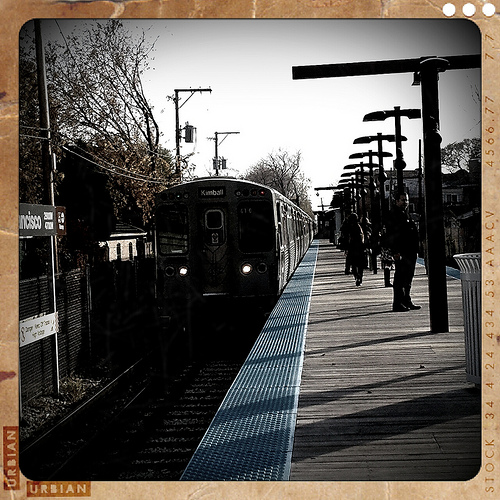
There was a man on the train platform. It doesn’t matter what race he was, or what age he was, or the color of his eyes.

He approached me with calm determination and a vacant look. Me, in my traveler black with the silver suitcase and an American Express card in the zippered security pocket on my thigh.

He told me a brief story of homelessness. He spoke so softly that I didn’t hear all the words with the rumble of the trains. I could only assess the body language and the wardrobe.

Then he asked me for a dollar.

Was his story true? Or was this his daily gig?

Did he did he put on raggedy clothes with bent shoulders and a forlorn look that morning as part of a performance that works for him in place of a more traditional job?

Did he proceed to the commuter parking lot at a different train station each day, rotating his way through the many train stations that surround his city?

Did he start with the morning commuters, and then, take a break at MacDonald’s before hitting up the mid-day suburban housewives on their way to a fancy lunch in town?

Did he use donations to buy a sandwich and a cold one to wash it down at a local bar? Did he meet his dealer in an alley for a hit? Was he a con man?

Or was he a down-on-his-luck drifter looking for work? A PTSD veteran? A man who fell through a crack in the system?

Maybe if I lived in that city and saw men with their palms open on a daily basis, I might be more cynical. Maybe, like most people, I would look the other way and let it be someone else’s business.

But I don’t live in the city, and I don’t see this every day.

I opened my zippered Baggallini purse and pulled a bill from its contents.

I gave the man the bill. He said a simple “Thank you” and turned away, then stopped with his back to me to view his take and place it in his pocket.

So. Was I a victim of fraudulent panhandling? Or a contributor to someone’s critical needs for the day?

You know what? It doesn’t matter. If I was swindled by a con man, it doesn’t matter.

In the brief seconds between “Do you have a dollar?” and “Thank you”, I decided not to judge.

With a twist of fate, any one of us could be that man on the train platform.

Christianity says to “Judge not, lest you be judged.”

The Torah of Judaism says 36 times to help “the widow, the orphan, the poor, and the stranger.”

In Buddhism, the more one gives, without seeking something in return, the more one gains. The suttas record various motives for exercising generosity. The Anguttara Nikaya enumerates the following eight motives: [1]

  1. Asajja danam deti: one gives with annoyance, or as a way of offending the recipient, or with the idea of insulting him.
  2. Bhaya danam deti: fear also can motivate a person to make an offering.
  3. Adasi me ti danam deti: one gives in return for a favor done to oneself in the past.
  4. Dassati me ti danam deti one also may give with the hope of getting a similar favor for oneself in the future.
  5. Sadhu danan ti danam deti: one gives because giving is considered good.
  6. Aham pacami, ime ne pacanti, na arahami pacanto apacantanam adatun ti danam deti: “I cook, they do not cook. It is not proper for me who cooks not to give to those who do not cook.” Some give urged by such altruistic motives.
  7. Imam me danam dadato kalyano kittisaddo abbhuggacchati ti danam deti: some give alms to gain a good reputation.
  8. Cittalankara-cittaparikkarattham danam deti: still others give alms to adorn and beautify the mind.

As long as our affluent society chooses not to have the compassion to find the resources to provide jobs and homes for those who need them, it’s up to us to individually decide what role we play in the great inequity.

Another train approached, the doors slid open and the masses flowed forward leaving the man on the platform alone.

trainApproaching

[1] Accesstoinsight.org

“Judge Not” is an essay from Linda Summersea’s Essays: Writing Like a Mad Woman.
“Judge Not” has also been published on elephantjournal.com. Check it out!

On Euthanasia, A Good Day to Die

Friday was a brilliant day at the water’s edge on Puget Sound. Sparkling water, blue skies with cotton candy clouds.

A contagious atmosphere of summer celebration was in the air as toddlers splashed at the edge of the icy water and a handful of sailboats marked the horizon.

A busload of school kids was picnicking with parent chaperones while their teachers took a break from counting down to the last day of school. Lovers nuzzled on park benches, new mothers in yoga pants and hoodies pushed strollers while a slight breeze off the ocean lifted and swirled their hair.

My dog Lily and I walked along the shore enjoying the sun at our backs.

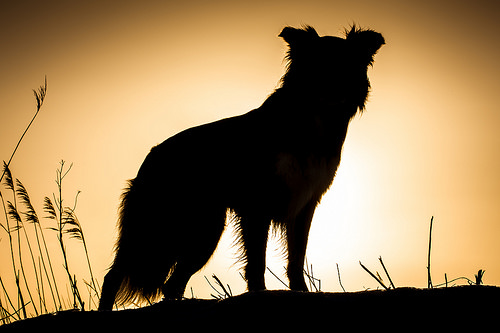
A 30ish couple with their baby girl and a black Border Collie was stretched out on a patch of lush green grass just ahead of us, watching our approach.

The young woman called out to me. Let’s call her “Emmalene”. It was something like that. The events that followed made me forget her name.

Emmalene explained that today was the last day of her dog’s life. He was going to be euthanized tomorrow, and would I allow Lily to play with him? She said that she was trying to give Blackie a Very Best Last Day.

Whew.

We all looked at Blackie and Lily. The Border Collie and the Golden Retriever were straining at their leashes, tails wagging wildly and trying to get near enough for sniffing. How could I refuse? Why would I even want to refuse? This was a serendipitous meeting. I had just helped a friend navigate through the euthanasia of her cat three weeks earlier.

The dogs greeted each other happily and stood very much at ease in each other’s presence. Honestly I’d never before seen anything quite like this extremely pacific exchange between my dog and another. I knelt in the grass and began to massage Blackie as we spoke, starting behind his ears, then neck, shoulders, and back, reverse and repeat. I could feel lumps all over his body, but he was relaxed at my touch.

Emmalene told me that Blackie had been having bad days when he vomits all his food and can’t get around. He also had good days like today where he was energetic, but the bad days were increasing.

“What did the vet say?” I asked.

“He’s old. 15 years. Most Border Collies live to be 12 or 13. He’s covered with lumps and some days he can barely function. Today he’s happy and alert, but the vet said it’s all about quality of life at this point so we had to decide… but we keep second-guessing ourselves. It’s so hard to say good-bye yet we don’t want him to suffer.”

As I massaged Blackie and spoke gently to him about his beautiful day, I shared that my friend’s cat was actually her second cat to develop pancreatic cancer. Her first cat developed it two years ago, and she approved all possible treatments. Chemo. Painkillers. The max. The poor cat suffered through it all until nothing more could be done. Sadly, her second cat was diagnosed with the very same type of extremely aggressive cancer.

This time, my friend decided—and the veterinary oncologist agreed—that quality of life needed to be foremost. Sometimes humans do everything to keep their pets alive when it’s not to the benefit of the pet’s life. My friend made the difficult decision to euthanize since there was no chance that treatment would do anything other than delay the end for a few weeks. Just because science has the ability to prolong life doesn’t necessarily make it right.

I’m certainly not an expert but I am a dog owner so I did my best to engage Emmalene and her husband in a conversation of assurance. I understand how difficult it is to say good-bye to a beloved pet that is such a dear member of the family.

I said, “You can always remember that you’ve given Blackie his very best life. 15 wonderful years. From what I understand, dogs don’t know Yesterday or Tomorrow. They only know Today. And now, Today, you’re giving him a Best Possible Beautiful Last Day.

Look at how happy he is! The two dogs are snuggling and he’s lying in the grass and enjoying the warmth of the sun.”

Emmalene said that some people with dogs had actually rejected her request that day, and it made her feel very badly about the situation. One woman even went so far as to tell her that her dog looked healthy!

Lily and I continued on with our walk and when we returned on our way to depart, I stopped and knelt at Blackie’s side one more time, ruffling his coat and massaging him again. It was hard to leave…

Finally, as they looked on, I held his face and spoke softly. “Good-bye, Sweetie. You’ve had a wonderful life. Today, I want you to enjoy this wonderful day. And tomorrow, I want you to have a smooth passage…”

Then Emmalene thanked me for what I had shared and told me that our visit had been meaningful to them.

Lily and I proceeded to the parking lot. Lily jumped into the back seat and settled down with her head between her paws, tired, eyes closed. I shut the door and resolutely took my position behind the wheel. I cried quietly for dear Blackie for a few minutes, then drove away through an old growth forest that spoke to me of the worth of a life well lived that pulses within us all.

bordercollie2

facebookFollow Linda Summersea on Facebook.

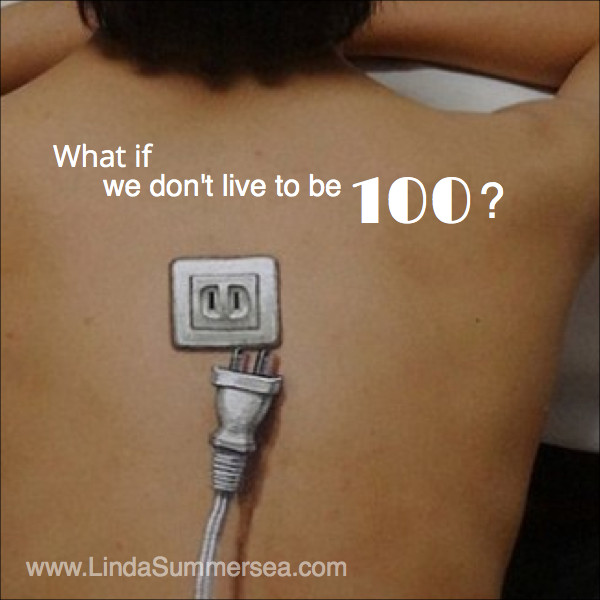
What If We DO Live to be a Hundred?

NOTE: I'm back! Whew. I had password trouble with this site on & off for months.
*This is a post that I originally wrote and posted here TEN years ago!  In retrospect,
it still makes sense to me... even as I find myself 10 years closer to the end of 
the line that I spoke of on May 29, 2015. (Its title was "What if we DON'T live to
be a hundred?)
My life has changed more in the past year than I could have imagined. Good times, 
bad times. It's all part of the deal. I still think Neil Young said it best. And now,

I believe that we WILL live to be 100. I DON'T like that these 10 years went by in a flash!
Carpe Diem!

“Old man take a look at my life
I’m a lot like you
I need someone to love me
the whole day through
Ah, one look in my eyes
and you can tell that’s true.” Neil Young

When we were young, the thought of growing old didn’t cross our minds- except perhaps in a romantic reference to a place we’d never be. We would never grow old. We would rather die than grow old.

Our heroes died young, living their lives like a stick of dynamite whose wick was burning fast and furiously.

“Twenty four
and there’s so much more
Live alone in a paradise
That makes me think of two.”

Then we merged and had children and reveled in the miracle of a thumb-sized hand grasping ours and a tiny mouth given life while cradled at our breast. We held their hands as they grew strong and we advised them as best as we could.

How to be in the world. How to exist amongst their peers. How to find a light in the dark. How to survive the heartbreak that is part of life’s passage and the love that cures it.

“Love lost, such a cost,
Give me things
that don’t get lost.”

Time passes at a rate that we’re told goes faster because the ratio of our current life to the big picture becomes less and less. At five, we’ve potentially lived only one/twentieth of a hundred year life. At twenty, it’s one/fifth.

But that doesn’t account for the times when life unaccountably slows up. When we sit in the waiting room of a hospital. Or fall from a great height to the ground below, feeling ourselves turn head over heels three times, slowly, realizing we might die at the bottom when our brain sloshes as our skull hits the concrete, but we inexplicably survive.

Or when we remember a luscious afternoon that we’re able to relive in our memory until it stretches for hours and hours, breathe after breathe, until it hurts because we want so much to go back in time and be there.

“Lullabies, look in your eyes,
Run around the same old town.
Doesn’t mean that much to me
To mean that much to you.”

Our children mature as we did, and move on to have their own lives. We continue hoping that they’ll cherish these days as we did not, and make the right life decisions.

At forty-five, we think: forty-five is half of ninety. We’re strong. We’re sexy. It’s the best time of our lives. Surely, we’ll live to be ninety or a hundred. Science tells us so. We’re only half-way there.

Then fifty. Fifty-five, sixty. The wheel is spinning faster. Hang on. We need to think clearly. Decisions have to be made. Every day is a gift. Not trite, but true.

“I’ve been first and last
Look at how the time goes past.
But I’m all alone at last.
Rolling home to you.”

How do we want to spend our days, now that we can see the period at the end of the sentence?


LSLiveto100

Are We Weeds or Flowers?

When I moved to the Pacific Northwest last fall, I was unfamiliar with our King County noxious weeds, a group of plants quite different from the heat-loving weeds of the Ozarks from whence I traveled. As I became busy with the details of moving in, getting settled, and getting my life back on track, I ignored the weeds growing in our perennial beds.

At first they were mere seedlings and I told myself that there was plenty of time to deal with them later. The brown soil boldly bared itself all around them. The weeds were sparse and spindly. But before I knew it, these foreign weeds were stretching wide and tall and deep, gaining a firm foothold in the garden where they enjoyed both sun and shade and reveled in the moist soil beneath the pendulous branches of the blossoming weeping cherry tree and her pink sisters.

Nor did these weeds have any hesitation in pushing up amongst the roses and peonies. No problem at all with marching en masse along the hedges of lavender! And soon—

I found them towering over the new spring growth of hybrid lily stalks- stalks that didn’t know what hit them as the weeds pushed through their fragile fringe of bright green.

One day, on returning from yoga class, I observed that in my absence the tallest weeds had not only formed buds, but now they were also blossoming. I knew that from blossoms there would soon be seeds and briefly panicked as I became determined to set things right in the garden. Immediately. Posthaste.

This would be a good opportunity for me to experience a much-needed grounding of my spirit as well. Crawling around in the soil on my hands and knees has always been an uplifting, pleasurable act.

I would allow Samu— the act of mindfulness in practical, physical work— to take precedence. A weed-free garden would be the secondary benefit.

I slid open the rust-edged doors of the garden shed to retrieve my tools. The doors objected with metallic shrieks cursing the light that entered their darkness. I hauled out the wheelbarrow, which by now, was leaning to the left as much as I.

I was dressed to kill in my faded garden hat, long-sleeved denim shirt and blue jeans, as I tossed my deerskin gloves, my padded kneeler and a three-pronged digger into the wheelbarrow.

I decided that I would realize feelings of accomplishment more quickly if I started where the weeds were thickest and tallest. And so it went.

Pull.   Pull.   Pull.   Toss into the wheelbarrow.

Repeat several times, and crawl forward with the kneeler. The rhythm of Zen was soothing. Birds aloft in the Douglas firs gossiped quietly. They were not surprised to see me on my knees.

Pull.   Pull.   Pull.  Toss into the wheelbarrow.

After about twenty such motions, a brown swath of soil was visible. Eddie, my orange tabby cat, joined me to see if I might be stirring up any excitement—perhaps a mole or two. None that I could hear.

After fifty such motions, I couldn’t help but notice the beauty of the plants in the wheelbarrow. Dead or alive, they had delicate blossoms and lovely arrowhead leaves.

As I continued, I questioned: who decided the taxonomy of these plants?

What made Herb Robert (Geranium robertianum) and Garlic Mustard (Alliaria petiolata) such villains? One woman’s geranium is pot-worthy—another to be pulled. One man’s garlic is fit for salad—another for the compost.

Stinging Nettles, I can understand. In spite of long sleeves and deerskin gloves, I accidentally pulled one specimen and it briefly touched my bare wrist—no more than a second.

Who canglovesnot respect a plant that causes welts to rise on your skin along with tingling and stinging sensations within two second of contact? …in addition to a tingling that begins anew twelve hours later when the antihistamine has worn off? Admittedly, not a totally unpleasant sensation once we embrace the amazingness of it.

Purple loosestrife, agreed, is another plant worthy of “weed”. But foxglove and scotch broom? Are we so intolerant of their personalities?

Of course, I know the answer to my questions. It’s never a good thing when a plant is so strong that it dominates and destroys the rest of its peers.

As I took a breather in the shade with a glass of water, I considered the same of people. How do we carry out our lives? Are we dominating? Or tender as a daisy? Do we act in such a way that causes us to be scorned or beloved? Are we weeds or flowers?

flowerorWeed

Follow me on Facebook. facebook